Upholding Academic Freedom, Research Independence, and Freedom of Teaching at UIN Jakarta
Syarif Hidayatullah State Islamic University Jakarta recognises academic freedom as an essential foundation for higher education, scientific advancement, independent research, and responsible intellectual expression. The University is committed to supporting an academic environment in which lecturers, researchers, and other members of the academic community can develop knowledge, conduct scholarly inquiry, communicate research findings, and participate in academic discussions according to established scientific and ethical principles.
These commitments are formally recognised through the University's Statute, institutional academic guidelines, and research-development mechanisms. By supporting academic freedom and scientific autonomy, Syarif Hidayatullah State Islamic University Jakarta contributes to Sustainable Development Goal 16: Peace, Justice and Strong Institutions, particularly Indicator 16.2.6 concerning academic freedom policies.
1. Establishing Academic Freedom through the University Statute
Syarif Hidayatullah State Islamic University Jakarta's commitment to academic freedom is formally established through Minister of Religious Affairs Regulation Number 17 of 2014 concerning the Statute of UIN Syarif Hidayatullah Jakarta. Article 11 recognises academic freedom as a right associated with educational activities and the independent development of knowledge and technology.
The regulation establishes that academic activities should be carried out responsibly and independently while reflecting scientific, Islamic, and Indonesian values. Importantly, Article 11 requires University leadership to facilitate and safeguard academic freedom and freedom of academic expression in accordance with relevant legal provisions and academic ethics.
The use of the term academic community establishes a broad institutional foundation that does not restrict academic freedom exclusively to senior lecturers or professors. This statutory commitment provides the principal policy basis for academic independence throughout the University.
2. Recognising Freedom of Academic Expression
Academic freedom involves not only undertaking research but also communicating scholarly findings and participating in intellectual discussions. Article 11 of the University Statute explicitly recognises freedom of academic expression alongside academic freedom.
This provision establishes an institutional commitment to supporting responsible scholarly communication and academic discussion.
It provides a policy foundation for lecturers and researchers to express academic perspectives through educational and scholarly activities within their fields of expertise. These freedoms are exercised in accordance with scientific standards, professional responsibilities, and applicable ethical principles. The University's commitment therefore recognises academic expression as an important component of research, teaching, and intellectual development.
3. Safeguarding Scientific Autonomy
Article 12 of the University Statute recognises scientific autonomy as the independence of academic disciplines in developing and defending scientific knowledge. It establishes that members of the academic community may engage in discovering, developing, expressing, and defending scientific truth according to recognised academic methods and disciplinary standards.
The provision also requires the University to develop scientific autonomy as a means of strengthening professional independence and responsible intellectual activity. This framework supports scholarly inquiry across the University's academic disciplines. By recognising scientific autonomy, Syarif Hidayatullah State Islamic University Jakarta establishes a foundation for responsible academic independence in research and teaching.
4. Supporting Academic Freedom through Institutional Quality Guidelines
The University's commitment to academic freedom is further reinforced through its 2015 Guidelines for the Development of the Academic Environment. Prepared under the Institute for Quality Assurance, these guidelines establish institutional principles for creating an academic environment that is open, critical, innovative, and professionally responsible.
Section 2.1 explicitly identifies academic freedom, freedom of academic expression, and scientific autonomy among the University's academic quality commitments. The guidelines also emphasise supporting infrastructure, constructive interactions between lecturers and students, academic ethics, and institutional monitoring and evaluation.
They establish responsibilities for University leaders, faculties, departments, study programmes, lecturers, and students in maintaining a conducive academic environment. These provisions reinforce the University's position that academic freedom should be supported by institutional governance and educational quality assurance.
5. Supporting Research Opportunities for Senior and Junior Academics
Academic independence requires opportunities for scholars at different career stages to conduct research and develop their expertise. Syarif Hidayatullah State Islamic University Jakarta's 2024 Research Guidelines, published by the Centre for Research and Publication under the Institute for Research and Community Service, establish several research funding categories.
These include capacity-building research, basic research, applied research, development research, and strategic research. The guidelines provide a specific capacity-building research category for early-career lecturers, including those holding the academic rank of Assistant Expert with up to five years of teaching experience. This category supports junior academics in developing research proposals, research instruments, and scientific reporting skills.
Other research categories provide opportunities for more established researchers to pursue disciplinary, interdisciplinary, and applied research within the University's funding framework. These arrangements demonstrate institutional support for research participation at different stages of academic careers.
Research funding remains subject to eligibility requirements, scientific review, and applicable programme priorities.
6. Promoting Research through Academic Review and Scientific Discussion
On 27 August 2024, Syarif Hidayatullah State Islamic University Jakarta's Centre for Research and Publication conducted a research-proposal seminar for candidates seeking research funding through the University's Public Service Agency programme. The programme provided opportunities for researchers to present proposals and receive academic evaluation.
The review process addressed scientific contributions, research novelty, expected outcomes, and budgeting. Such activities contribute to a research environment in which scholarly proposals are discussed and assessed according to established academic criteria.
On 30 December 2024, the University also announced the opening of research funding applications for 2025, inviting lecturers and researchers across Syarif Hidayatullah State Islamic University Jakarta to submit proposals. These activities demonstrate the University's continuing efforts to support research development and scholarly engagement.
7. Strengthening Academic Expression for Senior Academics
Syarif Hidayatullah State Islamic University Jakarta also provides opportunities for experienced academics to communicate their expertise through public scholarly forums. In May 2025, the Faculty of Education and Teacher Training organised an academic forum entitled Mimbar Guru Besar.
The programme was designed to bring professors together to discuss strategic issues concerning Islamic education from multidisciplinary perspectives.
The forum was publicly accessible and encouraged the presentation of scholarly perspectives and intellectual reflections. This activity illustrates the practical importance of academic expression and knowledge dissemination within the University's academic environment.
It also provides a documented example of senior academics participating in public scholarly dialogue.
8. Supporting the Teaching Development of Junior Academics
The University's commitment to teaching quality also includes institutional support for early-career lecturers.
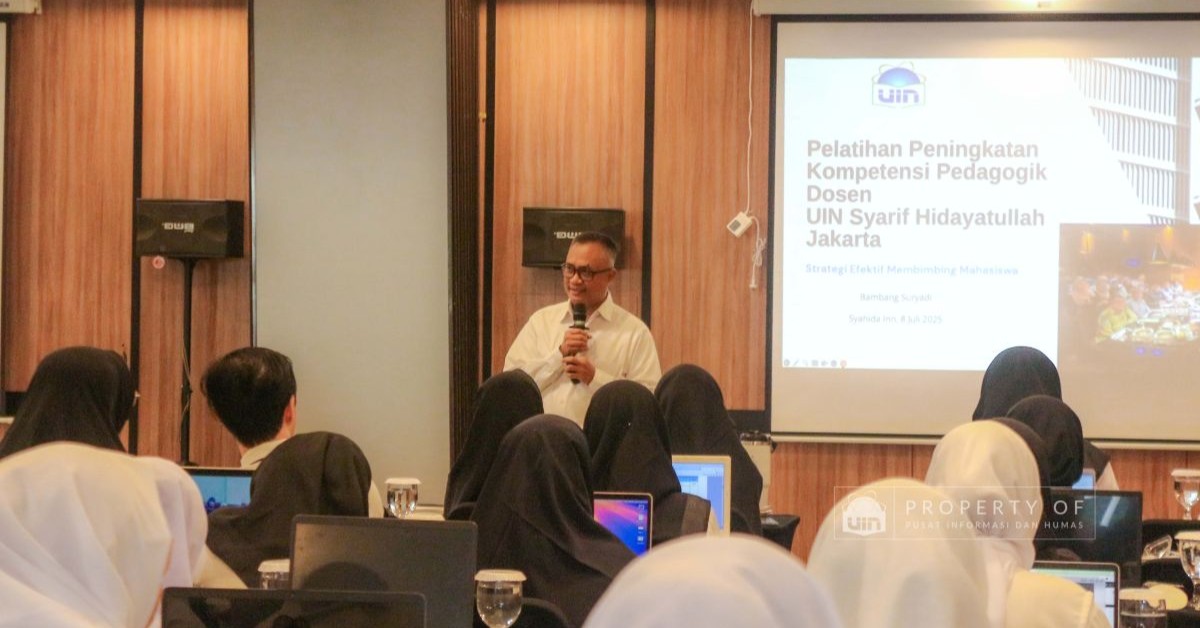
On 8–9 July 2025, Syarif Hidayatullah State Islamic University Jakarta organised pedagogical competency training for new lecturers appointed through civil-service and government employment schemes. The programme focused on professional teaching, responsible academic practice, and contemporary learning approaches.
Such initiatives support the ability of junior academics to contribute effectively to the University's teaching mission. The University's general academic freedom provisions apply to the academic community without distinguishing between senior and junior lecturers.
Professional-development activities complement these protections by strengthening the teaching capabilities of early-career academics. However, pedagogical training should be understood as supporting evidence of teaching development rather than independent proof of unrestricted teaching autonomy.
9. Maintaining Academic Responsibility and Integrity
Academic freedom is accompanied by responsibilities concerning scientific quality, research integrity, professional ethics, and respect for applicable regulations. Syarif Hidayatullah State Islamic University Jakarta's Statute explicitly establishes that academic freedom and scientific autonomy should be exercised responsibly.
The University's academic environment guidelines similarly emphasise integrity, professional behaviour, constructive academic interactions, and institutional quality assurance. These responsibilities support a balance between independent academic inquiry and the maintenance of credible scholarly standards.
The University's approach recognises that academic freedom is essential to the pursuit of knowledge while remaining accountable to established scientific methods and ethical principles.
10. Contribution to SDG 16: Peace, Justice and Strong Institutions
Syarif Hidayatullah State Islamic University Jakarta demonstrates a formal institutional commitment to academic freedom through its Statute, academic quality guidelines, research-development policies, and scholarly activities. Minister of Religious Affairs Regulation Number 17 of 2014 establishes the University's principal policy framework for academic freedom, freedom of academic expression, and scientific autonomy.
The University's 2015 Guidelines for the Development of the Academic Environment further integrate these principles into institutional quality assurance and academic governance. Research funding arrangements documented in 2024 demonstrate opportunities for academic inquiry at different career stages, including dedicated capacity-building support for junior lecturers.
Academic discussions, research-proposal seminars, and scholarly forums during 2024–2025 provide additional examples of institutional support for research and intellectual engagement. Together, these policies and programmes demonstrate Syarif Hidayatullah State Islamic University Jakarta's formal commitment to supporting academic freedom and responsible scholarly expression among senior and junior members of its academic community. These commitments contribute to Sustainable Development Goal 16, particularly Indicator 16.2.6, by establishing institutional protections for academic independence and supporting opportunities for research, teaching, and public scholarly dialogue.


Source :
https://asset.uinjkt.ac.id/uploads/DyvVGLBV/2023/11/pma-nomor-17-tahun-2014-tentang-statuta-uin-syarif-hidayatullah-jakarta.pdf
https://drive.google.com/file/d/1x8Bw1DwmhOeUgr4VyO53IYiGAVY-QWSQ/view
https://siapp.uinjkt.ac.id/storage/pengumuman/ZRqRwiLd906dGiUU2ZhLPGYEn8EttuhfcQrniPfw.pdf
https://uinjkt.ac.id/id/pengumuman-pembukaan-penelitian-2025
https://uinjkt.ac.id/id/press-release-uin-jakarta-gelar-mimbar-guru-besar-forum-strategis-bedah-isu-pendidikan-islam
https://uinjkt.ac.id/id/tingkatkan-profesionalisme-uin-jakarta-gelar-pelatihan-peningkatan-kompetensi-pedagogik-bagi-dosen-pemula