Tracking and Managing Campus Food Waste at Syarif Hidayatullah State Islamic University Jakarta
Syarif Hidayatullah State Islamic University Jakarta is committed to strengthening the measurement, management, and reduction of food waste as part of its broader Green Campus initiative. During the 2024–2025 period, the University strengthened its waste-management framework through campus-wide waste separation, organic-waste management, research-based food-waste measurement, and the expansion of infrastructure designed to support more responsible waste disposal and recovery.
Strengthening Campus Waste Management
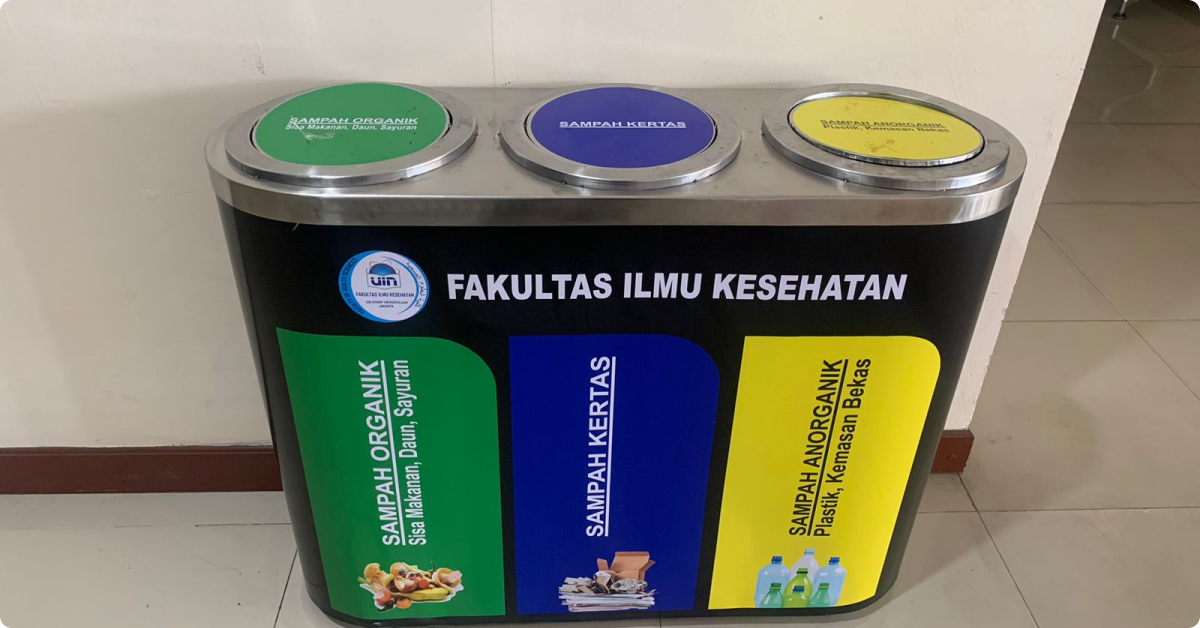
In 2024, Syarif Hidayatullah State Islamic University Jakarta implemented an integrated waste-management approach that emphasised waste separation, treatment, and reduction at source. Organic waste bins are designated for food scraps and other biodegradable materials, while separate facilities are provided for recyclable inorganic waste and hazardous materials.
Food scraps collected through the organic-waste stream can subsequently be processed as compost, helping reduce the amount of organic material sent directly to final disposal. This system provides an institutional foundation for improving the University's ability to identify, separate, manage, and ultimately reduce food waste generated through campus activities.

Direct Measurement of Food Waste
In 2025, a study conducted at the Faculty of Medicine canteen provided a direct quantitative measurement of food waste generated from food served within the University. The study used direct food-waste measurement over a ten-day observation period.
The results recorded an average food-waste generation of 7.16 kilograms per day, equivalent to an estimated 14,473 kilograms, or 14.473 metric tons, per year at the measured canteen. The composition of the waste was dominated by uneaten rice and side dishes. The study also examined student consumption behaviour and the application of the Food Recovery Hierarchy by canteen operators and food vendors. The findings identified opportunities to strengthen food-waste prevention, redistribution, recycling, and composting practices.
Using Measurement to Improve Campus Practices
The food-waste measurement provides Syarif Hidayatullah State Islamic University Jakarta with a quantitative baseline for understanding the scale and composition of food waste generated through campus food-service activities. The findings can support future improvements in food-service management, awareness campaigns, portion planning, waste separation, food recovery, and organic-waste processing.
The research also recommended strengthening food-waste education and providing appropriate composting facilities as part of the University's Green Campus development.
Expanding Waste-Sorting Infrastructure
In July 2025, the University further expanded its Green Campus infrastructure by increasing the availability of separate bins for organic, inorganic, and hazardous waste. The initiative explicitly recognised that campus eating and drinking activities generate significant waste, including food leftovers and packaging.
Expanding waste-separation infrastructure enables food and other organic materials to be separated more effectively from recyclable and hazardous waste streams.

Toward Integrated Campus Waste Management
The University's efforts continued in October 2025 through collaboration with PT Garudha Panglimo Nuswantara to develop an integrated campus waste-management system. The collaboration covers waste separation, collection, processing, and reuse of organic and inorganic materials, together with technical assistance and environmental education.
Through these initiatives, Syarif Hidayatullah State Islamic University Jakarta is progressively strengthening the connection between quantitative waste measurement, institutional waste-management systems, environmental education, and practical waste-reduction measures.
Supporting Sustainable Food-Waste Management
The combination of direct measurement, academic research, waste separation, organic-waste processing, and integrated waste-management initiatives demonstrates the University's commitment to addressing food waste through evidence-based action. The 2025 Faculty of Medicine canteen study currently provides a documented partial measurement of food waste within the University. This quantitative evidence also provides a foundation for expanding systematic food-waste measurement across additional food-service locations in the future.
Through continued monitoring and Green Campus development, Syarif Hidayatullah State Islamic University Jakarta seeks to reduce food waste, improve resource efficiency, and promote more sustainable consumption and waste-management practices across the campus community.

Source :
https://repository.uinjkt.ac.id/dspace/handle/123456789/89890
https://uinjkt.ac.id/id/pengelolaan-limbah
https://uinjkt.ac.id/id/uin-jakarta-dan-pt-garudha-panglimo-nuswantara-jalin-kerja-sama-pengelolaan-sampah-terpadu