Supporting National Clean Energy and Energy-Efficiency Policy Development
Syarif Hidayatullah State Islamic University Jakarta contributes to national environmental and clean-energy policy development through evidence-based research, policy recommendations, government engagement, and academic initiatives concerning energy transition and sustainable technology.
During 2024–2025, the University engaged national government institutions through research and policy forums led particularly by the Center for the Study of Islam and Society (PPIM UIN Jakarta). These initiatives addressed climate change, environmental governance, energy transition, and the integration of sustainability into national policy. The University's activities demonstrate its role not only as an implementer of clean-energy initiatives within its own campus, but also as an academic institution providing research findings and policy recommendations to national government stakeholders.
1. Engaging National Government Institutions through the REACT Programme
On 25 April 2024, PPIM UIN Jakarta organised a Project Board Meeting under the Religious Environmentalism Actions (REACT) programme. The meeting brought together national government institutions and research bodies, including the Ministry of Environment and Forestry, the Ministry of Religious Affairs, the Ministry of Education, Culture, Research and Technology, and the National Research and Innovation Agency.
The forum was designed to identify challenges and opportunities for strengthening societal responses to environmental degradation and climate change. Through this engagement, UIN Jakarta provided an academic platform where researchers and government representatives could exchange evidence, experience, and policy perspectives. The initiative demonstrates direct engagement between the University and national public institutions on environmental policy issues.
2. Producing National Evidence on Energy Transition
In 2024, PPIM UIN Jakarta conducted a nationally representative Green Islam survey involving 3,397 respondents across Indonesia. The survey examined environmental knowledge, attitudes, and behaviour, including public understanding of climate change and energy transition.
One of its significant findings was that almost 80 percent of Indonesian Muslims surveyed were unfamiliar with the concept of energy transition. Among respondents who had heard about energy transition, substantial knowledge gaps also remained regarding its meaning. The research additionally examined public perceptions concerning mining, economic activities contributing to climate change, electricity conservation, and environmentally responsible behaviour. These findings provide evidence relevant to policymakers seeking to design effective energy-transition communication, environmental education, and public engagement strategies.
By producing national-scale evidence on public understanding of energy transition, UIN Jakarta contributes academic information that can support the development of more socially responsive clean-energy policies.
3. Providing Policy Recommendations to National Government

On 27 August 2024, PPIM UIN Jakarta publicly presented the results of its research on the Green Islam movement in Indonesia. The policy discussion involved researchers, environmental organisations, and representatives of government institutions, including a senior representative from the Ministry of Environment and Forestry. The University's researchers recommended strengthening cooperation between environmental movements and national government institutions.
They specifically identified the Ministry of Environment and Forestry and the Ministry of Religious Affairs as important government stakeholders in mainstreaming environmental issues. Most significantly, PPIM UIN Jakarta recommended incorporating Green Islam into the policy direction of the Ministry of Religious Affairs and proposed its inclusion within the Ministry's 2025–2029 Strategic Plan. The research programme was also designed to provide a platform through which policymakers could exchange knowledge and experiences relating to environmental protection and climate change.
These activities demonstrate a direct contribution by UIN Jakarta to national-level environmental policy discussion and development.
4. Developing a Dedicated Government Policy Brief
Following its research programme, PPIM UIN Jakarta developed a dedicated policy brief entitled “Integrating Green Islam into the Policy Direction of the Ministry of Religious Affairs.” Published in November 2024, the policy brief translated academic findings into policy-oriented recommendations for a national government institution.
This activity represents an important connection between university research and public policy. Rather than limiting research outputs to academic publication, UIN Jakarta communicated findings in a format specifically intended to inform government planning and policy development. The policy recommendations were supported by research covering climate change, environmental behaviour, energy transition, environmental movements, and sustainability.
The policy brief therefore strengthened UIN Jakarta's role as an academic contributor to national environmental governance.
5. Supporting the National Ecotheology Policy Agenda
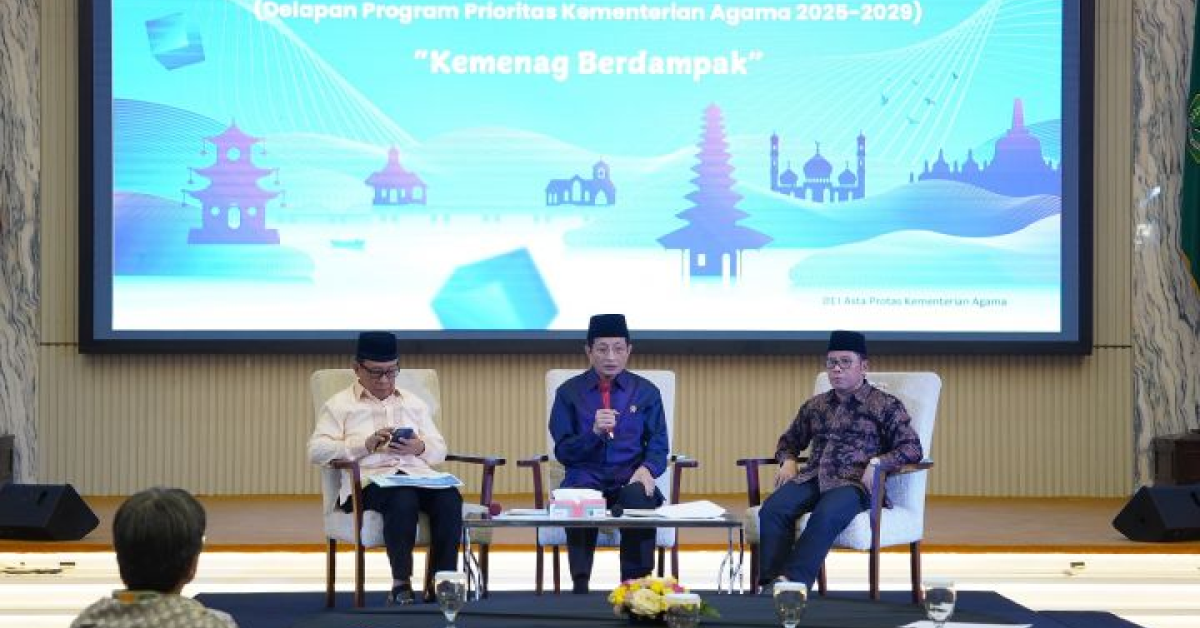
In March 2025, the Indonesian Ministry of Religious Affairs introduced eight national priority programmes under the Asta Protas Kemenag Berdampak framework. One of these priorities is Strengthening Ecotheology, which integrates religious values with environmental responsibility and sustainability.
Syarif Hidayatullah State Islamic University Jakarta subsequently expressed its institutional commitment to contributing to these national priorities. The University's Green Campus programme, environmental research, and renewable-energy initiatives provide practical institutional experience that can contribute to the implementation of this national environmental agenda. The development of the Ministry's ecotheology programme is consistent with the policy direction advocated by PPIM UIN Jakarta during 2024.
However, the University does not claim that the national programme was created solely as a result of its recommendations. Rather, the sequence demonstrates continued alignment and knowledge exchange between university research and national environmental policy priorities.
6. Strengthening Technical Knowledge on Clean-Energy Innovation

The University's contribution to policy discussion is supported by academic engagement with emerging clean-energy technologies. In September 2025, the Chemistry Study Programme of the Faculty of Science and Technology collaborated with PT Pertamina (Persero) to organise a Green Energy Studium Generale on Sustainable Aviation Fuel.
The programme examined the conversion of Used Cooking Oil and other feedstocks into sustainable aviation fuel through pretreatment, hydrodeoxygenation, and isomerisation technologies. Participants discussed technical production processes, supply-chain challenges, sustainability considerations, and Indonesia's opportunities in the development of green aviation fuel. This activity strengthened the University's technical knowledge base concerning clean-energy transition and connected academic research with developments in Indonesia's energy sector.
Such knowledge provides an important academic foundation for informed contributions to future public policy discussions on clean-energy technologies.
7. Linking Research, Technology, and Public Policy
UIN Jakarta's approach combines three complementary elements. First, the University generates empirical evidence concerning public understanding of climate change and energy transition. Second, the University converts research findings into policy recommendations and dedicated policy briefs for government stakeholders. Third, the University develops technical knowledge and applied experience through renewable-energy programmes and engagement with clean-energy technologies.
Together, these activities enable the University to contribute evidence-based perspectives to national environmental and energy-transition discussions. This model demonstrates how higher education institutions can connect research, technology, public communication, and policy development.
8. Contribution to SDG 7: Affordable and Clean Energy
Syarif Hidayatullah State Islamic University Jakarta demonstrates national-level engagement in supporting environmental and clean-energy policy development. Through the REACT programme, national Green Islam research, energy-transition surveys, policy recommendations to government institutions, and dedicated policy briefs, the University has provided evidence and policy perspectives relevant to national environmental governance.
These activities have been complemented by technical engagement with emerging clean-energy technologies, including Sustainable Aviation Fuel and renewable-energy development. Together, these initiatives demonstrate that UIN Jakarta informs and supports national government policy discussions concerning environmental sustainability, climate action, and the transition toward cleaner and more energy-efficient technologies.
The strongest verified evidence for the 2024–2025 reporting period supports classification at the National level under SDG 7 Indicator 7.4.4.
Source :
https://ppimcensis.or.id/
https://ppimcensis.or.id/2024/04/26/dorong-kolaborasi-hadapi-krisis-iklim-dan-lingkungan-ppim-uin-jakarta-gelar-project-board-meeting-program-religious-environmentalism-actions-react/
https://uinjkt.ac.id/id/antisipasi-perubahan-iklim-inisiatif-green-islam-butuh-dukungan-luas
https://ppimcensis.or.id/books/integrasi-green-islam-dalam-arah-kebijakan-kemenag/
https://uinjkt.ac.id/id/kemenag-kenalkan-delapan-program-prioritas-uin-jakarta-siap-berkontribusi
https://fst.uinjkt.ac.id/id/prodi-kimia-fst-uin-jakarta-gelar-studium-generale-energi-hijau-bersama-pertamina