Strengthening Institutional Diversity, Gender Equality, and Inclusion at UIN Jakarta
Syarif Hidayatullah State Islamic University Jakarta is committed to creating an inclusive, equitable, and respectful academic environment through dedicated institutional units responsible for gender equality, disability inclusion, human dignity, and protection against discrimination.
The University recognises that promoting diversity and equality requires organisational structures with clearly defined responsibilities, sustained institutional programmes, and mechanisms for advising and supporting members of the academic community. These responsibilities are supported through the Centre for Gender and Child Studies (Pusat Studi Gender dan Anak, PSGA), the Center for Students with Special Needs (CSSN), and related institutional protection mechanisms. During 2024–2025, these units implemented educational activities, gender-mainstreaming initiatives, disability-awareness programmes, and institutional discussions aimed at strengthening equality and inclusion across the University.
1. Establishing an Institutional Unit for Gender Equality

UIN Jakarta operates the Centre for Gender and Child Studies (PSGA) under the Institute for Research and Community Service (LP2M). According to its official institutional profile, PSGA is responsible for promoting gender equality and justice across the University's three principal functions: education, research, and community engagement. The Centre addresses disparities in academic participation and opportunities between women and men and works to integrate gender perspectives into University programmes.
Its institutional responsibilities include supporting gender awareness, facilitating discussions on equality, and strengthening programmes related to women and children. PSGA also maintains an organisational structure and coordinates activities with other University units. These responsibilities establish PSGA as an institutional mechanism performing functions associated with gender equality and diversity governance.
2. Implementing Gender Mainstreaming through the Gender Academy

From 4 to 6 June 2024, PSGA organised a three-day Focus Group Discussion addressing gender equality, patriarchy, and women's empowerment. The event also marked the launch of the Gender Academy (Akademi Gender), a new PSGA programme designed to strengthen understanding of gender-related issues among the University's academic community.
The programme was introduced as a platform for continued educational activities concerning gender perspectives and equality. During the event, the leadership of LP2M recognised PSGA as an important institutional driver of gender mainstreaming within UIN Jakarta.
The Gender Academy demonstrates that PSGA's responsibilities extend beyond awareness statements to the development of structured educational and capacity-building activities. Through these initiatives, the University supports the implementation of gender-equality principles in academic and institutional life.
3. Strengthening Disability Inclusion through CSSN

In addition to PSGA, UIN Jakarta has developed institutional mechanisms to support students with disabilities through the Center for Students with Special Needs (CSSN). CSSN contributes to promoting accessibility, disability awareness, and inclusive participation within the academic environment.
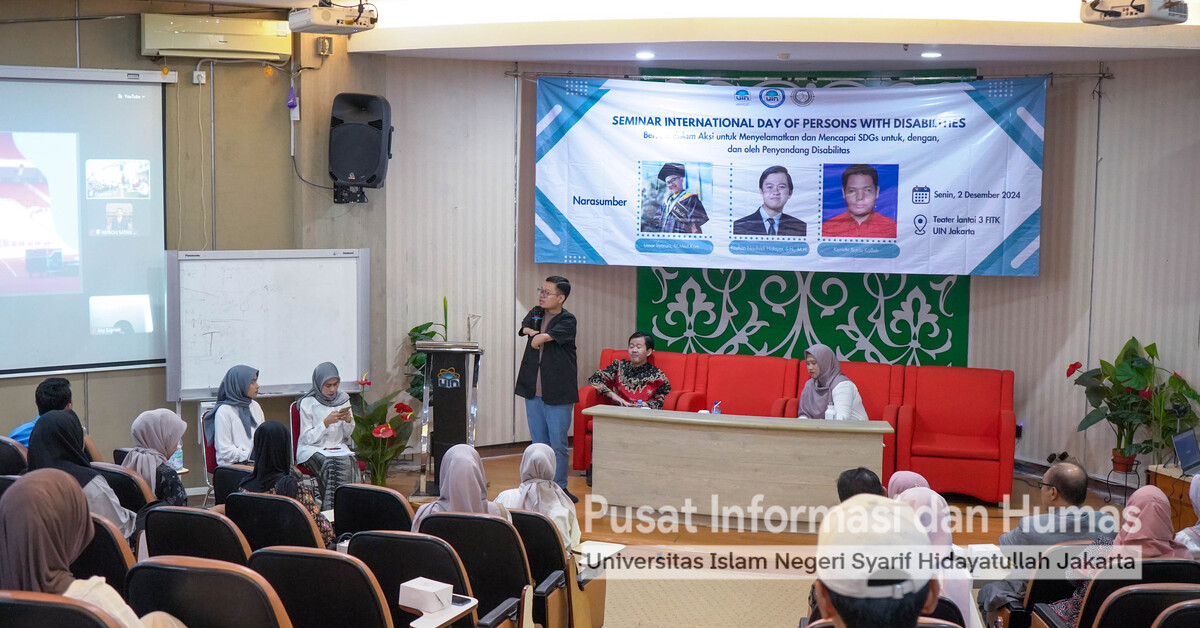
On 2 December 2024, CSSN collaborated with academic departments to organise an International Day of Persons with Disabilities seminar. The programme addressed disability rights, social inclusion, disability literacy, and the importance of equitable educational opportunities.
The University Rector attended the event and expressed support for strengthening the institutional role of CSSN so that disability-related services could reach the wider academic community. The activity illustrates the University's efforts to develop specialised institutional responsibilities for improving disability inclusion. CSSN complements the gender-equality activities of PSGA by addressing barriers related to disability and accessibility.
4. Supporting Institutional Protection through Dedicated Mechanisms
The University's approach to equality and inclusion is reinforced by mechanisms for the prevention and handling of sexual violence. PSGA collaborates with relevant institutional stakeholders and the University's sexual-violence prevention and response mechanisms to promote safer learning and working environments.
These mechanisms support awareness activities, reporting procedures, institutional coordination, and assistance for affected members of the academic community. At faculty level, related units contribute to the dissemination of protection information and the implementation of appropriate procedures.
Such arrangements are important for addressing unequal power relationships and supporting individuals who experience harassment or violence. They also demonstrate that UIN Jakarta's institutional equality agenda involves organisational responsibilities, not merely individual initiatives.
5. Promoting Equal Access and Women's Empowerment in Digital Environments

During 2025, PSGA continued strengthening its equality programmes by addressing women's empowerment and access to technology. On 17 October 2025, PSGA organised a Focus Group Discussion entitled Technology and Women's Empowerment: Strengthening Access and Equality.
The programme discussed the importance of inclusive digital environments and the role of technology in creating opportunities for women. Speakers also highlighted the importance of accessible technology for persons with disabilities.
The discussion expanded PSGA's gender-equality agenda to include barriers affecting digital access, participation, and empowerment. This initiative demonstrates the Centre's continuing engagement with emerging issues affecting equal participation in education and society.
6. Integrating Equality and Inclusion into University Activities
The University's institutional arrangements support equality and inclusion through several complementary mechanisms. PSGA promotes gender mainstreaming and educational activities concerning equality and women's empowerment. CSSN supports disability awareness and inclusive educational participation. Related prevention and response mechanisms address protection from sexual violence and promote safer institutional environments.
Faculty-level organisational structures provide additional channels for student services, welfare support, and institutional coordination. Together, these arrangements support the University's ability to identify equality-related challenges and implement programmes that respond to the needs of different members of its academic community. Although the responsibilities of these units vary, they collectively contribute to a broader institutional approach to gender equality, inclusion, and protection.
7. Institutional Accountability and Continuing Development
The existence of officially identified institutional units provides a foundation for sustained implementation of equality and inclusion programmes. PSGA's organisational profile establishes its responsibilities in gender equality and justice within the University's academic activities.
Its Gender Academy initiative provides documented evidence of organised educational programming. CSSN's activities demonstrate institutional involvement in disability awareness and inclusion. The University's continued coordination of equality-related programmes during 2025 further demonstrates the importance of maintaining dedicated organisational capacity. Future efforts to strengthen formal coordination across these units would support more comprehensive institutional monitoring and implementation of diversity, equity, inclusion, and human-rights initiatives.
8. Contribution to SDG 10: Reduced Inequalities
Syarif Hidayatullah State Islamic University Jakarta has established dedicated institutional units that perform functions relevant to diversity, equality, and inclusion. The Centre for Gender and Child Studies promotes gender equality and justice through education, research, community engagement, and structured awareness programmes.
The Center for Students with Special Needs contributes to disability inclusion and promotes equitable access to higher education. These units are complemented by institutional protection mechanisms and faculty-level services. During 2024–2025, the University's initiatives included the launch of the Gender Academy, disability-awareness activities, and programmes addressing women's empowerment and equal access to technology. Together, these institutional structures and programmes demonstrate that UIN Jakarta has designated organisational responsibilities for promoting gender equality, disability inclusion, and equitable participation within its academic community. Through these efforts, UIN Jakarta supports Sustainable Development Goal 10, particularly Indicator 10.6.5, by maintaining institutional units with functions comparable to a university diversity and equality office.

Source :
https://lp2m.uinjkt.ac.id/id/pusat-studi-gender-anak-psga
https://www.uinjkt.ac.id/id/pertegas-gender-mainstreaming-di-perguruan-tinggi-islam-psga-luncurkan-akademi-gender
https://uinjkt.ac.id/id/seminar-hari-disabilitas-internasional-2024-menuju-kampus-inklusif-dan-literasi-disabilitas-di-uin-jakarta
https://uinjkt.ac.id/id/wujudkan-kampus-inklusif-fgd-psga-uin-jakarta-dorong-kesetaraan-gender-dan-pemberdayaan-perempuan-di-ruang-digital
https://fk.uinjkt.ac.id/id/resmi-fk-uin-jakarta-launching-unit-p3ks