Protecting Individuals Reporting Discrimination from Academic and Employment Disadvantages
Syarif Hidayatullah State Islamic University Jakarta is committed to maintaining an academic environment where students, lecturers, and administrative personnel can report sexual violence and related discriminatory treatment without fear of intimidation, threats, or disruption to their education and employment. The University recognises that the fear of retaliation can discourage individuals from reporting misconduct, particularly when incidents involve unequal power relationships within academic or professional settings.
To address these risks, UIN Jakarta has established formal protection provisions through its institutional sexual violence prevention and response policy, supported by designated reporting mechanisms and institutional units responsible for handling complaints. During 2024–2025, the University maintained formal safeguards protecting complainants and witnesses from threats and interruptions to their education or employment and strengthened awareness of these protections through institutional initiatives. These measures contribute to Sustainable Development Goal 5: Gender Equality by promoting accountability, protecting vulnerable members of the University community, and supporting access to institutional reporting mechanisms.
1. Establishing Formal Protection through Rector's Decree Number 573 of 2022
The principal regulatory foundation is Rector's Decree Number 573 of 2022 concerning the Guidelines for the Prevention and Handling of Sexual Violence at Syarif Hidayatullah State Islamic University Jakarta. Established on 30 June 2022, this policy remained an institutional reference during the 2024–2025 reporting period.
The regulation establishes mechanisms for the prevention and handling of sexual violence affecting the University's academic community, including students, lecturers, and administrative personnel. Importantly, it incorporates non-discrimination and gender justice as guiding principles. Article 4, Paragraph 2(b) establishes a non-discriminatory principle in the prevention of sexual violence, while Article 7, Paragraph 2(f) and (g) provides for non-discrimination and gender justice in handling reported incidents.
These principles establish the importance of fair treatment and institutional protection in addressing misconduct. The policy is particularly relevant to individuals who may be reluctant to report incidents because they fear being treated unfairly or experiencing negative consequences within the University.
2. Protecting Complainants and Witnesses from Educational and Employment Disadvantages
A central provision directly relevant to this indicator is Article 24, Paragraph 2 of Rector's Decree Number 573 of 2022. The article establishes protective guarantees for complainants and witnesses during the investigation and disciplinary process.
These guarantees include:
-
Confidentiality of personal identities.
-
Protection against threats or violence by alleged perpetrators or other parties.
-
Continuity of education or employment within UIN Jakarta.
-
Provision of a safe house or temporary accommodation where appropriate.
The provision concerning educational and employment continuity is especially significant. For students, it establishes a formal basis for protecting their ability to continue their education while participating in the reporting or investigation process. For lecturers and administrative personnel, it establishes protection concerning the continuity of their employment. These safeguards respond to the risk that individuals reporting misconduct may otherwise face intimidation or pressure affecting their academic or professional activities.
By explicitly recognising continued access to education and employment, the University's policy provides documented protection against disadvantages arising during the handling of reported sexual violence.
3. Supporting Victims' Continued Participation in Education and Employment
The University's policy also recognises that protecting individuals who experience misconduct requires appropriate assistance during and after the reporting process. Article 9, Paragraph 2 establishes measures for supporting victims during proceedings.
These include access to health services, psychological support, spiritual assistance, family and community support, and continuity of education or employment in accordance with applicable regulations. These provisions are relevant because individuals experiencing sexual violence may face academic disruption, difficulties maintaining employment, psychological distress, or concerns about their personal safety. The University's institutional framework therefore incorporates protective measures that extend beyond simply receiving complaints. The regulation recognises that institutional responses should also address the practical circumstances affecting individuals' ability to continue studying or working.
This approach supports the principle that seeking protection should not unnecessarily compromise an individual's educational or professional future.
4. Establishing Institutional Reporting and Complaint-Handling Procedures
The University's protection measures are supported by the Integrated Service Unit (ULT), operating under the coordination of the Center for Gender and Child Studies (PSGA). The institutional framework provides procedures for receiving, documenting, verifying, and following up reports of suspected sexual violence. Article 8, Paragraph 4 specifies that initial handling should begin no earlier than one 24-hour period and no later than three 24-hour periods after a report is received by the Integrated Service Unit.
This establishes a defined institutional timeframe for initial responses. Under the reporting and disciplinary provisions, the University also provides procedures for obtaining information, conducting preliminary examinations, referring matters to authorised officials, and establishing an ethics committee where required.
These procedures provide a structured institutional pathway for addressing reports. The existence of a formal reporting mechanism is important for promoting confidence among students and employees who may otherwise be uncertain about how to seek assistance. However, the existence of these procedures does not by itself establish the number of reports processed or their outcomes during the reporting period.
5. Implementing Institutional Protection through the ERTRI Task Force
To support the implementation of its sexual violence prevention and response framework, UIN Jakarta established the Rumah, Ramah, Rahmah (ERTRI) Task Force. The task force was established under Rector's Decree Number 1549 of 2023, dated 3 October 2023.
ERTRI serves as an institutional mechanism supporting the prevention and handling of sexual violence, including coordination among relevant University units. The task force involves representatives from different areas of the institution, contributing to the development of accessible and coordinated protection measures. Its work supports the University's efforts to ensure that students and employees are aware of available reporting mechanisms and assistance. The Faculty of Psychology, for example, documented the involvement of two faculty representatives in ERTRI's organisational structure.
These arrangements demonstrate the existence of designated institutional responsibilities for implementing the University's protection framework.
6. Strengthening Faculty-Level Protection Mechanisms in 2025
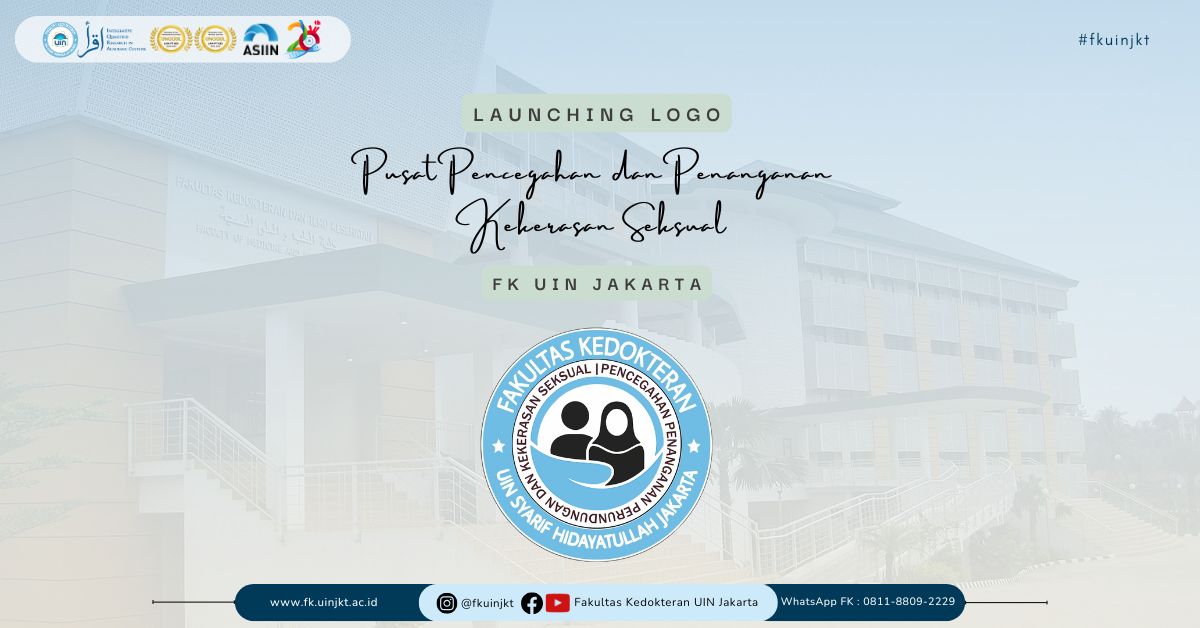
The University's protection efforts were reinforced at faculty level during 2025. On 11 July 2025, the Faculty of Medicine publicly introduced its Counselling and Prevention and Handling of Sexual Violence Unit (P3KS).
The faculty described the unit as part of UIN Jakarta's broader ERTRI protection structure. The unit was responsible for receiving complaints and providing counselling and assistance for academic and non-academic problems, including bullying and sexual violence. Its responsibilities included supporting students and other members of the faculty community, including those undertaking medical education in affiliated clinical settings.
The faculty also publicised the unit through official institutional communication channels. This initiative demonstrates efforts to make reporting and support services more visible and accessible within individual academic units. The July 2025 initiative provides documented evidence of faculty-level implementation of institutional protection and complaint-handling mechanisms.
7. Strengthening Awareness through Student Orientation and Institutional Education
UIN Jakarta also undertook activities to improve awareness of its protection mechanisms. On 19 August 2025, the University organised an online orientation session for incoming students as part of its Academic and Student Culture Introduction Programme (PBAK).
The programme included a presentation by the Head of PSGA on developing a safe campus environment and preventing sexual violence. Students were introduced to PSGA, the ERTRI Task Force, reporting procedures, and available assistance services.
The session was attended by thousands of incoming students through online communication platforms. This educational initiative was significant because awareness of reporting mechanisms is an important part of making institutional safeguards accessible. Students who understand their reporting options and available protection services may be better equipped to seek assistance when experiencing or witnessing misconduct. The University's orientation activities therefore complemented its formal policies by communicating available institutional protections to new members of the academic community.
8. Reinforcing Protection through the 2025 Sexual Violence Prevention and Response Handbook
The University further strengthened institutional guidance during 2025. On 23 April 2025, PSGA organised a Focus Group Discussion involving University leadership, ERTRI representatives, students, and external participants to develop a comprehensive handbook on preventing and handling sexual violence.
The initiative focused on improving institutional understanding, prevention practices, and responses to incidents. Subsequently, on 16 October 2025, PSGA officially launched the University's Sexual Violence Prevention and Response Handbook.
The launch was accompanied by discussions concerning women's empowerment, access, equality, and institutional protection. University leadership emphasised the importance of protecting members of the academic community from violence and discrimination. PSGA representatives also explained that the handbook would support awareness and understanding of reporting procedures among students, lecturers, administrative personnel, and University leadership. The handbook addresses principles relevant to victim protection, including confidentiality, non-discrimination, gender justice, access to reporting mechanisms, and appropriate support services. The development and public launch of the handbook in 2025 provide evidence of efforts to strengthen the practical communication and implementation of institutional protection policies.
9. Contribution to SDG 5: Gender Equality
Syarif Hidayatullah State Islamic University Jakarta has established formal institutional safeguards intended to protect individuals who report sexual violence from threats and disruption to their education or employment. Rector's Decree Number 573 of 2022 explicitly establishes confidentiality, safety, and educational and employment continuity protections for complainants and witnesses.
The University's Integrated Service Unit, PSGA, and ERTRI Task Force provide institutional structures supporting complaint handling and protective assistance. During 2025, these mechanisms were reinforced through faculty-level protection services, student orientation, policy development discussions, and the launch of the University's Sexual Violence Prevention and Response Handbook.
Together, these documented measures demonstrate that UIN Jakarta maintains a formal policy framework protecting individuals who report sexual violence and related discriminatory treatment from threats and disadvantages affecting their continued education or employment. This framework contributes to Sustainable Development Goal 5 by supporting gender-responsive protection, institutional accountability, and safer participation in academic and professional activities. The documented policy is specifically concerned with reporting sexual violence. Further evidence of protections covering complaints about other forms of discrimination would strengthen the University's demonstration of comprehensive anti-retaliation safeguards.
Source :
https://fpsi.uinjkt.ac.id/id/berani-melapor-tanpa-takut-kehilangan-masa-depan-uin-jakarta-perkuat-perlindungan-di-kampus
https://repository.uinjkt.ac.id/dspace/bitstream/123456789/82851/1/11200541000087_ARBA%20SYIFA%20FADLIA%20L.pdf
https://uinjkt.ac.id/id/pbak-2025-uin-jakarta-sosialisasi-program-green-campus-dan-pencegahan-kekerasan-seksual-untuk-mahasiswa-baru
https://fk.uinjkt.ac.id/id/resmi-fk-uin-jakarta-launching-unit-p3ks
https://ppid.uinjkt.ac.id/id/ciptakan-kampus-ramah-psga-uin-jakarta-luncurkan-buku-pedoman-pencegahan-dan-penanganan-kekerasan-seksual-