From Academic Evidence to Public Policy: Providing Expert Advice to Government
Syarif Hidayatullah State Islamic University Jakarta contributes academic expertise, research evidence, policy recommendations, and technical input to government institutions at local and national levels. Through its researchers, research centres, and institutional units, the University supports public decision-making by identifying policy challenges, producing evidence, translating research findings into recommendations, participating in government–university discussions, and providing technical input for public initiatives.
A particularly strong example is the work of the Center for the Study of Islam and Society (PPIM), whose evidence-based policy engagement has connected academic research with ministries responsible for religion, environment, development planning, education, disaster management, energy, and the protection of women and children. These activities demonstrate the role of Syarif Hidayatullah State Islamic University Jakarta as a source of independent academic expertise for government decision-making.
1. Providing Research-Based Recommendations to National Government

During 2025, PPIM strengthened its role in providing evidence and recommendations to national government institutions through the Religious Environmentalism Actions (REACT) Project. At the third REACT Project Board Meeting in December 2025, research findings and lessons from the two-year programme were presented to representatives of Indonesian ministries and government agencies. Government stakeholders included representatives from the Ministry of Environment and Forestry, Ministry of Religious Affairs, Ministry of Women's Empowerment and Child Protection, Ministry of Energy and Mineral Resources, National Development Planning Agency (Bappenas), National Disaster Management Agency (BNPB), and the ministry responsible for education and research.
The University's researchers presented evidence on the effectiveness and limitations of environmental interventions involving religious organisations and communities. Among the recommendations communicated to government stakeholders were the need to strengthen systematic cross-sectoral collaboration, institutionalise environmental programmes within government and religious institutions, improve coordination across ministries, and develop more contextual strategies for communicating ecotheology and environmental knowledge. This process demonstrates the provision of specific research-based expert advice to national government institutions, rather than general public commentary.
2. Research Evidence Informing Government Strategic Planning
The University's contribution extended beyond meetings and research dissemination. The PPIM unit performance report records that ministerial audiences and multistakeholder focus group discussions involved 30 representatives from key ministries and more than 20 organisations, including religious institutions, environmental NGOs, research institutions, and community-based initiatives. More importantly, the report states that research generated by the REACT Project informed the formulation of the Strategic Plan (Renstra) within the Ministry of Religious Affairs.
The same evidence records that REACT research supported the issuance of Minister of Religious Affairs Decree No. 442 of 2025 concerning Guidelines for Environmentally Friendly Pesantren. This demonstrates a tangible pathway:
academic research → evidence generation → government engagement → policy recommendation → strategic planning and government guidance.
The role of the University was therefore not limited to implementing sustainability programmes independently. Its research findings were brought into national policy processes to help government institutions strengthen environmental programmes and future planning.
3. Developing Policy Briefs for Government Decision-Making
Syarif Hidayatullah State Islamic University Jakarta also translates research into concise policy recommendations intended for government decision-makers. Through PPIM, research findings have been converted into policy briefs covering environmental sustainability, Green Islam, community environmental innovation, religious organisations, and climate-change mitigation. One significant example is the policy brief “Integrasi Green Islam dalam Arah Kebijakan Kemenag”, which specifically addresses the integration of environmental priorities into the policy direction of Indonesia's Ministry of Religious Affairs.
The recommendation proposed that Green Islam and environmental sustainability become part of the Ministry's strategic agenda and planning framework. Another policy brief addresses Muslim environmental innovation and its potential contribution to climate-change mitigation. These publications demonstrate an institutional process through which academic evidence is converted into practical recommendations that policymakers can review and incorporate into programmes and strategies.
4. Providing Evidence for Child-Friendly Pesantren Policy

Another significant example of expert advice is PPIM's research on Child-Friendly Islamic Boarding Schools (Pesantren Ramah Anak). The initiative was connected with a cross-ministerial policy involving the Ministry of Women's Empowerment and Child Protection, Ministry of Religious Affairs, and support from Bappenas. PPIM conducted extensive quantitative and qualitative research to assess how the policy was being implemented.
The research initially surveyed 90 Islamic boarding schools across 34 provinces, followed by qualitative research involving 170 informants from 17 pesantren and 12 related institutions across 13 provinces. Researchers identified challenges including limited understanding of sexual violence and reproductive health, inadequate facilities, weak reporting mechanisms, and gaps in child-protection systems.
At a national dissemination forum in June 2025, PPIM presented these findings to participants including officials from the Ministry of Religious Affairs, pesantren administrators, researchers, and other stakeholders. The evidence was intended to strengthen implementation of the government's Child-Friendly Pesantren initiative.
5. Providing Technical Input to Local Government
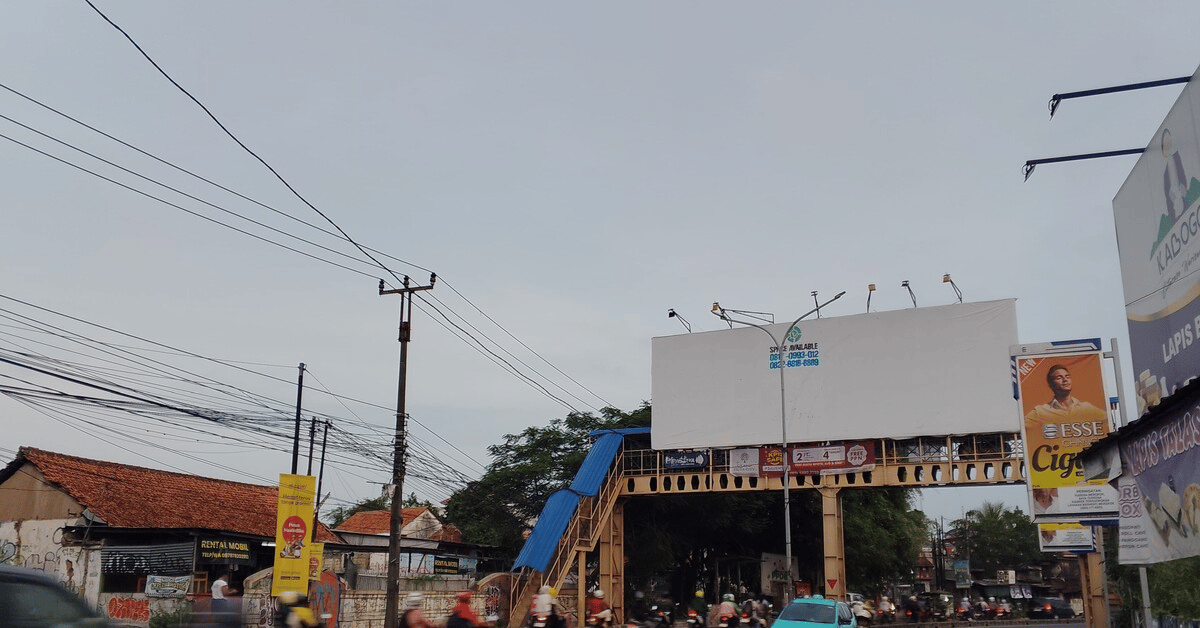
The University's advisory contribution also extends to local government. In 2025, Syarif Hidayatullah State Islamic University Jakarta worked with the Tangerang Selatan City Government concerning plans to relocate a pedestrian bridge near the University's main campus. The University was invited by the local government to participate in discussions involving city-government officials, transportation authorities, and the private-sector operator.
As part of this process, Syarif Hidayatullah State Islamic University Jakarta prepared an initial conceptual design as technical input for the proposed relocation. The proposal considered accessibility, safety, functionality, and the mobility needs of both the academic community and the wider public. The Tangerang Selatan City Government subsequently committed to supporting the permitting process and further coordination required for implementation. This provides a concrete example of the University supplying technical and planning input to local government for a public-infrastructure initiative.
6. University–Local Government Dialogue on Community Challenges

The University's engagement with the Tangerang Selatan City Government also includes wider discussion of local development challenges. LP2M and the Center for Community Service met with officials from the Tangerang Selatan development-planning authorities to discuss issues including environmental cleanliness, poverty, local development indicators, and the targeting of community-service programmes. The discussions sought to connect university expertise, research, lecturers, and student community-service programmes with problems identified by local government.
The local government agreed to provide relevant data, while both institutions discussed how university programmes could be better targeted according to community needs. Although this example is primarily a collaborative planning mechanism rather than a formal policy instrument, it demonstrates an ongoing framework through which university expertise can respond to local-government development priorities.
7. Evidence-Based Policy Advocacy as an Institutional Function
Providing expert advice is also embedded within PPIM's institutional approach. Its policy-advocacy activities are explicitly designed to bridge research findings with public-policy decision-making. The approach aims to ensure that academic research does not end with scholarly publication, but is translated into recommendations relevant to legislation, government programmes, and policy evaluation.
Mechanisms include:
-
policy briefs;
-
government audiences;
-
Project Board Meetings;
-
research dissemination;
-
multistakeholder discussions; and
-
direct presentation of evidence to policymakers.
This institutional model strengthens the University's capacity to serve as an independent evidence provider to government.
8. Contribution to SDG 16: Peace, Justice and Strong Institutions
Through its research centres and institutional partnerships, Syarif Hidayatullah State Islamic University Jakarta provides government institutions with evidence, policy recommendations, technical input, and expert analysis. At the national level, research conducted through PPIM and REACT has contributed evidence and recommendations to ministries and national agencies and has informed policy discussions concerning environmental sustainability, religious institutions, education, climate action, and child protection.
The documented contribution of REACT research to the Ministry of Religious Affairs Strategic Plan and to the development of guidance for environmentally friendly pesantren demonstrates a particularly strong connection between academic expertise and national government policy. At the local level, the University's provision of conceptual planning input to the Tangerang Selatan City Government demonstrates how university expertise can also contribute to practical public-infrastructure decision-making.
These activities demonstrate that Syarif Hidayatullah State Islamic University Jakarta provides specific expert advice, research evidence, policy guidance, and technical input to government institutions to support evidence-based public decision-making.
They therefore provide substantive evidence for SDG Indicator 16.3.1: Provide Expert Advice to Government.
Source :
https://ppimcensis.or.id/profil/policy-advokasi/
https://ppimcensis.or.id/2025/12/18/ppim-gelar-project-board-meeting-ke-3-paparkan-capaian-dan-pelajaran-penting-proyek-react/
https://ppimcensis.or.id/2025/12/18/pendekatan-agama-dan-sains-ternyata-kunci-efektif-atasi-krisis-lingkungan-temuan-proyek-react-ppim-uin-jakarta-dibuktikan-dengan-jangkauan-sangat-luas-di-masyarakat/
https://ppimcensis.or.id/books/integrasi-green-islam-dalam-arah-kebijakan-kemenag/
https://ppimcensis.or.id/2025/06/18/ppim-uin-jakarta-paparkan-hasil-riset-soal-pesantren-ramah-anak/
https://uinjkt.ac.id/id/uin-jakarta-pemkot-tangsel-dan-vendor-jpo-kaji-relokasi-jpo-depan-kampus