
Work directly to maintain and extend existing ecosystems and their biodiversity
1. Exploring the Biodiversity of Pari Island: FST Syarif Hidayatullah State Islamic University Biology Students Successfully Conduct Animal Systematics Field Trip
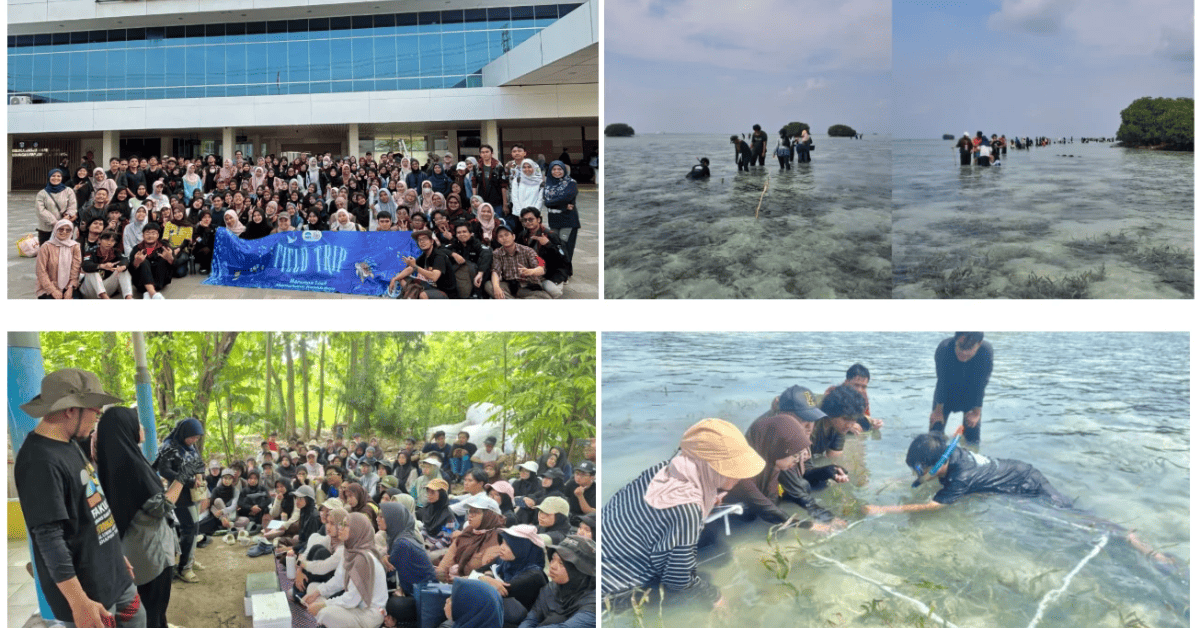
In an effort to align classroom theories with environmental realities, the Biology Study Program of the Faculty of Science and Technology (FST) at Syarif Hidayatullah State Islamic University successfully organized a field trip for the Animal Systematics course. This off-campus academic expedition took place over three days, from May 8 to 10, 2026, centered around the conservation and coastal areas of Pari Island, Thousand Islands. The field trip was comprehensively designed to provide students with hands-on experience in recognizing, classifying, and identifying faunal diversity directly within their natural habitats.
The first day of this scientific adventure commenced with an intensive focus on the Pisces (fish) class. Students received rigorous briefing and hands-on practice regarding morphometric and meristic fish identification techniques. This session was mentored directly by Ashma Hanifa, M.Si., an expert practitioner and the Founder of the Elasmobranchi Project Indonesia. Under her professional guidance, students learned to measure fish body proportions (morphometrics) and precisely count specific anatomical features such as fin rays and scales (meristics) to accurately determine fish species. The practical dynamic then shifted to the terrestrial and coastal zones, where students observed the Mammalia and Aves (birds) classes by exploring mangrove vegetation using binocular telescopes.
On the second day, the research focus transitioned toward the quantitative analysis of marine and terrestrial ecosystem biodiversity. The morning session began with marine biota observation utilizing the Line Intercept Transect (LIT) method. Equipped with snorkeling gear and underwater writing boards, students deployed a 50-meter transect line to meticulously record live coral cover, dead coral, algae, and associated marine organisms in Pari Island's waters. Towards the afternoon, the activity moved landward to examine soil macrofauna through the hand-sorting method. By carefully excavating designated soil plots, students successfully identified various types of worms, soil insects, and other arthropods, gaining a profound understanding of the crucial role macrofauna plays in maintaining soil fertility and ecosystem nutrient cycles.
2. BIOSVER
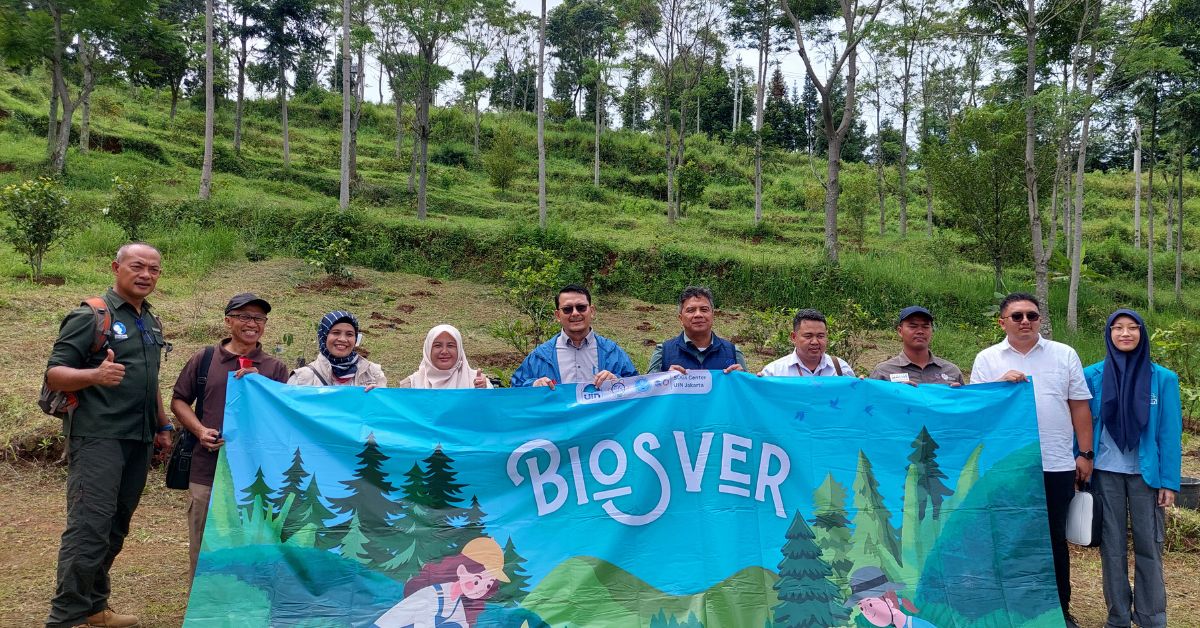
In 2025, the Biology On Society for Environment Restoration (BIOSVER) program was successfully held under the theme “Green Future: Steps Towards Conservation and Sustainable Development,” promoting environmental awareness and encouraging collective action for conservation. A key highlight was the signing of a Declaration of Support for the Implementation of the Sustainable Development Goals (SDGs) by the SDGs Center of Syarif Hidayatullah State Islamic University, the Faculty of Science and Technology, and Resort PTN Region VI.
3. The Studium Generale of the Sociology Study Program
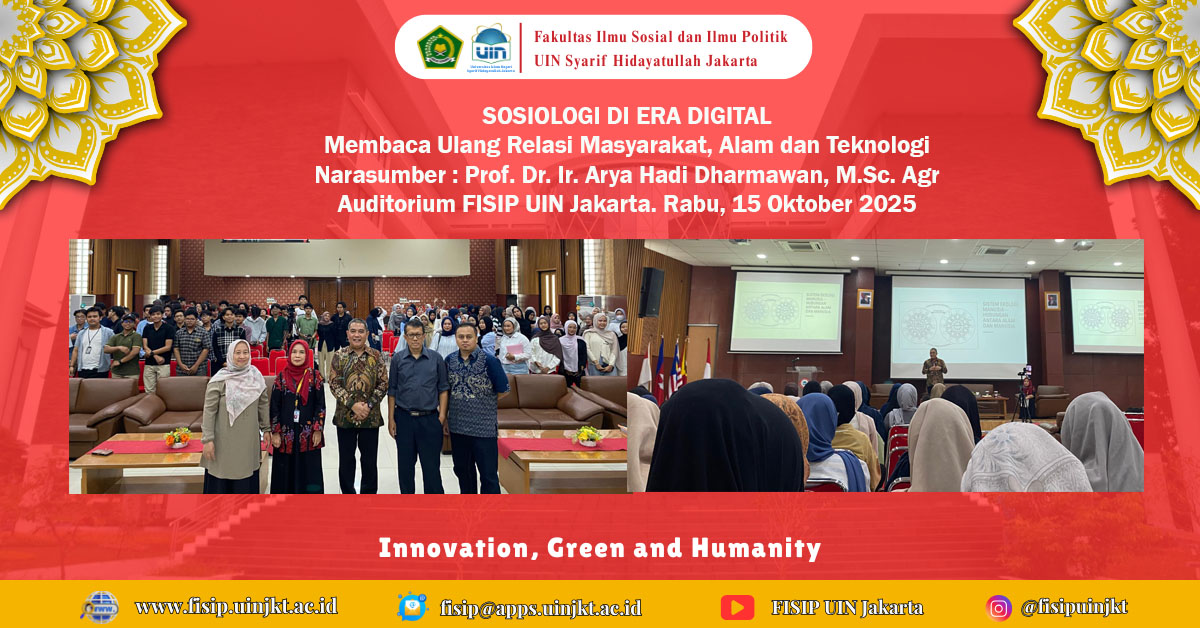
The Studium Generale of the Sociology Study Program, Faculty of Social and Political Sciences (FISIP) Syarif Hidayatullah State Islamic University, is a strategic public lecture that reexamines the role of sociology amidst technological disruption, under the theme “Sociology in the Digital Age: Rereading the Relationship between Society, Nature, and Technology.” It featured Prof. Dr. Ir. Arya Hadi Dharmawan, M.Sc.Agr. and involved lecturers and new Sociology students of the Class of 2025. The documentation shows the event poster, a group photo with the audience, and the lecture in progress with presentation slides.
4. Syarif Hidayatullah State Islamic University Biology Departement and Local Community Join Forces for Mangrove Conservation on Pari Island
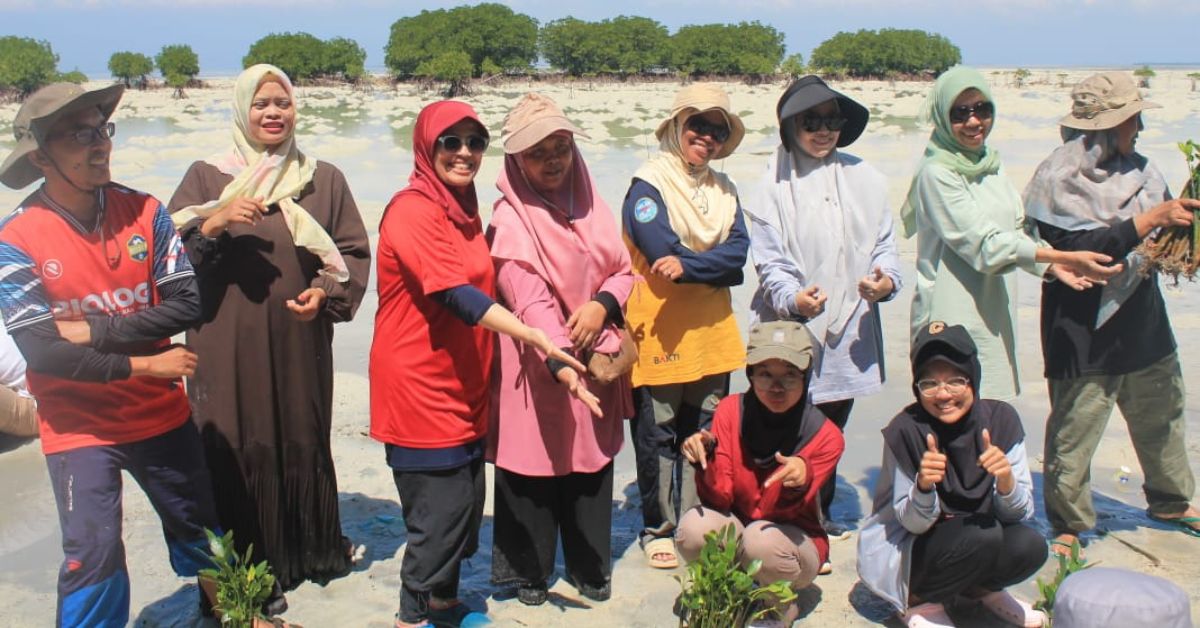
As part of a field trip activity, the Biology Department of FST Syarif Hidayatullah State Islamic University conducted a Community Service Project by planting 1,500 mangrove propagules at Bintang Beach, Pari Island, on Saturday, May 17, 2025. The seedlings were sourced from environmentally conscious local residents, symbolizing a collaborative effort between academic institutions and local communities in protecting coastal ecosystems. The photograph shows participants planting mangrove propagules in the tidal flat.