What Makes Universities Functional
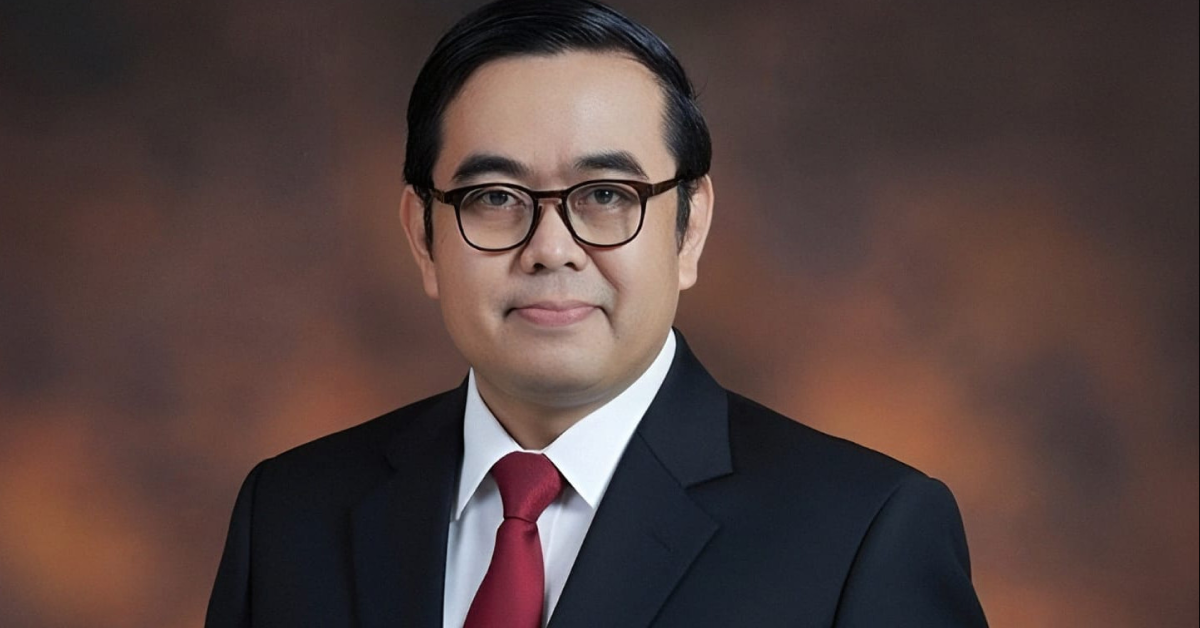
Prof. Dr. Ahmad Tholabi S.Ag., S.H., M.H., M.A.
Professor at Syarif Hidayatullah State Islamic University Jakarta
Member of the National Council for Higher Education (DPT)
Over the past two decades, access to higher education has improved significantly. Universities now sit in nearly every regency, as gross enrollment ratios have climbed. Yet, as UNESCO (2023) notes, expansion without quality and measurable impact risks eroding academic standards.
The development agenda for higher education must therefore shift from growing institutional numbers to cultivating a healthy, collaborative ecosystem. In this landscape, state universities, private institutions, ministry-affiliated colleges (PTKL), and foreign universities (PTLN) are not competitors but complementary pillars. Industry, local government, professional associations, and civil society form integral parts of this ecosystem.
This structure is the essence of a truly Functional Campus (Kampus Berdampak). It is an idea built upon four central orientations: relevance to societal and industrial needs, resilience amid global disruption, research impact that produces applicable benefits, and responsibility as academic institutions accountable to the public.
Effective Governance
In numerous Higher Education Council discussions, a recurring concern emerges with the loss of scholarly culture. Many universities are trapped in a rat race of chasing metrics of citation counts and rankings.
Clark Kerr (1963) famously envisioned the university as a community of scholars: a society united by the search for enlightenment, not merely a graduate industry. Therefore, restoring an academic culture grounded in integrity, collaboration, and academic freedom is time-sensitive.
The Indonesian Higher Education Summit (KPPTI) 2025 places research at the core of its theme, “Excellence in Scientific Culture: Restoring the Dignity of Academic and Research Institutions.” The agenda calls for a shift from statistical impact to societal impact. As a result, the research actually transforms communities rather than merely accumulating citations.
KPPTI stands as a synergy hub across sectors where regulators, scholars, industry, and society converge to design a roadmap for educational transformation. Through plenary sessions, leadership clinics, and networking forums, the conference aims to chart Indonesia’s higher education trajectory.
This effort aligns with the Indonesia Emas 2045, which places superior human capital at the forefront of national strategy. The 2025–2029 Strategic Plan of the Ministry of Education reinforces mid-term goals by prioritizing graduate employability, applied research, and internationalization.
In addition, policies such as Merdeka Belajar–Kampus Merdeka (MBKM) and Indikator Kinerja Utama (IKU) mark the initial milestones, but they remain insufficient without strong collaboration across higher-education pathways. Accordingly, this conference calls for integration among state, private, ministry-affiliated, and international institutions. Equity and inter-institutional networking form the foundation of this functional ecosystem.
Knowledge Diplomacy
The Functional Campuses cannot detach themselves from ethics and social responsibility. Knowledge without values is dangerous, as Albert Einstein warned in 1954: “Science without religion is lame; religion without science is blind.” Building an impactful academic environment therefore requires restoring the balance between intellectual excellence and social morality.
Across the world, universities propel social change. Oxford established the Oxford Social Impact Lab, while the University of Tokyo developed its Campus SDGs Hub. Indonesia must follow a similar path by positioning its universities as actors in sustainable development.
Law Number 12/2012 mandates higher education to advance civilization through knowledge and technology. Today, that mandate demands real execution with active participation in climate mitigation, renewable energy, digital public services, and community empowerment.
Consequently, universities must become agents of knowledge diplomacy. Unfortunately, Indonesia’s admission of international students remains far below neighbor countries like Malaysia, which surpasses eight percent of total enrollments.
Thus, internationalization is more than prestige; it is a vehicle of national soft power. KPPTI 2025 elevates this idea under the theme “Global Knowledge, Local Impact,” emphasizing academic diplomacy as a strategic national instrument. Soon, faculty and student exchanges, cross-border research, and academic diaspora engagement will help elevate Indonesia’s scholarly reputation globally.
A Shared Mission for the Future
Ultimately, the success of educational transformation depends not on the abundance of regulations but on our willingness to collaborate and share. KPPTI 2025 seeks to unify the higher-education ecosystem, whether large or small, public or private, under one collective spirit.
As John Dewey (1916) reminds us, “Education is not preparation for life; education is life itself.” Higher education must transcend technocratic function and pulse as the living heartbeat of the nation as a source of knowledge, freedom, and hope for the future of Indonesia.
This article was originally published in detik.com on Wednesday (19/11/2025).