
Waste tracking Measure the amount of waste generated and recycled across the university
1. Plastic Waste Volume
Decreased from 0.1143 tons/month to an average of 0.058 tons/month (49.26% reduction).
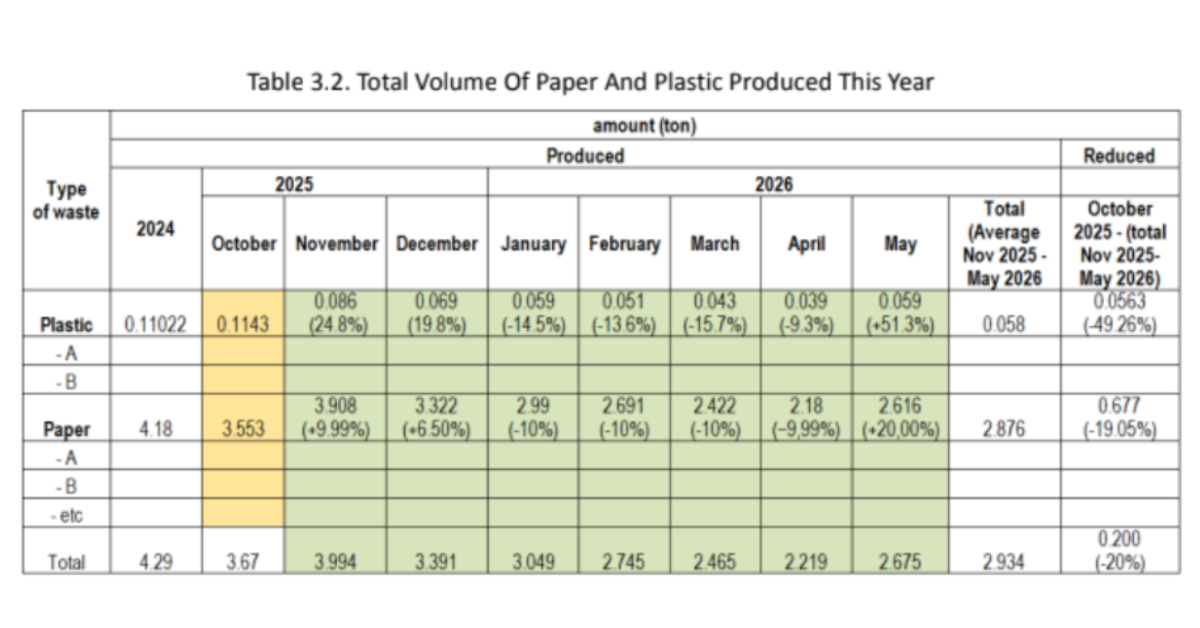
Total Paper and Plastic Waste Volume This Year (tons), demonstrating consistent monthly reductions.
2. Paper Waste Volume
Decreased from 3.553 tons/month to an average of 2.876 tons/month (19.05% reduction).
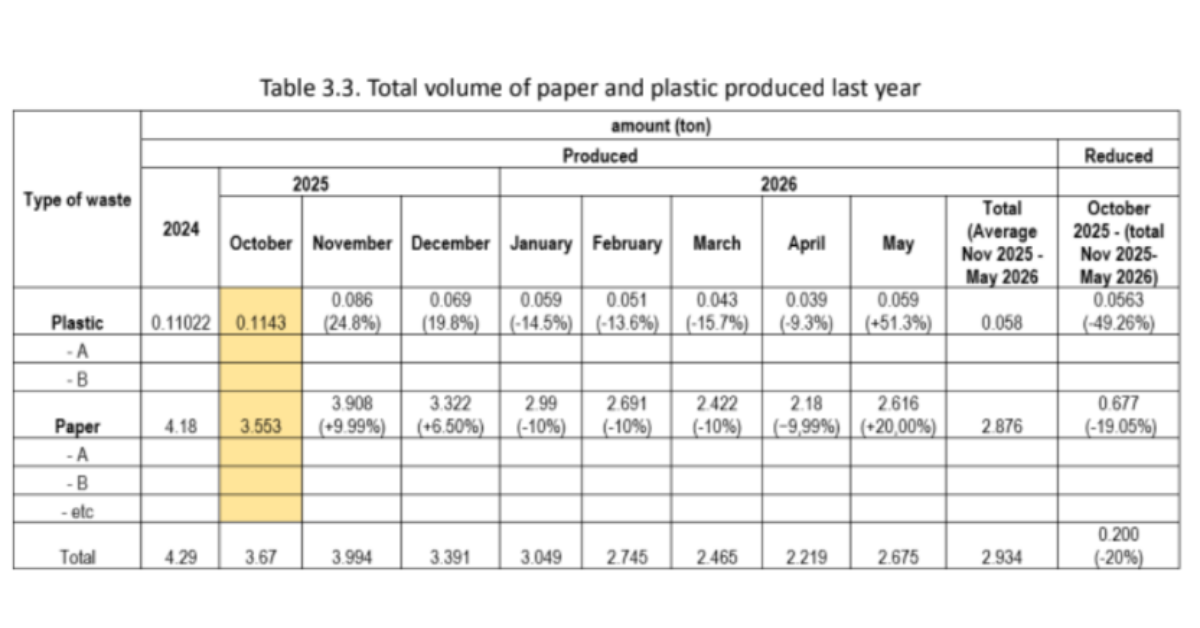
Total Paper and Plastic Waste Volume Last Year (tons), serving as the baseline reference data.
3. Total Paper & Plastic Waste Volume
Decreased from 3.67 tons/month to an average of 2.934 tons/month (~20% reduction).
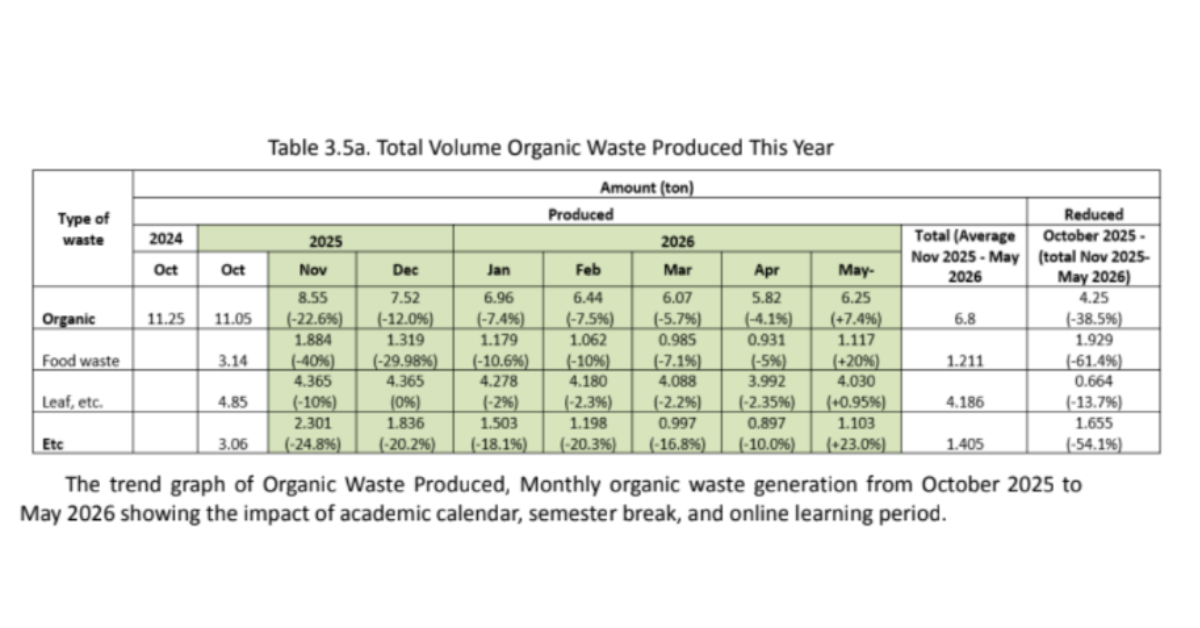
Total Organic Waste Volume Generated This Year (tons) processed and managed on campus.
4. Total Organic Waste Generated
Dropped from 11.05 tons/month (Oct 2025 baseline) to an average of 6.80 tons/month (38.5% reduction), reaching a low of 5.82 tons in April 2026.
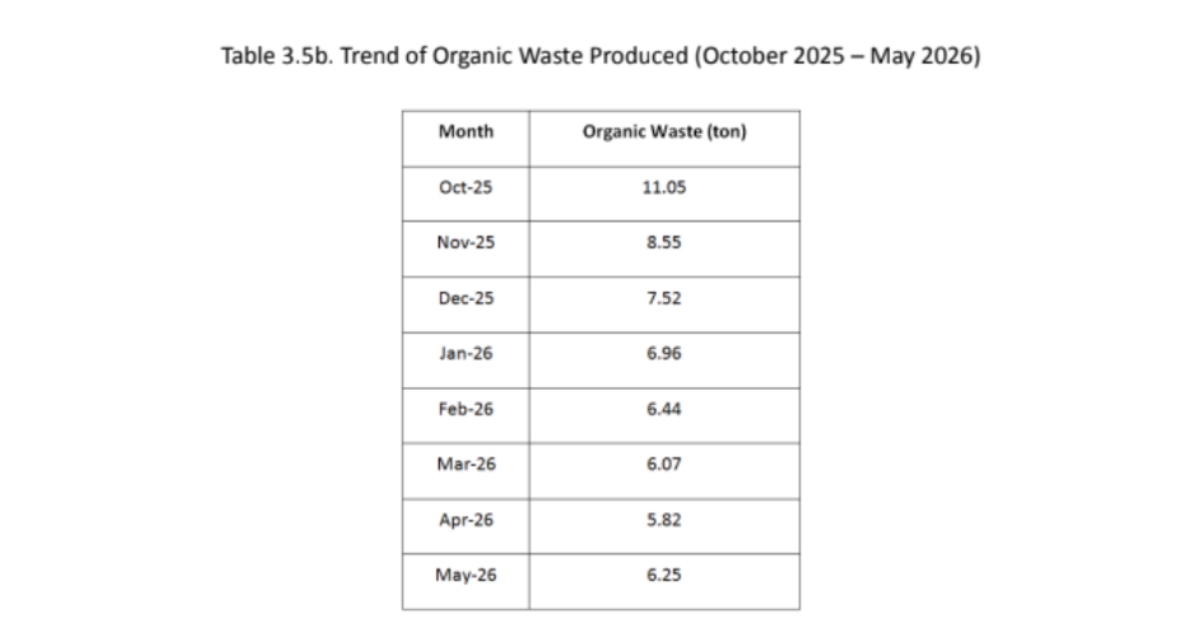
Organic Waste Trend (October 2025–May 2026), highlighting the month-by-month reduction pattern.
5. Baseline Organic Waste Composition (Oct 2025)
Leaves and garden waste: 4.85 tons (43.9%), food waste: 3.14 tons (28.4%), and other organic waste: 3.06 tons (27.7%).
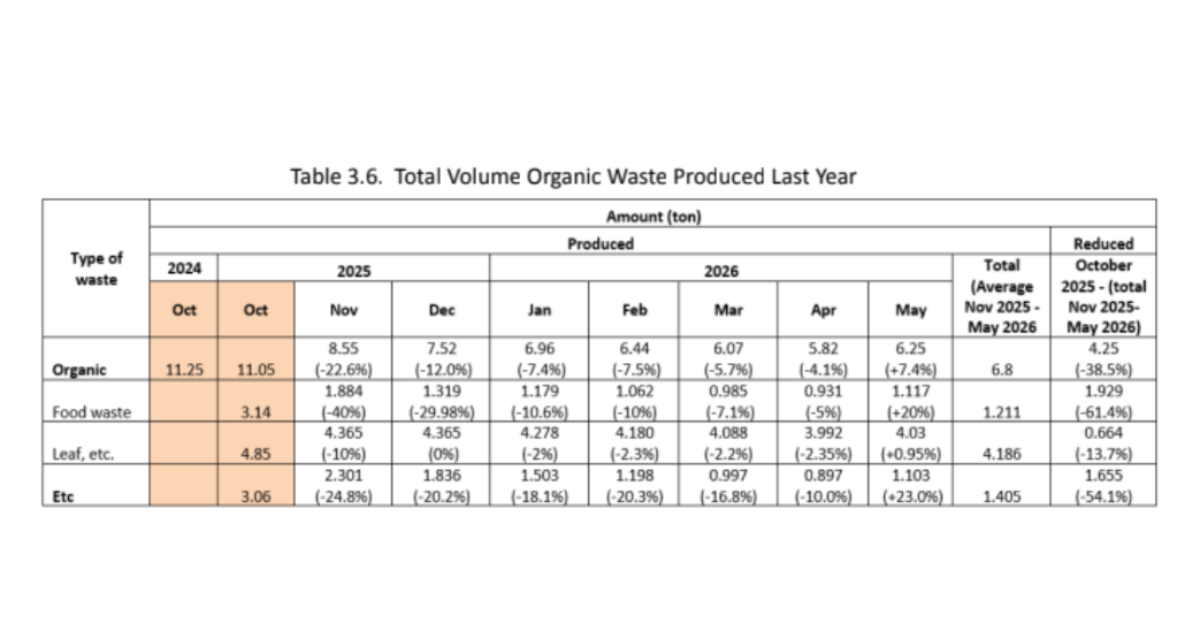
Total Organic Waste Volume Last Year (tons), breaking down baseline components (food waste, garden waste, and other organics).
Syarif Hidayatullah State Islamic University continues to reinforce its commitment as a Green Campus through an integrated waste reduction and management program. The initiative aims to suppress waste generation directly at the source, optimize campus recycling workflows, and foster eco-friendly habits among students, faculty, and administrative staff.
Monitoring and active waste management were conducted from November 2025 through May 2026, using October 2025 data as the baseline reference. Key strategic actions
included:
1. Single-Use Plastic Reduction: Enforcing plastic reduction policies, deploying waste sorting facilities across campus units/faculties, expanding recycling initiatives, and promoting reusable water bottles.
2. Digitalization (Paperless Policy): Implementing digital administrative workflows, online academic services, electronic correspondence, and Computer-Based Testing (CBT) across multiple faculties.
3. Integrated Organic Waste Management: Processing organic waste directly on-site at the campus Integrated Waste Management Facility (TPSTM) through composting operations.