
UIN Jakarta Targets the 1.4 Trillion US Dollar Global Halal Market and Migrant Worker Rights Defenses During Strategic Academic Summits With the Guangdong Institute
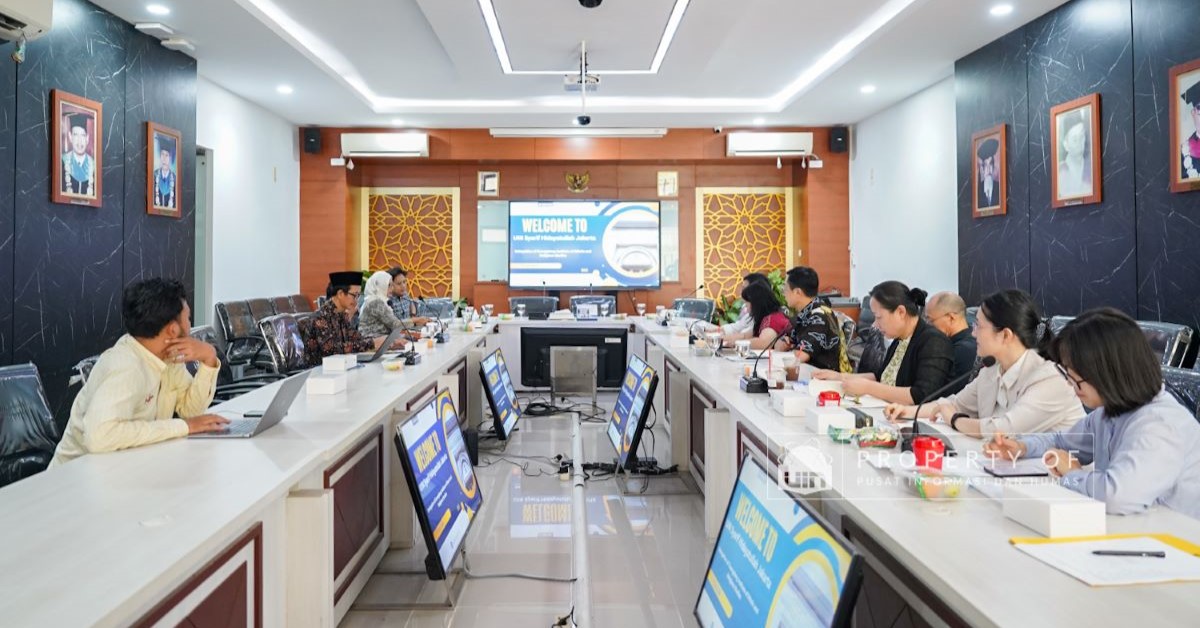
JAKARTA, UIN Online News – Solidifying its role as a premier soft power research hub UIN Syarif Hidayatullah Jakarta has officially opened a bilateral research pipeline with China’s prominent Guangdong Institute of Ethnic and Religious Studies. Executed on Friday July 17 2026 the high-level academic summit targeted deep cross-border research collaborations in global halal supply chain logistics Southeast Asian Islamic heritage preservation and legal protections for Indonesian domestic workers across Hong Kong Guangdong and Macau.
The institutional assembly was led by LP2M Chair Professor Amelia Fauzia alongside Vice Rector Professor Ali Munhanif FISIP Vice Dean Dr. Zaki Mubarak and Riyadh Cultural Attaché Professor Badrus Sholeh together with a seven-member delegation from the Guangdong Institute.
Opening the proceedings Professor Amelia Fauzia emphasized UIN Jakarta's multi-disciplinary research assets ranging from Islamic economics and green theology to gender and public policy. The visiting Guangdong scholars expressed profound admiration for UIN Jakarta's rich cultural heritage positioning this initial encounter as the baseline for long-term institutional exchanges.
A central priority of the bilateral dialogue focused on unlocking the massive commercial potential of the global halal market currently valued at over 1.4 trillion US dollars. As China's manufacturing powerhouses seek to meet international halal compliance standards UIN Jakarta positions itself as the primary regulatory and scientific authority guiding bilateral trade.
The two delegations formally mapped out five high-impact joint research streams:
-
Halal Industry Roadmap 2026: Conducting comparative regulatory analyses on halal product administrative mechanisms specifically evaluating coordination frameworks between BPJPH and MUI to streamline global trade across the 1.4 trillion dollar market.
-
Bilateral Halal Trade and Logistics: Deconstructing regulatory barriers and export-import supply chains for halal-certified goods passing between Indonesia and China.
-
Indonesian Migrant Worker Welfare: Investigating the socio-religious conditions and legal rights protections for Muslim domestic workers stationed across Hong Kong Guangdong and Macau.
-
Socio-Religious Demographics: Mapping the demographic distribution geographic influences and social welfare contributions of major Indonesian Islamic civil organizations.
-
Chinese-Indonesian Multiculturalism: Examining social integration models religious practices and traditional heritage preservation of the Chinese community within modern Indonesian society.
By addressing both multi-trillion dollar economic frameworks and humanitarian protections UIN Jakarta demonstrates that academic partnerships with Chinese state institutes can move far beyond conventional infrastructure projects. The joint initiative cements UIN Jakarta's position as a critical academic bridge protecting citizen welfare abroad while guiding global halal trade standards across the Asian continent.