
UIN Jakarta Rector Backs President Prabowo’s Radical Education Reform, Proposing a "Three Pillars" Accountability Synergy
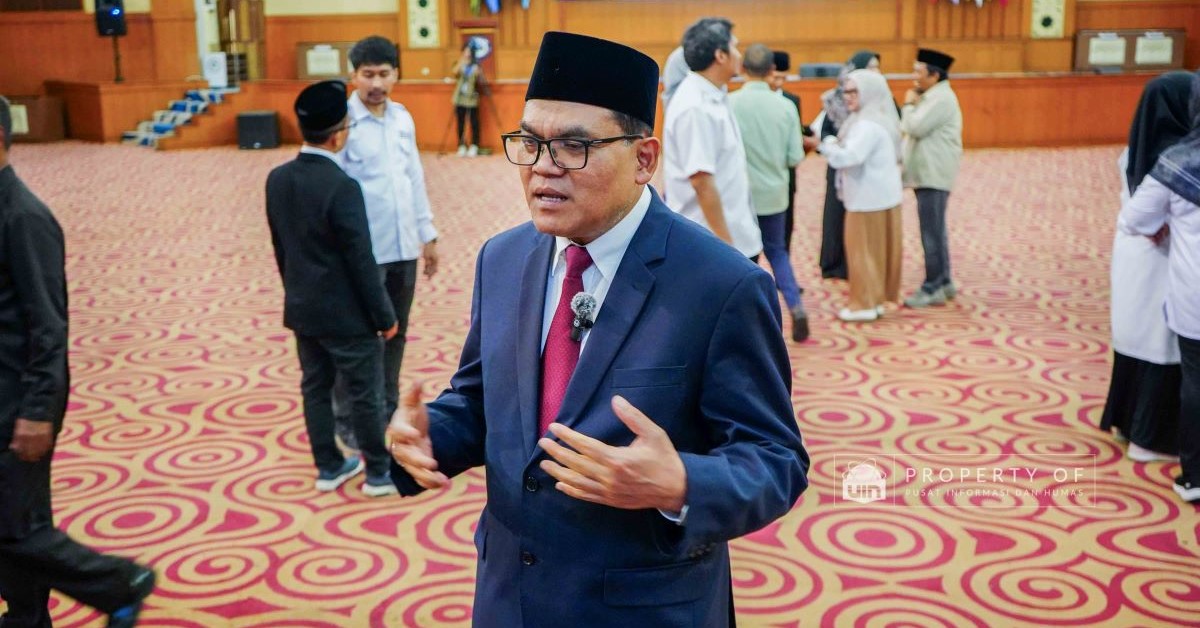
JAKARTA, UIN Online News – The Rector of UIN Syarif Hidayatullah Jakarta, Prof. Asep Saepudin Jahar, highly commended the transformative education affirmative policies introduced by President Prabowo Subianto. The reform focuses on expanding the Integrated Public Schools (Sekolah Rakyat Terintegrasi) program and providing boarding facilities for families living in extreme poverty.
Rector Asep Jahar assessed that the transformative policies delivered by President Prabowo Subianto during his inspection of the 17 Tabanan Public Junior High School (SRMP) in Bali, on Sunday, June 7, 2026, mark a radical repositioning in the national social justice agenda via educational pathways.
"The government's affirmative actions—ranging from the expansion of Integrated Public Schools, dormitories for families in extreme poverty, to the debureaucratization of school renovation funds represent a bold intervention. This requires an objective analysis, deep reflection, and accountability-based solutions from the academic world," he stated to the press on Tuesday, June 9, 2026.
As a university executive, Prof. Asep Jahar views this momentum not merely as an object of academic study, but as a direct call for higher education institutions to step up as strategic partners to the government.
"The existence of boarding-based schools acts as a powerful social elevator capable of directly breaking the intergenerational poverty trap. However, the government must remain vigilant so that this massive program does not inadvertently trigger social segregation or create a new social stigma labeling them as schools for the marginalized," he cautioned.
"The quality of graduates from these public schools must be thoroughly standardized using a high-level science and technology curriculum. This ensures their alumni possess equal competitiveness when competing in the global job market or passing highly selective state university entrance screenings," he asserted.
From a public management perspective, Rector Asep Jahar noted that the President's announcement to scale up the school renovation target from 17,000 schools to 70,000 schools this fiscal year—by transferring cash directly to the bank accounts of school principals and school committees is a radical leap in debureaucratization.
This self-management model successfully cuts out regional red tape and extortion risks. However, the Rector warned that delegating budgeting authority on such a massive scale (aiming for an accumulative target of 300,000 schools within five years) introduces new operational vulnerabilities.
"School principals and local committees in remote regions often have limited literacy regarding formal accounting and state procurement regulations. Without proper assistance, this extreme decentralization poses a high risk of shifting the locus of embezzlement from high-level bureaucracy down to micro-corruption at the individual school unit level. This must be anticipated," he explained.
Deploying the Integrated Three Pillars Framework
Based on these challenges, Rector Asep Jahar invited academic elements, the central government, and regional administrations to establish an Integrated Three Pillars Framework (Sinergi Tri Dharma Terintegrasi) through concrete actions, which he broke down into three strategic interventions:
1. Financial Accountability Assistance
Universities must open their doors wide to the Ministry of Education and the Ministry of Social Affairs to deploy expert academic teams. These teams will provide direct mentorship, draft simplified digital financial software, and train school committees to deliver transparent financial reporting for the directly managed funds.
2. Curriculum Partnership
Higher education institutions will actively guide curriculum development in these public schools. The academic focus should expand beyond mental resilience, marrying character building with modern industrial readiness through the transfer of digital technology expertise and applied science learning.
3. Continuous Impact Evaluation Research
Academia will execute periodic, longitudinal studies to evaluate the long-term socio-economic impact yielding from these public school graduates. This data ensure that the government's flagship project operates on a solid framework of evidence-based policy for long-term national planning.
"A just synergy cannot be realized if policy idealism runs isolated without the support of scientific validation and rigid oversight systems. For this reason, the academic sector, central government, and regional offices must collectively construct this Integrated Three Pillars framework through immediate, practical actions," he concluded.