
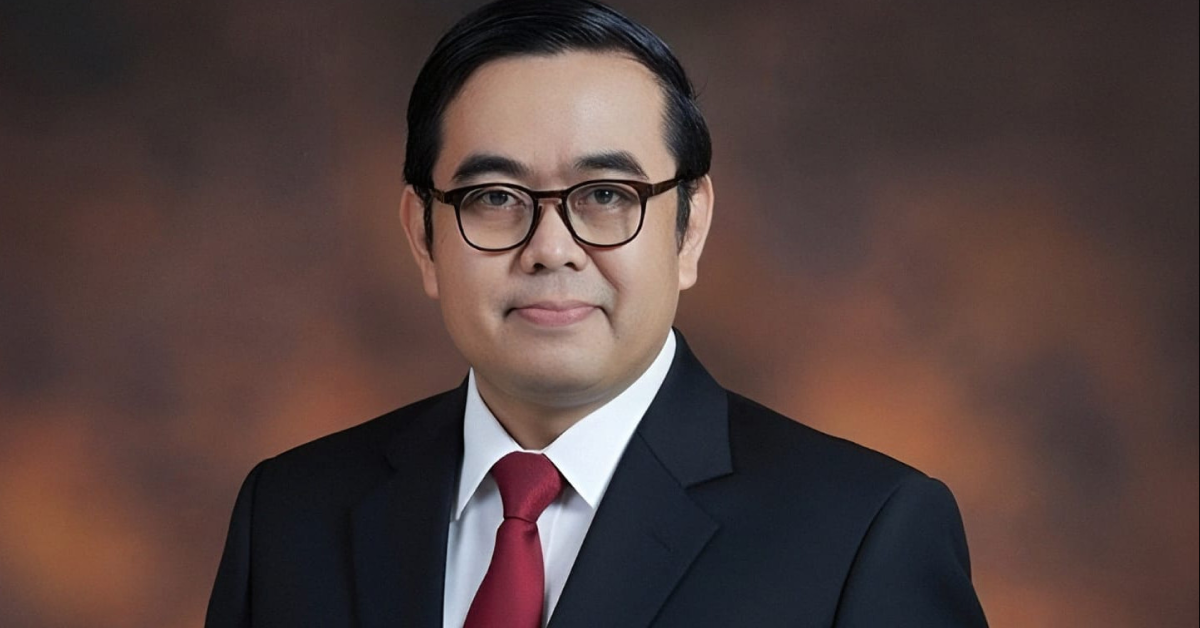
UIN Jakarta Professor: Presidential Advisory Council Strengthens Quality of State Policy Recommendations


Ciputat, UIN News Online - Professor at UIN Syarif Hidayatullah Jakarta, Prof. Dr. Ahmad Tholabi Kharlie, S.Ag., S.H., M.A., M.H., stated that the Presidential Advisory Council (Wantimpres) plays a strategic role in strengthening the quality of state policy decision-making. He conveyed this in response to the inauguration of 26 Wantimpres members by President Prabowo Subianto, led by Pratikno as chairman and Hatta Rajasa as vice chairman, on Friday (02/10/2026).
The inauguration serves as momentum to bolster strategic counsel in state governance. Prof. Tholabi explained that the existence of Wantimpres possesses a strong constitutional foundation as mandated by Article 16 of the 1945 Constitution of the Republic of Indonesia (UUD 1945), which tasks the council with offering advice and considerations to the President.
According to Prof. Tholabi, in a presidential system, broad executive authority requires a decision-making process backed by thorough consideration, wide perspectives, and critical insight. Thus, Wantimpres holds strategic space to fortify the dimension of wisdom within national leadership.
“In a presidential system, the President wields significant executive authority. Therefore, the quality of decision-making is heavily determined by the maturity of consideration, breadth of perspective, and courage to present critical views. Wantimpres holds strategic space to fortify the dimension of wisdom within national leadership,” he noted.
He assessed that the diverse backgrounds of Wantimpres members—ranging from academics, religious scholars, political figures, and economic practitioners to professionals—can enrich the formulation of state policy. This diversity, in his view, must be translated into intellectual and moral strength to address national challenges comprehensively.
“The diverse backgrounds of Wantimpres members will gain meaningful significance if translated into substantive dialogue and high-quality exchanges of ideas. The President requires clear, expertise-based advice that remains firmly oriented toward public interest,” he explained.
Beyond diversity, Prof. Tholabi highlighted the paramount importance of intellectual independence and moral integrity for Wantimpres members. In his view, a presidential advisor bears the responsibility of offering objective perspectives, even when those views diverge from the government's policy inclinations.
“Good advisors are not those who always validate their leader's decisions. Good advisors are those possessing the moral courage to speak truth, present alternatives, and caution the leader when a policy risks straying from the public interest,” he asserted.
Furthermore, Prof. Tholabi observed that Wantimpres needs to contribute directly to addressing key national strategic agendas, such as legal reform, democratic consolidation, economic equity, educational transformation, technological development, and national unity. According to him, the true effectiveness of Wantimpres should be measured by the quality of its recommendations and its concrete contribution to public policy.
“The benchmark of success for Wantimpres lies not in how close its members are to the center of power, but in how meaningful their advice is for national progress. Their presence must enrich the decision-making process and reinforce policy orientation toward social justice and public welfare,” he elaborated.
In the context of constitutional democracy, Prof. Tholabi reminded that presidential power must always operate within the boundaries of the constitution, the rule of law, and democratic accountability principles. He views Wantimpres as a strategic reflection space within the presidency while fully respecting the authority of other state institutions and democratic oversight mechanisms.
Prof. Tholabi expressed hope that the inauguration of Wantimpres will mark the beginning of a strengthened tradition of high-integrity advisory governance. In his view, the existence of presidential advisors must be channeled to align experience, ideas, and expertise with moral integrity, ensuring state policy remains firmly rooted in constitutional ideals and the public good.
“This nation requires leadership that is both strong and receptive to counsel. The greatness of a leader is reflected not only in the ability to make decisions, but also in the willingness to listen, weigh, and accept differing views for the greater good of the nation and state,” he concluded.