
UIN Jakarta Policy Experts Warn of Institutional Risk as State Education Funds Shift to National Nutrition Agency
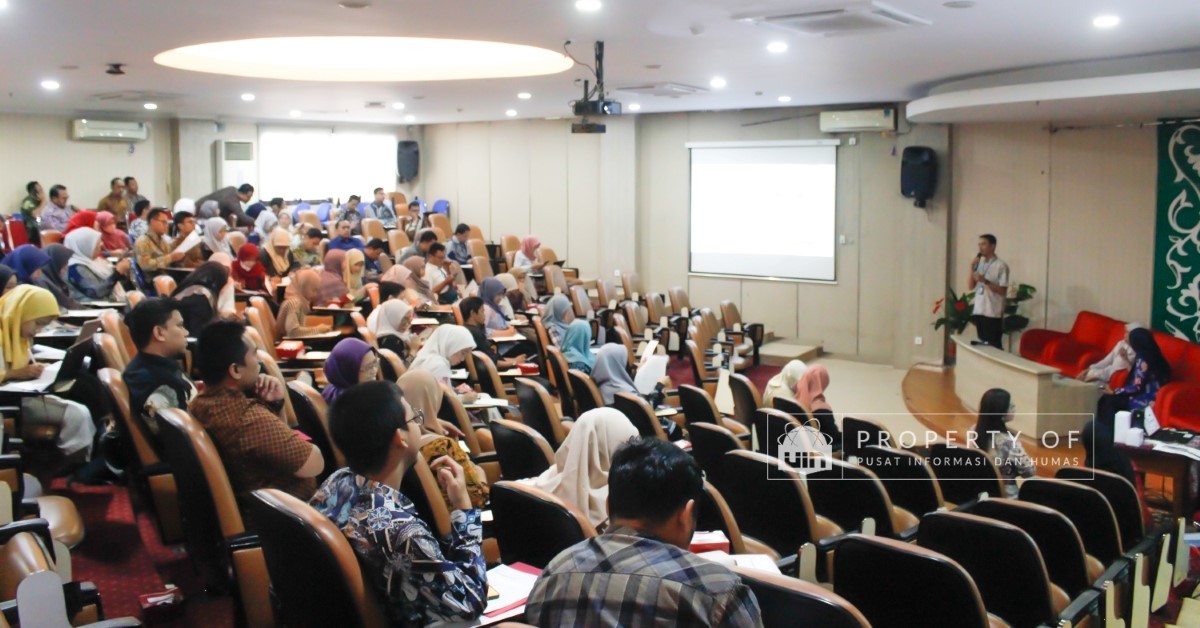
JAKARTA, UIN Online News– A panel of prominent legal counsels, political scientists, and civil society leaders issued critical assessments regarding the federal appropriation of the national education budget to fund the state’s massive Free Nutritious Meal (MBG) program. Staged during the educational symposium titled “Dissecting the Allocation of Educational Budgets for the Free Nutritious Meal Program: Quo Vadis Education in Indonesia,” the policy debate was organized by the Islamic Education (PAI) Department at UIN Jakarta on Tuesday, June 23, 2026.
Constitutional lawyer and former Student Executive Body (BEM) Chair at the University of Indonesia’s Faculty of Law, Muhammad Fawwaz Farhan Farabi, deconstructed the legal anomalies underpinning the budgetary re-routing. Acting as one of the active judicial counsels litigating the MBG funding scheme at the Constitutional Court, Farabi argued that incorporating nutritional logistics into the education budget framework violates basic statutory norms.
He clarified that while the core bodies of state educational finance laws do not explicitly dictate food procurement, the administration inserted an administrative expansion within the statutory elucidation notes to legitimize the expenditure.
"Statutory elucidations are legally restricted from establishing new legal norms. When an elucidation expands the substantive definition of a primary statute, it creates a severe constitutional conflict. Substantively, the Free Nutritious Meal program operates strictly within the domain of social protection and public health nutrition, completely outside the core mandate of educational operations which must focus on curriculum design, infrastructure upgrades, laboratory modernization, and teachers' welfare," Farabi asserted.
Furthermore, Farabi questioned the microeconomic efficiency of the program in mitigating stunting, noting that stunting must be tackled within the first 1,000 days of an infant's life rather than at school age. He heavily criticized the lack of data transparency regarding the actual beneficiaries of the multi-trillion rupiah initiative, raising serious questions about state expenditure priorities.
Senior Political Scientist at FISIP UIN Jakarta, M. Zaki Mubarak, Ph.D., analyzed the MBG initiative from a macroeconomic transformation perspective. He framed the policy as a central pillar within President Prabowo Subianto's human capital master plan geared toward the Indonesia Emas 2045 vision.
While Mubarak acknowledged that the ideological framework targets long-term social justice and competitive human capital, he warned that executing a program of this scale introduces massive governance and transparency risks. The major structural friction arises because the massive funding required is directly carved out of the existing educational fiscal pool.
"By squeezing the national education fund to absorb these massive social welfare costs, the state is triggering a textbook tragedy of the commons across the academic sector. If this fiscal pressure continues, the domestic cost of higher education will skyrocket, instructional quality will degrade, and teachers' compensation will be systematically marginalized," Mubarak clarified.
He reminded the assembly that global history is replete with major national transformation projects that collapsed due to weak administrative planning, demanding immediate structural adjustments before the education sector suffers irreversible damage.
Concurrently, the National Coordinator of the Indonesian Network for Education Watch (JPPI), Ubaid Matroji, audited the distribution matrices of the 2026 Federal Education Budget (APBN Pendidikan 2026). He stated that while the gross nominal figure appears historically high, the internal asset distribution reveals a severe distortion of state priorities.
"The internal tracking metrics of the 2026 budget show that a highly striking, disproportionate chunk of the national education fund flows directly into the newly formed National Nutrition Agency. This leaves the core fiscal space meant for physical school reconstruction, teacher training, and universal educational access intensely restricted. The Indonesian constitution explicitly mandates that the 20 percent educational allocation must fund authentic academic development, not merely operate as a statistical cover to satisfy political metrics," Matroji stated firmly.
Matroji concluded the forum by calling on undergraduate units to maintain an aggressive, data-backed critical consciousness regarding federal policies, asserting that research universities hold a permanent moral obligation to protect the financial integrity of the national education system.