
UIN Jakarta Eid al-Adha Sermon Highlights Prophet Ibrahim’s Example of Sincerity
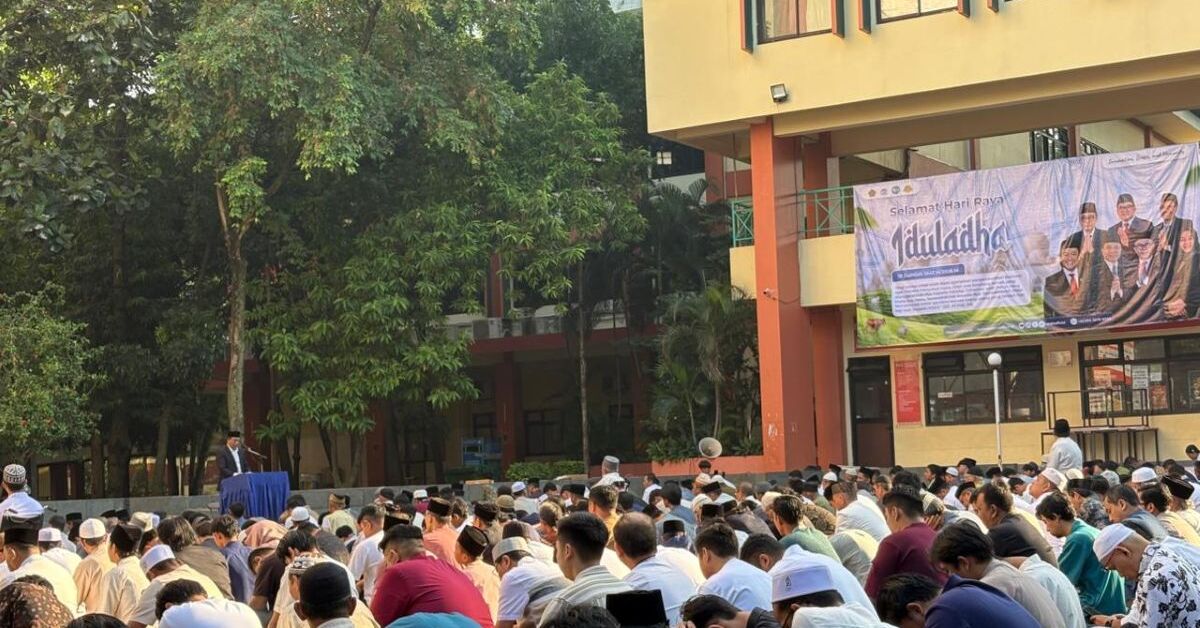
Student Center Field, UIN News Online — Thousands of worshippers gathered at the Student Center parking grounds of UIN Syarif Hidayatullah Jakarta on Wednesday (May 27, 2026) to perform the Eid al-Adha prayer and commemorate one of the most significant celebrations in the Islamic calendar.
Since early morning, members of the university community, alumni, and residents from surrounding neighborhoods filled the prayer grounds, joining together in a celebration that embodies the values of devotion, sacrifice, and compassion.
The Eid prayer was led by Ustadz Aang Saeful Ma’arif, S.Ag., Imam of Fathullah Mosque, while the sermon was delivered by Prof. Rumadi Ahmad, M.Ag., Professor at UIN Jakarta and Senior Advisor to Indonesia’s Ministry of Human Rights.
In his sermon, Prof. Rumadi invited worshippers to reflect on Eid al-Adha as a reminder of sincerity (ikhlas), a virtue that represents the highest form of devotion to God.
He explained that the concept of qurban (sacrifice) derives from the Arabic root qaraba–yaqrabu, meaning “to draw near.” As such, the essence of sacrifice extends beyond the ritual slaughter of animals. It represents a believer’s sincere effort to draw closer to Allah through obedience, humility, and selflessness.
“Eid al-Adha carries a profound message about sincerity as the highest expression of human devotion to God. This sincerity was exemplified by Prophet Ibrahim when he accepted Allah’s command to sacrifice his son, Prophet Ismail,” he said.
According to Prof. Rumadi, the story of Prophet Ibrahim offers a timeless lesson about overcoming personal desires and placing divine guidance above individual interests. The narrative reminds Muslims that true sacrifice is not limited to material offerings but also includes the willingness to restrain ego, ambitions, and worldly attachments.
He noted that the message of sincerity has become increasingly relevant in today’s world, where people are often confronted with uncertainty, social tensions, and materialistic values. Amid such challenges, he said, individuals need opportunities to reconnect with the spiritual dimensions of life that foster inner peace and purpose.
Drawing on Islamic teachings, Prof. Rumadi described sincerity as ruhul amal, the soul of every good deed. Without sincerity, acts of worship and kindness lose their spiritual significance. Conversely, even the simplest act can carry immense value when performed solely for the sake of Allah.
“In Islam, what matters most is not merely what we do, but for whom we do it. That is where the human heart is tested, whether our actions are truly for Allah or motivated by the desire for praise, recognition, or public approval,” he explained.
He further observed that maintaining sincerity has become more challenging in the digital era, where social media often encourages individuals to seek validation and attention. Achievements, charitable acts, and even acts of worship are increasingly measured by the reactions they receive from others.
Quoting the renowned Sufi scholar Ibn Ata’illah al-Sakandari in Al-Hikam, Prof. Rumadi encouraged worshippers to cultivate moments of spiritual solitude and introspection. Genuine spiritual depth, he noted, is not built through public visibility but through a sincere relationship with God nurtured in the quietness of the heart.
“Eid al-Adha reminds us that what matters most is not how many people witness our good deeds, but how sincerely those deeds are offered to Allah. When sincerity is preserved, life becomes lighter because we are no longer dependent on praise or recognition from others,” he said.
Concluding his sermon, Prof. Rumadi called on worshippers to use Eid al-Adha as an opportunity for self-reflection, spiritual renewal, and social responsibility. These values, he emphasized, are essential foundations for building a more compassionate, peaceful, and blessed society.