UIN Jakarta Develops Early Warning System, Rector: Early Detection Is Key to Supporting Students’ Academic Progress
Jakarta, UIN News Online– UIN Syarif Hidayatullah Jakarta is developing a Student Early Warning System (EWS) as an innovation in data- and information technology-based academic governance. The application is designed to detect potential obstacles to students’ academic progress at an early stage by monitoring integrated academic and administrative data. Through this system, the university aims to provide faster, more measurable, and better-targeted interventions and support to increase the number of students graduating on time.
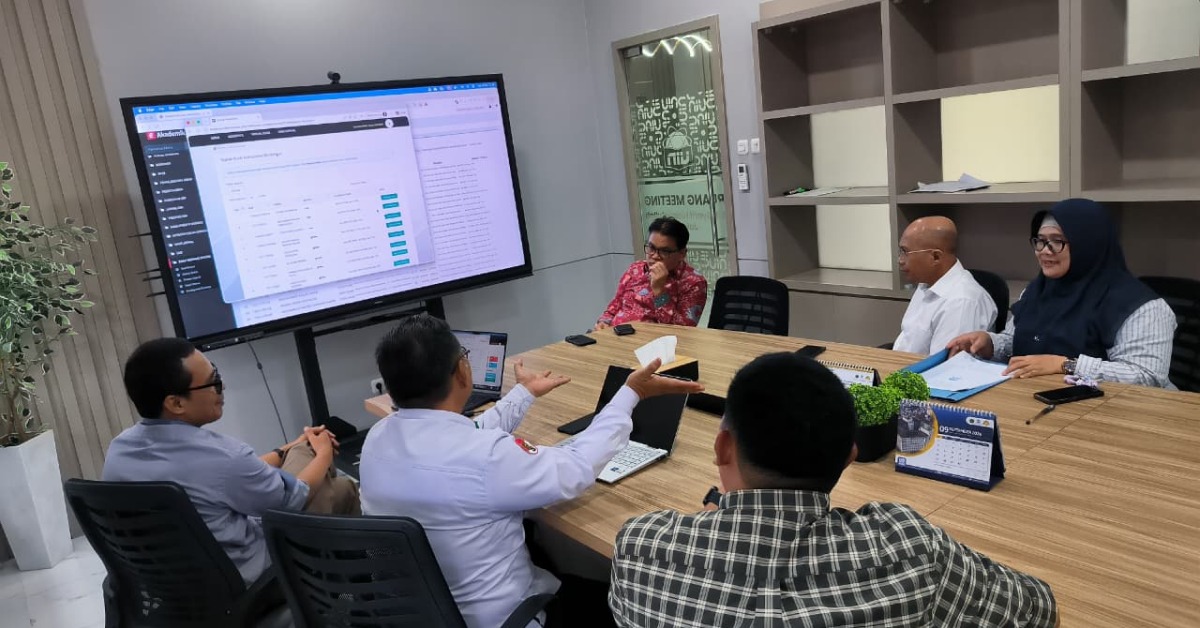
The EWS initiative was introduced by UIN Jakarta Vice Rector for Academic Affairs, Prof. Dr. H. Ahmad Tholabi Kharlie, S.Ag., S.H., M.H., M.A.; Head of the Bureau of Academic Administration, Student Affairs, and Cooperation (AAKK), Dr. H. Yayat Supriyadi, M.Si.; and EWS Development Team Lead Dr. Feni Arifiani, M.H., during an online meeting held via Microsoft Teams on Wednesday (November 18, 2026). The meeting was attended by university and faculty leaders, deans and vice deans, heads and managers of academic programs, the Institute for Quality Assurance (LPM), academic advisors, and academic administration staff.
In his remarks, Vice Rector Ahmad Tholabi Kharlie praised the development of EWS as a strategic instrument for strengthening data-driven academic management. “Potential obstacles to students’ academic progress must be identified early, not when they are already approaching the maximum period of study. Therefore, EWS should be used as a tool to identify problems and determine the appropriate support and follow-up measures,” he emphasized.
The professor at the Faculty of Sharia and Law also stressed the importance of involving academic advisors, study programs, faculties, and relevant units in ensuring that information generated by the application leads to concrete action. According to him, EWS is not intended to stigmatize or negatively label students. Rather, it is a support tool to ensure that students receive attention and guidance tailored to their circumstances.
Four Categories of Academic Risk
During the technical presentation, EWS Development Team Lead Feni Arifiani explained that the system processes various academic and administrative variables to classify students according to their level of academic risk. It uses four color-coded categories to indicate students’ academic status.
Green indicates normal academic progress, with students continuing to receive routine monitoring. Yellow signals the need for review by academic advisors and study programs. Orange indicates potential risks requiring consultation and further follow-up. Red identifies more serious risks that call for comprehensive intervention and support.
“These classifications are based on several indicators, including Grade Point Average (GPA), the number of semester credit units (SKS) completed, class attendance, registration and Study Plan Card (KRS) submission activities, tuition payment status under the Single Tuition Fee (UKT) scheme, and trends in students’ academic performance compared with previous semesters,” she explained.
The application development team, whose members include Muhammad Furqon, M.A., and Supardi, M.Kom., also demonstrated several key EWS features using sample data from the Faculty of Psychology. These features include an administrator dashboard for monitoring students’ academic conditions by faculty, academic period, and risk category.
“The system also provides information on the factors influencing a student’s status, enabling relevant parties to identify the reasons behind an alert and determine appropriate follow-up measures,” Feni said.
Supardi added that academic advisors can access lists of their advisees to monitor academic progress and recommend appropriate actions. Students also have limited access to view their academic status and submit correction requests if they find discrepancies in their data. These requests are reviewed by administrators, and if approved, the system can recalculate the student’s risk status.
Feni further explained that study programs and faculties are expected to use EWS information to monitor students classified as yellow, orange, or red and ensure that appropriate support is provided according to their needs.
EWS to Help Increase On-Time Graduation Rates
During the discussion, representatives of the Institute for Quality Assurance (LPM) highlighted EWS’s potential as an instrument for strengthening the Internal Quality Assurance System (SPMI), particularly in monitoring study-period standards and increasing on-time graduation rates.
The meeting shared approximate on-time graduation rates of 65 percent for undergraduate programs (S1), 40 percent for master’s programs (S2), and 6 percent for doctoral programs (S3). These figures were among the issues highlighted in discussions on improving the effectiveness of student monitoring and support.
LPM emphasized that identifying students at risk must be followed by an investigation into the underlying causes. Intervention should not rely solely on the color categories or scores displayed by the application. It must also involve verifying students’ circumstances, determining appropriate support measures, assigning responsible parties, and monitoring the results of follow-up actions.
Several participants also offered suggestions for further system development. These included considering psychological, psychosocial, social, and cultural factors that may affect students’ academic success. Participants also proposed enhancing the study program dashboard, providing reports on academic advisors’ activities, and organizing technical training through a Training of Trainers (ToT) program.
In response, the development team explained that the initial phase of EWS would focus on academic and administrative indicators for which data are already available in the university’s systems. The development of nonacademic indicators will be considered in subsequent improvements.
During the discussion, AAKK Bureau Head Yayat Supriyadi stressed that data validity and integration are essential foundations for implementing EWS. He noted that the system’s effectiveness depends heavily on the quality of the data, the commitment of all academic stakeholders, and sound governance and protection of student information.
“EWS must be supported by valid, structured, and accountable data. The application should not merely serve as an administrative system; it must be used effectively to strengthen the monitoring of students’ academic progress and provide appropriate support,” he emphasized.
Strengthening Academic Support and Governance
As follow-up actions, the AAKK Bureau and the development team will refine the technical guidelines, standard operating procedures (SOPs), and application user manuals. Further socialization sessions and training will also be provided for academic advisors and academic administration staff at the faculty level.
EWS will be further optimized through E-Semesta accounts, with access granted according to each user’s authorization. Academic advisors and study programs are expected to actively monitor students identified as being at risk, communicate with them, and provide consultations and academic guidance.
The university will also strengthen data validation procedures, provide study programs with access to reports in accordance with their respective authorities, and periodically evaluate and refine the risk indicators. Data management and application access will continue to prioritize information security and the protection of students’ academic records.
Through EWS implementation, UIN Jakarta aims to move beyond an academic management approach focused primarily on administrative recording and reporting toward an integrated system for monitoring and supporting students. This initiative also reflects the university’s commitment to improving academic services, reducing the risk of delayed graduation, and enabling more students to complete their studies on time.
Rector Says EWS Is Part of the University’s Academic Governance Transformation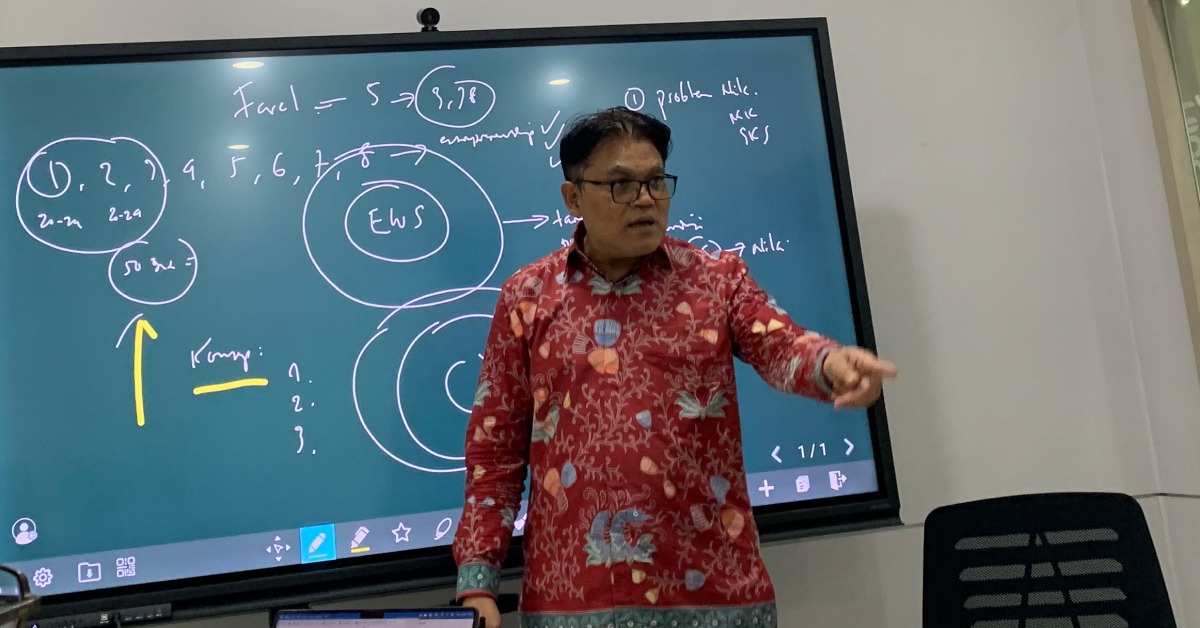
UIN Syarif Hidayatullah Jakarta Rector Prof. Asep Saepudin Jahar, M.A., Ph.D., welcomed the development of EWS as part of the university’s broader transformation of academic governance. He emphasized that the system is highly significant in supporting students’ academic development through continuous monitoring of their study progress.
“Developing EWS is an important step in enabling the university to identify potential obstacles faced by students at an early stage. It is not enough to know only the final outcomes of their studies; we must also be able to monitor their progress and ensure that they receive appropriate support,” the Rector stressed in his remarks on the system’s development.
Through EWS, the Rector added, the university is expected not only to monitor students’ academic achievements but also to identify factors that may hinder their ability to complete their studies. This will enable the university to shift its academic support approach from reactive responses to a more proactive model centered on students’ needs. (zm)