UIN Jakarta Commences National Standardized Admissions, Welcoming Non-Muslim Applicants and International Candidates
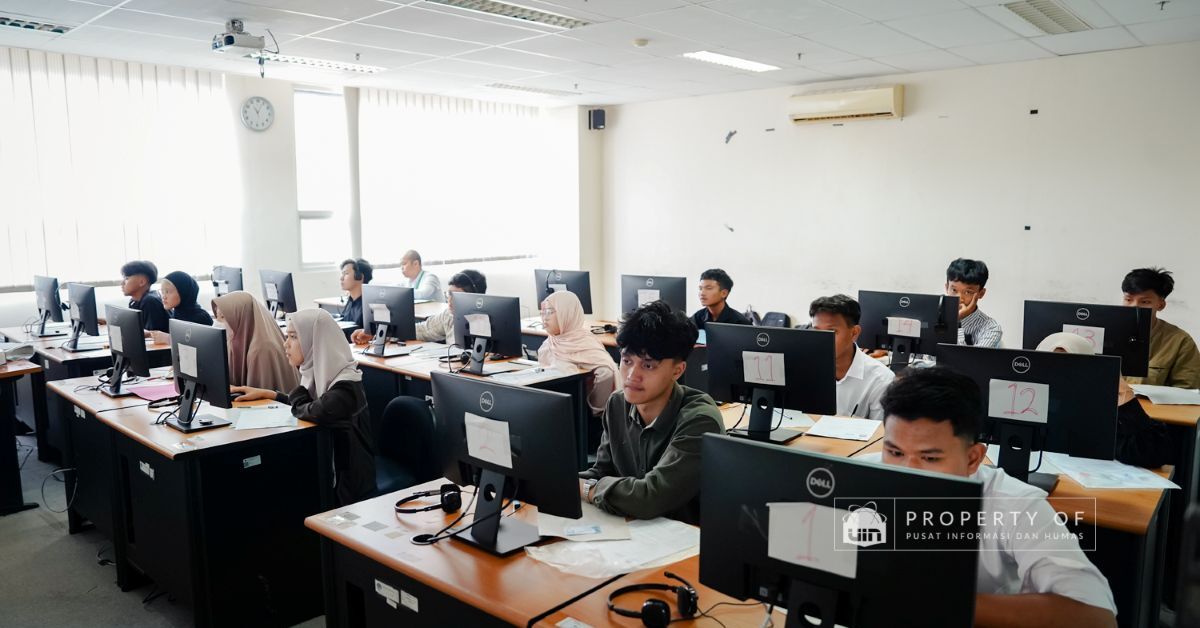
NICT Building, UIN Online News – UIN Syarif Hidayatullah Jakarta officially initiated the Electronic System Selection (SSE) for the State Islamic Higher Education National Entrance Examination (UM-PTKIN) 2026 on Monday, June 8, 2026. As one of the 55 hosting state institutions, UIN Jakarta is set to serve thousands of applicants participating in this synchronized national testing network running from June 8 to June 14, 2026.
In his operational report, the Vice Rector for Academic Affairs at UIN Jakarta, Prof. Dr. Ahmad Tholabi, revealed that all logistical and structural preparations have been maximized to guarantee a seamless screening process. Specifically, UIN Jakarta has deployed 33 fully equipped computer laboratories to support 12 examination sessions scheduled across four intensive testing days.
“Alhamdulillah, the execution of the 2026 SSE UM-PTKIN at UIN Syarif Hidayatullah Jakarta is operating smoothly. The entire process follows strict established protocols, and we continue to monitor the network architecture so that all candidates can take their exams comfortably,” he noted.
Beyond standard technical and server optimizations, UIN Jakarta has dedicated specific resources to universal accessibility. This year, the campus testing center accommodates four candidates with disabilities, consisting of two visually impaired students and two students with intellectual disabilities. The organizing committee has provided customized examination chambers alongside specialized personal proctors to assist them throughout the testing cycle.
“Our goal is to ensure that every single applicant receives an equal, fair opportunity to clear this national selection. Consequently, infrastructure accessibility and customized services for students with disabilities remain a top institutional priority,” Prof. Ahmad Tholabi asserted.
For this specific entry track, UIN Jakarta provides an institutional enrollment quota of 3,034 new student seats. Public interest remains exceptionally high, with a total of 14,398 applicants choosing UIN Jakarta as their prospective alma mater (consisting of 5,541 first-choice applicants, 4,769 second-choice applicants, and 4,088 third-choice applicants). Out of that matrix, 5,618 candidates are physically taking their digital examinations directly across UIN Jakarta’s Campus I, Campus II, and Campus III testing centers.
National Validation, Interfaith Openness, and International Enrollment
The Director General of Islamic Education at the Ministry of Religious Affairs, Prof. Dr. Amin Suyitno, expressed high appreciation for the growing public enthusiasm toward state Islamic universities. He noted that the surge in applicant volume is a direct result of ongoing digital innovations and progressive institutional branding.
He emphasized that the execution of these synchronized digital exams serves as a clear benchmark for the information technology infrastructure of each campus, encouraging all state universities to continuously audit and reinforce their digital safety networks.
Concurrently, the Chairman of the National Admissions Committee, Prof. Abd. Aziz, revealed that the national UM-PTKIN pool reached 64,479 registered candidates across 59 nationwide locations. West Java Province topped the geographical chart with 9,245 applicants, followed closely by East Java with 8,971, and Central Java with 7,440.
Crucially, Prof. Abd. Aziz highlighted groundbreaking metrics regarding the demographic inclusivity of the 2026 cycle. Out of the national applicant pool, 43 candidates are registered individuals with disabilities (including 11 visually impaired, 8 hearing impaired, 7 physically disabled, and 17 intellectually disabled students).
Furthermore, the national examination proudly accommodates 20 non-Muslim applicants, consisting of 17 Protestant Christians, 2 Roman Catholics, and 1 adherent of indigenous Indonesian spiritual beliefs (Kepercayaan terhadap Tuhan YME).
"In addition to our pluralistic domestic applicants, we are proud to announce that the 2026 selection cycle features international candidates, including a prospective student from Papua New Guinea who is taking part in the UM-PTKIN track to pursue higher education in Indonesia," Prof. Abd. Aziz announced enthusiastically.
This diverse demographic framework cements the status of Indonesia's state Islamic universities as progressive, highly accessible, and globally oriented educational hubs capable of attracting international talent regardless of faith or physical capability.