
The Minister of Religious Affairs Directs State Islamic Universities to Adopt ISO Standards and Quantitative Research
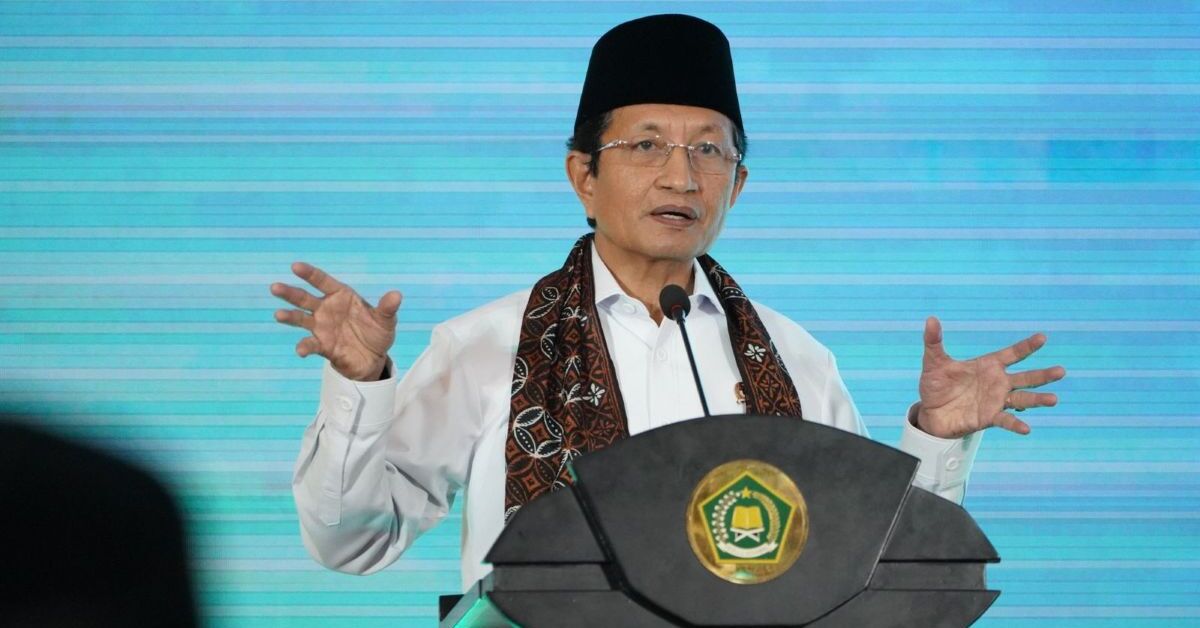
JAKARTA, UIN Online News – The Minister of Religious Affairs of the Republic of Indonesia, Prof. Dr. KH. Nasaruddin Umar, urged the network of State Islamic Higher Education Institutions (PTKIN) to execute a radical transformation in formulating academic and institutional policies. The Minister asserted that the academic community within PTKIN must immediately abandon speculative, intuition-based policymaking and transition toward a model anchored in heavy quantitative data and rigorous statistical research.
The executive directive was delivered before Rectors and Vice Rectors representing PTKIN networks from across Indonesia in Jakarta on Saturday, June 27, 2026. According to the Minister, a fundamental systemic weakness still frequently observed within the UIN, IAIN, and STAIN ecosystems is the acute lack of statistical data utilization during institutional decision-making cycles.
"Our policies must originate from and be validated by quantitative metrics. For too long, our religious studies have operated on a heavily deductive-qualitative axis, causing executive decisions to frequently lean toward the speculative," the Minister stated firmly.
Connecting the urgency of quantitative analysis with theological interpretation, the Minister analyzed the structure of the first Quranic revelation. He explained that the divine command Iqra’ (read/examine) preceding Bismi Rabbika (in the name of your Lord) dictates an inductive scientific approach rooted in observation, research, and empirical data aggregation (istiqra’). Furthermore, he evaluated the gradual 23-year chronology of the Quranic revelation as a prime historical model of a humanistic, process-oriented inductive methodology.
Consequently, the Minister ordered all institutions to compile highly detailed statistical breakdowns of the student database via pilot tracking surveys to accurately map out student motivations and socio-economic backgrounds as the baseline for future policymaking.
Additionally, the Minister issued a mandatory directive for all State Islamic Universities to execute a comprehensive implementation of the International Organization for Standardization (ISO) quality management frameworks starting this fiscal year.
"I instruct the Director General that all UIN and PTKIN entities must operate strictly under verified ISO standards. When we work consistently within tightly controlled ISO formulas, operational mismanagement and potential internal corruption inside the campus environment can be systematically eliminated. The administrative apparatus will run efficiently on autopilot," he clarified.
However, the Minister warned that the mastery of ISO quality indicators must not be monopolized by administrative clerks or registrar offices. Rectors and university executives are duty-bound to comprehend these technical evaluation metrics directly to eliminate information bias during operational execution.
To reinforce institutional leadership, the Minister emphasized that university Rectors must master the art of micromanagement rather than operating exclusively on macro-level policies.
"Rectors must maintain an absolute grip on micromanagement. It is unacceptable to only understand high-level strategic visions while remaining completely blind to the microscopic details of financial allocation or administrative paperwork. We must be highly literate regarding our own internal systems to guarantee that campus governance is fully accountable," the Minister added.
Responding to this executive demand, the Minister directed the Directorate General of Islamic Education to immediately design additional management masterclasses and micromanagement simulation clinics for PTKIN executives, featuring prominent corporate restructuring experts. The specialized training programs will be rolled out via regional zoning systems, focusing initially on the Eastern Indonesia sector to ensure an accelerated, equitable distribution of advanced managerial competencies.