Syarif Hidayatullah State Islamic University Accelerates Low-Carbon Energy Transition to Support SDG 13 and Campus Sustainability
Syarif Hidayatullah State Islamic University has reaffirmed its commitment to climate action and environmental stewardship by advancing low-carbon energy adoption across its campuses. In alignment with Sustainable Development Goal (SDG) 13 on Climate Action—specifically addressing SDG Indicator 13.2.2 (Low-carbon energy use: Total energy used and Total energy used from low-carbon sources)—as well as SDG 7 (Affordable and Clean Energy) and the UI GreenMetric World University Rankings, the university has implemented a comprehensive energy management strategy. This initiative focuses on expanding clean energy generation, optimizing low-carbon infrastructure, and enforcing strict energy conservation policies.
This program was implemented to fulfill the commitment of Syarif Hidayatullah State Islamic University to reducing campus greenhouse gas emissions, expanding renewable energy infrastructure, and improving overall energy efficiency. The primary objective is to transition the campus toward an eco-friendly energy ecosystem by expanding rooftop solar power generation, deploying solar-powered public lighting, utilizing biosolar backup power, and strictly regulating electricity consumption across all university faculties and administrative units.
By systematically monitoring key metrics under SDG Indicator 13.2.2—measuring both Total Energy Used and Total Energy Used from Low-Carbon Sources—the university tracks its decarbonization progress while fostering a culture of energy conservation among its 39,093 campus community members (comprising 37,227 students and 1,866 faculty and administrative staff).
Institutionally executed by the university's Green Campus Team, the low-carbon energy program operates under Rector's Decree No. 1415 of 2024 concerning Green Campus Policy, Rector's Circular Letter No. 21 of 2024 on Energy Management, and Rector's Circular Letter No. 10 of 2026.
The program encompasses five major operational and technical pillars:
-
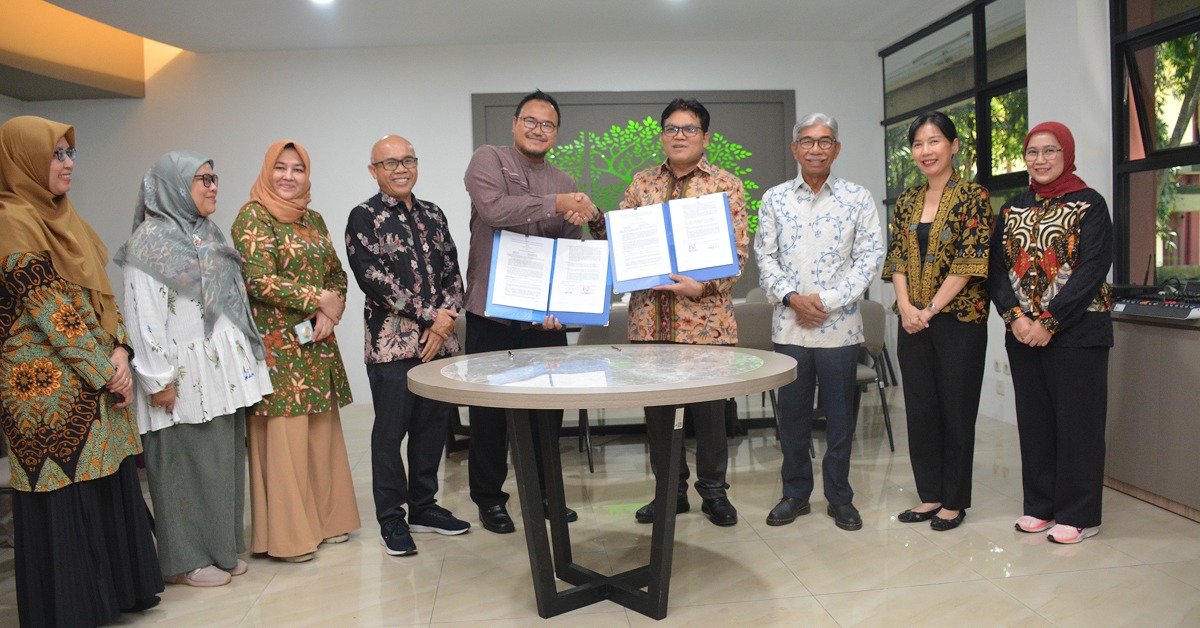
Rooftop Solar Photovoltaic (PV) Expansion: Syarif Hidayatullah State Islamic University signed a strategic partnership agreement with licensed solar energy provider PT Agra Surya Energi to develop on-grid hybrid rooftop solar PV systems with a total planned capacity of 270.17 kWp across four major campus buildings. Systems are fully operational at the Faculty of Science and Technology (FST) with 83.80 kWp capacity and the Faculty of Educational Sciences (FITK) with 58.52 kWp capacity. Advanced dual-metering systems record real-time energy production and grid exchanges. Installations at the Rectorate Building and Harun Nasution Auditorium are undergoing final development.
-
Solar-Powered Street Lighting: The university operates 396 units of automatic, solar-powered streetlights across main roads, open spaces, and parking lots in Campuses 1, 2, and 3. Operating independently from the State Electricity Company (PLN) grid, these units automatically activate based on ambient light levels.
-
Biosolar-Fueled Generators: The campus utilizes biosolar fuel—a blend of fossil diesel and Fatty Acid Methyl Ester (FAME) derived from vegetable oil—for its backup generator sets, providing a cleaner alternative to conventional fossil fuels during grid power outages.
-
Operational Energy Efficiency Measures: Under Circular Letter No. 10 of 2026, air conditioning units are regulated to operate strictly between 24°C and 27°C. Electrical devices, lighting, and AC units must be turned off at the end of working hours (16:00 WIB Monday–Thursday and 16:30 WIB on Fridays). Elevator operations are optimized by bypassing the 2nd and 3rd floors to encourage stair use. Additionally, 86.1% of campus appliances have been upgraded to energy-efficient devices, including 12,290 LED lamps and 1,568 inverter ACs, while natural lighting is maximized via glass roofs and expansive windows.
-
Public Outreach and Behavioral Campaigns: Visual campaigns, banners, and digital messaging are actively deployed across campus to encourage students and staff to unplug idle chargers, turn off switches, and adopt energy-saving habits daily.
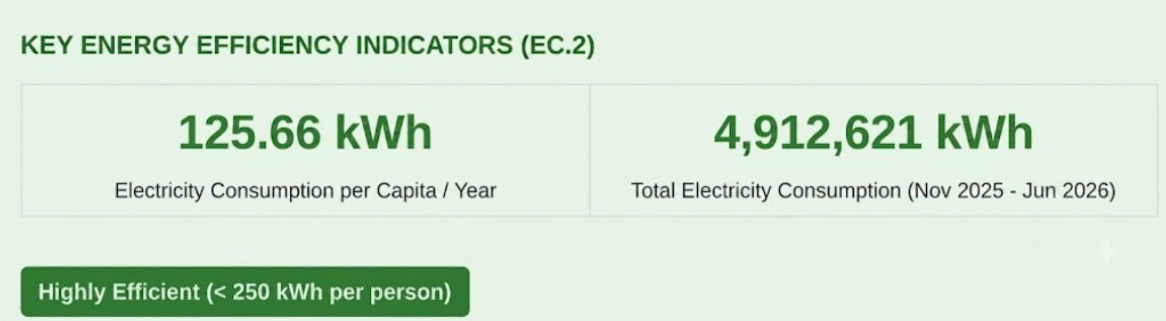
Total Electricity Consumption at the Syarif Hidayatullah State Islamic University Jakarta Campus.
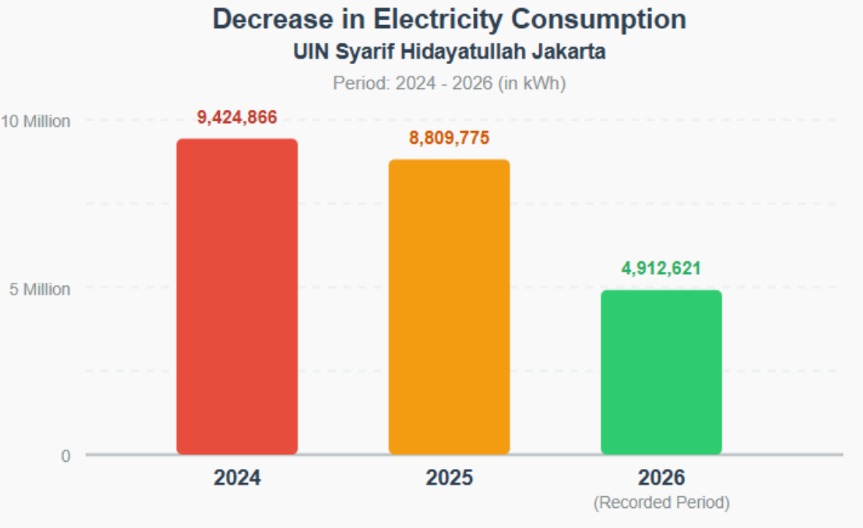
Electricity Consumption by State Electricity Company (PLN) at the Syarif Hidayatullah State
Islamic University Jakarta Campus in 2024, 2025, and 2026 (kWh/year)
Data and documentation confirm significant achievements in both low-carbon energy production and total energy reduction at Syarif Hidayatullah State Islamic University:
Total Energy Used from Low-Carbon Sources (SDG Indicator 13.2.2)
The university's total low-carbon energy production increased from 1,446,760.98 kWh in 2025 to 1,542,323.90 kWh in 2026, representing an overall output gain of 95,562.92 kWh (a 6.61% increase). The breakdown of low-carbon energy generation in 2026 includes:
-
Rooftop Solar PV (FST): 91,043.98 kWh (surging by 172.6% from 33,392.64 kWh in 2025).
-
Rooftop Solar PV (FITK): 58,841.62 kWh (surging by 181.1% from 20,930.04 kWh in 2025).
-
Solar-Powered Street Lights (396 units): 481,925.00 kWh.
-
Biosolar Generator Sets: 910,513.30 kWh.
Total Energy Used & Efficiency Indicators (EC.2)
Total grid electricity consumption from the State Electricity Company (PLN) at Syarif Hidayatullah State Islamic University has demonstrated a consistent downward trend over the 2024–2026 period:
-
2024: 9,424,866 kWh (full 12-month annual cycle).
-
2025: 8,809,775 kWh (a year-over-year reduction of approximately 6.53%).
-
2026 (Recorded 8-Month Period): 4,912,621 kWh (tracked from November 2025 to June 2026).
Energy Performance Indicators & Environmental Impact
-
Per Capita Energy Efficiency Benchmark: Annual electricity consumption per capita was maintained at 125.66 kWh per person/year. This metric places the university well within the international "Highly Efficient" classification threshold of less than 250 kWh per person per year.
-
Low-Carbon Energy Ratio: The ratio of energy produced from low-carbon sources divided by total energy consumption rose significantly from 21.80% in 2025 to 31.39% in 2026, earning the maximum Score 4 in the UI GreenMetric evaluation.
-
Financial and Ecological Benefits: The combination of reduced grid reliance and expanded clean energy production has substantially lowered campus greenhouse gas emissions and operational utility expenses while establishing the university as a green leader in higher education.
Low-carbon energy operations continue to function effectively with strong technical oversight and institutional governance. Future action plans for Syarif Hidayatullah State Islamic University include:
-
Completing the ongoing rooftop solar PV installations on the Rectorate Building and Harun Nasution Auditorium to reach the full design capacity of 270.17 kWp.
-
Expanding smart energy metering infrastructure across individual faculties and units to enable real-time consumption monitoring and data analytics.
-
Scaling up campus-wide energy conservation campaigns and green habit incentives for students, faculty, and staff.
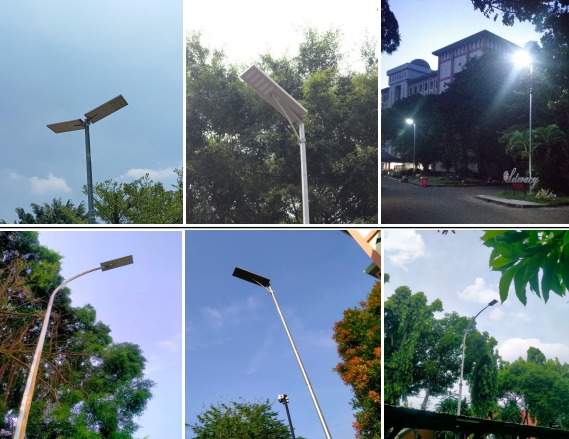
Solar Powered Lamps That Automatically Lights Up When The Night Comes.
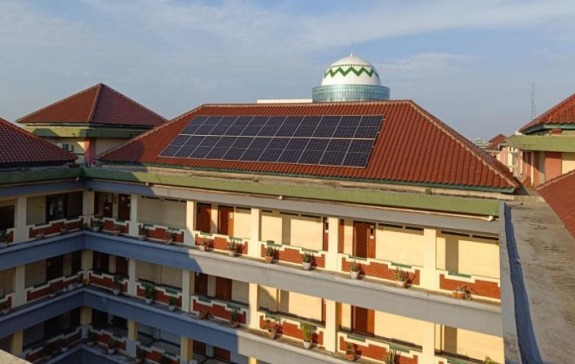
Solar panels for renewable energy in the Faculty of Science and Technology, Faculty of Tarbiyah and Teacher Training.