
Supporting Women's Participation through Paternity Leave and Shared Childcare Responsibilities
Syarif Hidayatullah State Islamic University Jakarta recognises that promoting gender equality requires institutional support for both mothers and fathers in fulfilling family responsibilities. Childbirth and early childcare can create significant demands on families, particularly women who may need to balance maternal recovery, childcare, academic responsibilities, and professional commitments.
Enabling fathers to take leave to accompany their wives during childbirth and participate in early childcare is therefore an important component of a family-responsive working environment. During 2024–2025, the Indonesian regulatory framework applicable to UIN Jakarta established provisions supporting fathers' participation in childbirth assistance and family care. These provisions included statutory paternity-related leave rights and civil service leave arrangements for eligible male employees. The University also developed complementary family-support initiatives, reflecting its broader commitment to gender equality and the well-being of parents and children.
These measures contribute to Sustainable Development Goal 5 by recognising shared family responsibilities and supporting women's continued participation in academic and professional life.
1. Establishing Paternity Leave Rights under Indonesian Law Number 4 of 2024
An important legal foundation for paternity protection is Indonesian Law Number 4 of 2024 concerning Maternal and Child Welfare during the First Thousand Days of Life, enacted on 2 July 2024. The legislation recognises that maternal well-being and child development require active support from husbands and other family members.
Article 6, Paragraph 1 establishes the responsibility of husbands and families to accompany mothers during the period covered by the law. Article 6, Paragraph 2 explicitly recognises the husband's right to accompanying leave during childbirth or when his wife experiences a miscarriage. The provision establishes an initial two-day period for accompanying childbirth, with the possibility of up to three additional days or another arrangement by agreement. It also provides two days of accompanying leave when a wife experiences a miscarriage. Article 6, Paragraph 3 recognises the importance of additional accompaniment when a mother or child experiences significant medical complications or other serious circumstances following childbirth.
These provisions establish a national legal foundation for recognising fathers' involvement during childbirth and the immediate postnatal period. For a state university, the statutory framework is relevant to the broader development of family-responsive employment policies and practices.However, Article 10 specifies that the implementation of these provisions for civil servants and other designated public-sector personnel is regulated through the relevant public service legislation. Accordingly, the precise leave arrangements for eligible UIN Jakarta civil servants must be understood alongside the applicable civil service regulations.
2. Providing Accompanying Leave for Male Civil Servants
Male academic and administrative personnel holding civil servant status are subject to Indonesia's civil service leave framework. National Civil Service Agency Regulation Number 24 of 2017, as amended by Regulation Number 7 of 2021, establishes procedures for requesting and granting leave to civil servants.
The regulations specifically recognise the possibility of granting leave for important reasons to male civil servants whose wives are giving birth or undergoing caesarean delivery. Under the relevant provisions, an eligible employee may request leave by submitting a written application supported by a hospitalisation certificate from an authorised healthcare facility. The leave period is determined by the official authorised to approve the request, subject to a maximum period of one month under the general important-reasons leave provisions.
This maximum period should not be interpreted as an automatic one-month entitlement for every childbirth. The regulations also provide for continued remuneration during approved important-reasons leave in accordance with applicable civil service rules. These arrangements create a formal administrative pathway enabling eligible male civil servants to accompany their wives during childbirth.
For UIN Jakarta, this framework is particularly relevant to male lecturers and administrative employees with civil servant status. By allowing employees to request time away from professional duties for childbirth-related family responsibilities, the regulations recognise that caring for a newborn child and supporting maternal recovery should not be viewed solely as women's responsibilities.
3. Recognising Fathers' Responsibilities in Maternal and Childcare Support
Paternity policy is not limited to the provision of time away from work. It also recognises the important responsibilities fathers undertake during the first stages of a child's life. Article 6, Paragraph 4 of Law Number 4 of 2024 identifies responsibilities associated with accompanying leave.
These responsibilities include maintaining the health of the mother and child, supporting adequate and balanced nutrition, assisting the mother in exclusive breastfeeding, and accompanying the family in accessing appropriate healthcare and nutritional services. The law therefore connects paternity leave with practical participation in maternal and infant care. This approach reinforces the principle that parenting responsibilities should be shared within the family.
For women working in higher education, greater paternal involvement can provide important assistance during postnatal recovery and the transition back to professional activities. Fathers' participation in early childcare may help families organise caregiving responsibilities while supporting mothers' well-being and continued engagement in employment. The University's use of the applicable national leave framework provides a legal reference for recognising these responsibilities among eligible male employees.
4. Establishing Administrative Procedures for Accompanying Leave
The civil service regulations also establish an administrative procedure for requesting leave for important reasons. Eligible employees must submit a written leave request to the official authorised to grant leave, together with the documentation required under the applicable provisions.
For childbirth-related requests, this includes the relevant healthcare certificate. The competent official reviews the request and determines the approved leave period within the regulatory limits. The rules also provide for temporary written authorisation in urgent circumstances when an employee cannot reasonably wait for the ordinary approval process. These procedures are important because formal administrative arrangements provide an established mechanism for considering family-related leave requests.
They also allow public-sector institutions to manage staffing responsibilities while recognising employees' legitimate family-care needs. UIN Jakarta's faculties have identified these national regulations among the documentary references supporting their responses to the paternity policy indicator. However, the documentation reviewed for 2024–2025 does not establish the number of male University employees who received approved accompanying leave during the reporting period.
5. Complementary Family-Friendly Initiatives at UIN Jakarta
The University's broader commitment to family welfare is reflected in initiatives supporting parents and young children within the campus environment. On 2 June 2024, the Center for Gender and Child Studies (PSGA), in collaboration with the Faculty of Medicine, officially inaugurated a daycare facility. The initiative was introduced to strengthen the University's development as a women-friendly and child-friendly campus.
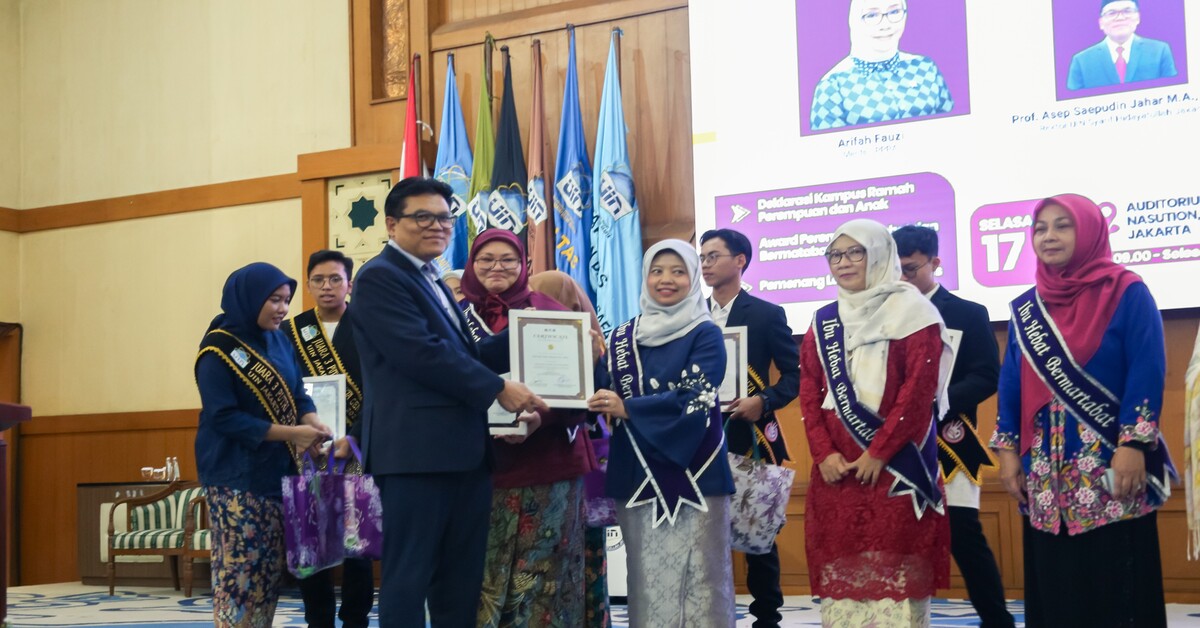
University representatives recognised that childcare facilities could help parents, including working mothers and academic employees, manage family responsibilities alongside professional activities. The University's family-friendly commitments were reinforced on 17 December 2024, through a declaration developed in collaboration with Indonesia's Ministry of Women's Empowerment and Child Protection. The declaration identified childcare provision as an important component of the University's commitment to supporting women and children.
These initiatives are complementary to paternity leave because they recognise childcare as an institutional concern rather than an exclusively private responsibility. Nevertheless, the daycare initiative should be treated as additional evidence of family-friendly support, not as a substitute for a formal paternity leave policy.
6. Supporting Women's Academic and Professional Continuity
A central objective of paternity policy is to ensure that mothers do not carry the full responsibility for childbirth-related family care without appropriate support. When fathers are able to accompany their wives and participate in early childcare, families may be better positioned to manage maternal recovery, medical appointments, infant feeding, and other essential responsibilities. For female lecturers and administrative personnel, shared childcare can support the continuation of teaching, research, professional development, and administrative duties following maternity leave.
For families in which a mother is undertaking university studies, paternal participation can also provide practical support during the transition back to academic activities. UIN Jakarta's relevant national employment framework recognises the possibility of accompanying leave for eligible male civil servants, while the 2024 legislation provides a broader statutory foundation for paternal involvement. These measures are relevant to the University's efforts to foster an academic and working environment that supports women and families.
However, evidence of the extent to which these arrangements were implemented across different employment categories during 2024–2025 remains incomplete.
7. Institutional Contribution to SDG 5: Gender Equality
Syarif Hidayatullah State Islamic University Jakarta operates within an established national legal framework that recognises fathers' participation in childbirth assistance and early family care. Law Number 4 of 2024 explicitly provides for accompanying leave and establishes paternal responsibilities relating to maternal health and infant welfare.
National Civil Service Agency Regulation Number 24 of 2017, as amended, provides a formal procedure through which eligible male civil servants may request leave for important reasons when their wives give birth. The University has also documented family-friendly initiatives during 2024, including childcare facilities and its declaration of commitment to a women-friendly and child-friendly campus. Together, these legal provisions and complementary institutional initiatives provide a documented foundation for supporting fathers' involvement in childcare and reducing the practical burdens that may affect women's participation in education and employment.
The available evidence demonstrates the existence of an applicable policy framework. Additional University-level documentation, including internal leave procedures and records of approved paternal leave, would strengthen verification of the University's operational implementation under THE Impact Rankings Indicator 5.6.9.

Source :
https://peraturan.go.id/files/uu-no-4-tahun-2024.pdf
https://www.bkn.go.id/storage/2018/01/PERATURAN-BKN-NOMOR-24-TAHUN-2017-TATA-CARA-PEMBERIAN-CUTI-PNS.pdf
https://www.bkn.go.id/wp-content/uploads/2025/04/Buku-Saku-FAQ-Cuti-PNS.pdf
http://uinjkt.ac.id/index.php/id/kolaborasi-psga-dan-fk-uin-jakarta-daycare-pertama-resmi-dibuka
https://uinjkt.ac.id/index.php/id/sambut-hari-ibu-uin-jakarta-bersama-kemenpppa-ri-deklarasikan-kampus-ramah-perempuan-dan-anak