Supporting Low-Carbon Innovation and Green Startup Development
Syarif Hidayatullah State Islamic University Jakarta supports the development of technology-based entrepreneurship through innovation hubs, startup incubation facilities, mentoring, product development, and collaboration with government and industry partners. During 2024–2025, the University strengthened an innovation ecosystem in which students and researchers could develop prototypes, technology-based business ideas, social enterprises, and sustainability-oriented solutions.
This ecosystem includes the Innovation Impact Hub, Saintek Hub, green-technology research clusters, sustainable agriculture initiatives, and institutional collaboration supporting the development of student startups. These activities provide an institutional foundation for supporting startups and early-stage ventures that contribute to environmentally sustainable and low-carbon technologies.
1. Establishing the Innovation Impact Hub
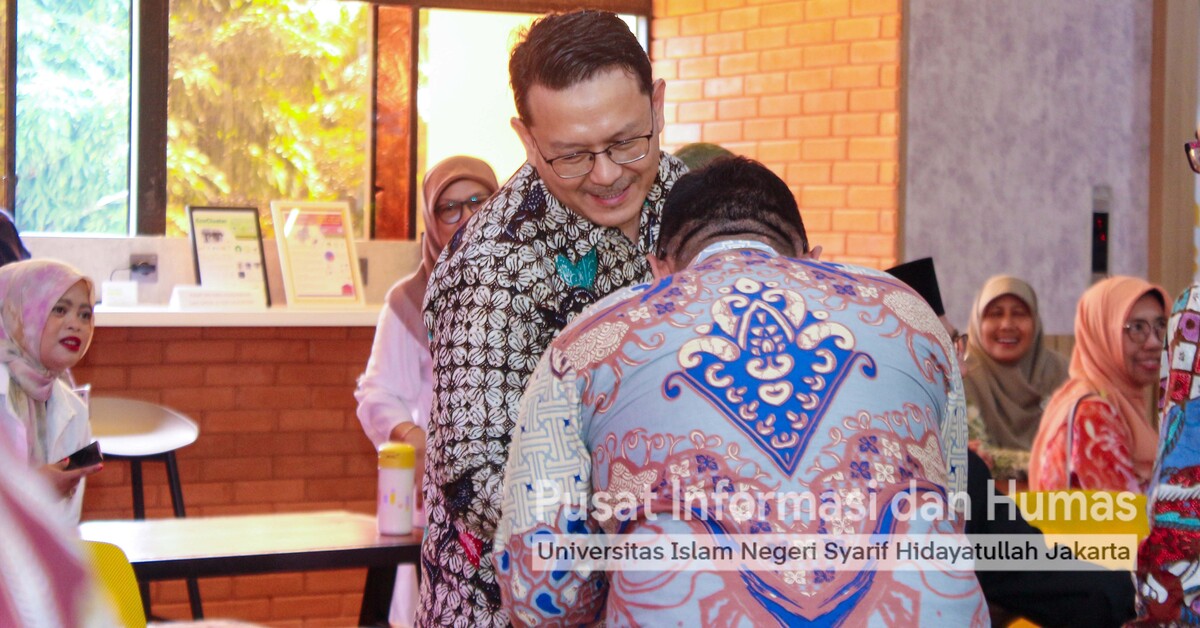
In October 2024, the Faculty of Science and Technology established the Innovation Impact Hub in collaboration with Maxy Academy. The facility was designed as a modern co-working space supporting innovation, collaboration, entrepreneurship, and the development of student ideas.
The Hub provides an environment in which students can develop creative projects and social-business concepts while interacting with academic and external stakeholders. The University's collaboration with Maxy Academy was intended to connect students with wider digital and entrepreneurship ecosystems.
FST UIN Jakarta stated that it would facilitate and support the programme as part of its effort to strengthen innovation and entrepreneurship among students. This facility established an early institutional platform through which ideas and prototypes could be developed beyond conventional classroom activities.
2. Establishing Saintek Hub as a Technology Incubator


The University's startup-support infrastructure was expanded in April 2025 through the establishment of Saintek Hub at the Faculty of Science and Technology. The facility was developed with support from the Telecommunication and Information Accessibility Agency of Indonesia's Ministry of Communication and Digital Affairs.
Saintek Hub was designed as a collaborative technology and innovation space equipped with modern co-working facilities, high-speed internet, smart presentation infrastructure, and spaces for interdisciplinary collaboration. More importantly, the facility was designed to function as a mini technology incubator. Its development programme includes technology-entrepreneurship training, mentoring by industry practitioners, internal innovation competitions, networking with startup ecosystems, and assistance for students and lecturers developing technology prototypes.
Students with prototypes or technological concepts are expected to receive mentoring to develop their ideas into market-ready products. The University's long-term development plan also includes startup acceleration, collaboration with venture-capital networks, and the incubation of at least ten startups capable of competing in the market. These arrangements demonstrate direct institutional assistance for the development of early-stage technology ventures.
3. Developing Sustainability-Oriented Innovation

The startup ecosystem operates alongside a strong portfolio of sustainability-oriented innovation at UIN Jakarta. In November 2024, the Faculty of Science and Technology organised the Dissemination of Outstanding Innovation Products programme to support and introduce innovations developed by lecturers and students.
The programme included several innovation clusters directly relevant to sustainable and low-carbon development. The Smart Urban Farming cluster developed sensor-based technologies for automated irrigation, nutrient management, and hydroponic monitoring. The system supports efficient use of water and resources while enabling sustainable food production in limited urban spaces.
The Waste and Renewable Energy cluster focused on converting waste into useful products and developing environmentally responsible technologies. Another cluster introduced Green AI, demonstrating the application of resource-efficient digital technology. Through this dissemination programme, the University provided institutional visibility and development support to environmentally oriented technologies with potential for further commercialisation and entrepreneurship.
4. Supporting Smart Urban Farming Innovation

One of the University's notable sustainability-oriented innovations is Smart Urban Farming. Developed by students from the Faculty of Science and Technology, the system integrates sensors and automated controls for urban agriculture.
Its technology includes automated irrigation, liquid-fertiliser management, and real-time monitoring of soil moisture, nutrients, and water conditions. The project was designed to make urban agriculture more efficient, water-conscious, and environmentally responsible. It can be applied on rooftops, vertical gardens, and other urban spaces where conventional agricultural land is limited.
The University promoted and disseminated this innovation as part of its wider technology-development activities. Smart Urban Farming represents an example of an environmentally oriented prototype that can be developed further through the University's technology-incubation ecosystem.
5. Developing Sustainable Agricultural Startup Opportunities

In September 2025, UIN Jakarta strengthened the connection between sustainability innovation and entrepreneurship through collaboration with Indonesia's Ministry of Agriculture. The collaboration addressed applied research, modern agricultural technologies, human-resource development, and sustainable agricultural practices. Importantly, the programme also opened opportunities for business incubation and agricultural startup development.
The initiative was designed to enable students, researchers, and communities to develop practical solutions addressing agricultural production, distribution, technology, and market access. The collaboration explicitly promoted the development of young entrepreneurs whose activities are oriented toward sustainability.
This provides direct evidence that the University's innovation ecosystem is extending beyond academic research toward startup development in environmentally sustainable sectors.
6. Providing Mentoring for Student Startup Development

UIN Jakarta also provides direct academic mentoring to student-led startup activities. A documented example is Pantau.ai, a technology startup involving students from the University's Informatics Engineering programme.
Pantau.ai developed an artificial-intelligence-based fire-detection system capable of identifying fire through existing colour CCTV infrastructure and transmitting real-time alerts. The startup received incubation support from the Bangkit programme and secured USD 10,000 in development funding. The Faculty of Science and Technology documented that the development of Pantau.ai was supported by guidance and mentoring from an Informatics Engineering lecturer at UIN Jakarta.
This example demonstrates that startup assistance within the University can include academic mentoring in addition to infrastructure and entrepreneurship programmes. Although the publicly available documentation does not classify Pantau.ai specifically as a low-carbon company, it provides evidence of the University's capacity to mentor technology startups.
7. Connecting Green Innovation with Startup Incubation
The combination of sustainability-oriented technology development and startup-incubation infrastructure creates an important pathway for low-carbon entrepreneurship. UIN Jakarta has developed environmentally oriented prototypes in areas including smart agriculture, renewable energy, waste utilisation, resource-efficient computing, and environmental technologies.
At the same time, the University provides co-working spaces, technology-incubation facilities, entrepreneurial training, mentoring, stakeholder networking, and pathways toward market readiness. The 2025 collaboration with the Ministry of Agriculture further connects this infrastructure to sustainable startup development. Together, these initiatives demonstrate an institutional pathway through which environmentally responsible innovations can progress from research and prototypes toward entrepreneurial and commercial applications.
8. Contribution to SDG 7: Affordable and Clean Energy
Syarif Hidayatullah State Islamic University Jakarta has strengthened its support for innovation and entrepreneurship through the Innovation Impact Hub, Saintek Hub, academic mentoring, innovation dissemination, and collaboration with government and industry partners. The University has simultaneously developed and promoted sustainability-oriented technologies in areas such as Smart Urban Farming, Waste and Renewable Energy, Green AI, and sustainable agriculture.
The 2025 sustainable-agriculture collaboration explicitly included opportunities for business incubation and agricultural startup development, while Saintek Hub provides institutional infrastructure for mentoring prototypes and accelerating technology startups. Together, these initiatives demonstrate that UIN Jakarta provides an enabling ecosystem for startups and early-stage ventures whose technologies can contribute to sustainable and low-carbon development.
Further documentation identifying specific low-carbon startups that have formally completed University incubation would strengthen verification and provide even more direct evidence for SDG 7 Indicator 7.4.5.
Source :
https://www.uinjkt.ac.id/id/saintek-hub-ruang-kolaborasi-baru-yang-hidupkan-semangat-inovasi-di-fst-uin-jakarta
https://fst.uinjkt.ac.id/id/kerja-sama-fst-uin-jakarta-dengan-kementerian-pertanian-untuk-penguatan-riset-dan-inovasi-pertanian-berkelanjutan
https://fst.uinjkt.ac.id/id/diseminasi-produk-inovasi-unggulan-fakultas-sains-dan-teknologi-uin-syarif-hidayatullah-jakarta-tahun-2024
https://uinjkt.ac.id/id/inovasi-mahasiswa-uin-jakarta-smart-urban-farming-untuk-masa-depan-pertanian-perkotaan
https://fst.uinjkt.ac.id/id/-peresmian-innovation-impact-hub-by-maxy-academy-pusat-inovasi-dan-kolaborasi-mahasiswa-di-uin-syarif-hidayatullah-jakarta
https://fst.uinjkt.ac.id/id/mahasiswa-fst-uin-jakarta-di-balik-sukses-pantauai-startup-deteksi-kebakaran-berbasis-ai-yang-raih-dana-10000-dari-bangkit