Strengthening International Collaboration for SDG Data Gathering and Climate Research
Syarif Hidayatullah State Islamic University Jakarta actively participates in international research collaboration to gather, analyse, and apply data related to sustainable development, particularly environmental sustainability, climate change, climate education, and community-based environmental action. Through the Center for the Study of Islam and Society (PPIM), the University has worked with international partners including Greenpeace Middle East and North Africa (MENA), Ummah for Earth Greenpeace Indonesia, and the Embassy of the Kingdom of the Netherlands in Indonesia. These collaborations have supported research activities designed to measure environmental awareness, climate-change education, sustainability practices, and the role of religious institutions and communities in responding to environmental challenges.
The resulting evidence contributes to Sustainable Development Goals including SDG 4: Quality Education, SDG 13: Climate Action, and SDG 17: Partnerships for the Goals.
1. International Research Collaboration with Greenpeace MENA and Ummah for Earth

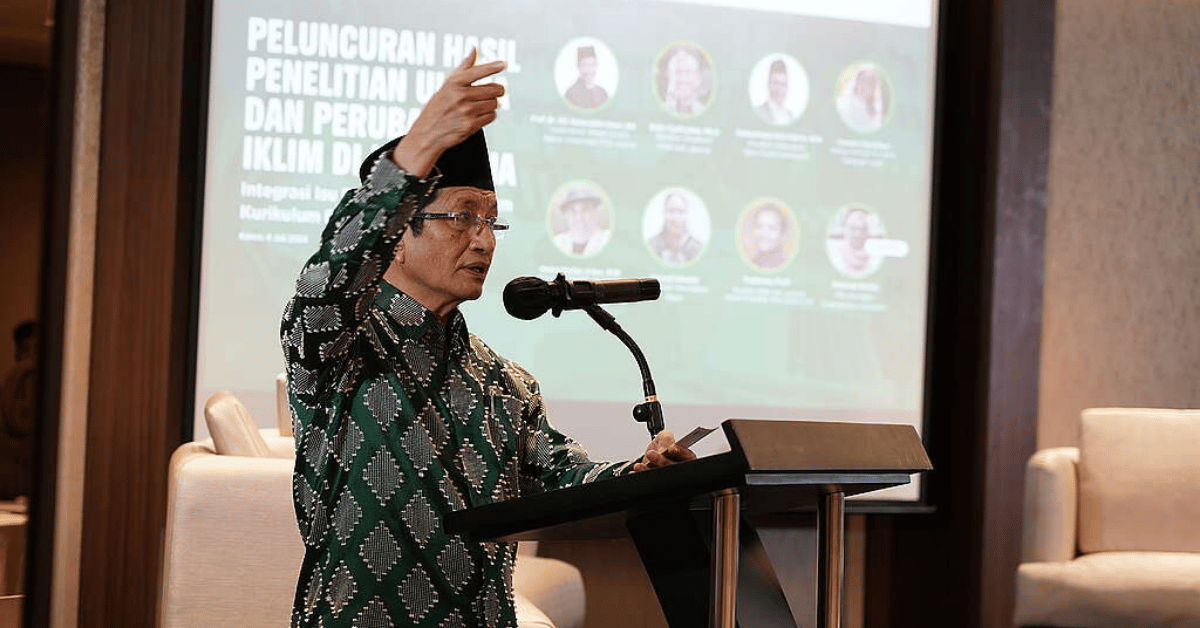
One of the University's most relevant international collaborations is the programme “Ulama (Imam) and Climate Change and Environmental Issues in Islamic Higher Education.” The initiative was implemented through collaboration between PPIM of Syarif Hidayatullah State Islamic University Jakarta, Greenpeace Middle East and North Africa (MENA), and Ummah for Earth Greenpeace Indonesia. The collaboration operated from 2023 to 2025 and focused on strengthening the capacity of Muslim religious leaders and Islamic higher education institutions to respond to climate change and environmental challenges.
A central component of the initiative was research designed to examine how climate-change and environmental issues were incorporated into Islamic higher education. This involved gathering evidence from Islamic universities, analysing curricula, examining institutional support, and identifying barriers affecting the integration of Climate Change and Environmental Education. The collaboration therefore generated data directly relevant to SDG-related questions concerning education for sustainability and climate awareness.
2. Gathering Data on Climate Education in Islamic Higher Education
The international research programme gathered qualitative data to assess the integration of climate-change and environmental issues into Islamic higher education. Research documented by Syarif Hidayatullah State Islamic University Jakarta included 14 focus-group discussions and interviews conducted across five Islamic universities over a three-month period. The study examined whether Islamic higher education institutions had incorporated climate and environmental education into their curricula.
It identified several challenges, including:
-
the absence of specialised courses on climate change;
-
limited institutionalisation of Climate Change Education;
-
low levels of institutional leadership commitment;
-
insufficient alignment between environmental issues and university missions; and
-
limited teaching resources and methodological capacity.
These findings provided measurable evidence about the state of climate education within Islamic higher education. Rather than relying only on general perceptions, the project collected institutional and stakeholder data that could be used to identify gaps and guide future educational interventions. The data therefore contributed to understanding progress toward sustainability education and climate-action objectives.
3. Expanding the Evidence Base across Islamic Universities
The wider collaboration between PPIM, Greenpeace MENA, and Ummah for Earth subsequently expanded the evidence base. Programme documentation records research across 17 Islamic higher education institutions, including institutions affiliated with major Islamic organisations such as Nahdlatul Ulama and Muhammadiyah. This broader research examined institutional readiness, curriculum development, environmental literacy, and support for integrating climate-change and environmental issues into university education. The data gathered through the collaboration identified recurring challenges across different institutions.
These findings were later used to develop two proposed curriculum components:
“Religion and Environment” and “Environmental Citizenship.”
These curriculum models demonstrate how internationally supported research data can be translated into practical interventions. By linking data gathering with curriculum development, Syarif Hidayatullah State Islamic University Jakarta demonstrated how international research collaboration can contribute to both the measurement and advancement of SDG-related education.
4. Translating Research Data into 2025 Institutional Action

The international collaboration continued to generate practical outcomes during 2025. PPIM and Greenpeace implemented capacity-building activities focused on environmentally responsive Islamic higher education. In November 2025, PPIM collaborated with Ummah for Earth–Greenpeace Indonesia and UIN Maulana Malik Ibrahim Malang to conduct a capacity-building programme for university lecturers. The programme was explicitly described as a follow-up to research and mapping undertaken jointly by PPIM and Greenpeace.
Research findings had identified limitations in environmental literacy and the methodological capacity of university lecturers. These measured gaps were then used to design training activities and curriculum-development interventions. This demonstrates an important research cycle:
data gathering → problem identification → analysis → intervention design → capacity building.
The process shows that international research collaboration was used not simply to produce publications but also to inform practical institutional responses.
5. International Partnership with the Embassy of the Kingdom of the Netherlands through REACT
Syarif Hidayatullah State Islamic University Jakarta also participated in international collaboration through the Religious Environmentalism Actions (REACT) Project. REACT was implemented by PPIM with the support and partnership of the Embassy of the Kingdom of the Netherlands in Indonesia. The project operated during 2024–2025 and combined research, policy engagement, capacity building, and public communication.
A major component of the project was data gathering. The project included:
-
a national environmental survey;
-
qualitative research;
-
field observations;
-
focus-group discussions;
-
interviews;
-
community studies; and
-
documentation of religious environmental initiatives.
The research was designed to generate evidence about the relationship between religion, environmental awareness, climate action, and community behaviour. The project therefore provides another example of international cooperation supporting the collection and interpretation of data relevant to sustainable development.
6. Measuring Community-Based Environmental Innovation

In 2025, REACT released research examining environmental innovation within Muslim communities. The study covered seven Indonesian provinces and 16 Muslim communities at village level. It involved 103 informants, including 67 men and 36 women.
Researchers used:
-
in-depth interviews;
-
field observations; and
-
document analysis.
The study examined factors influencing successful environmental innovation and identified how local communities responded to climate and environmental challenges. The data covered issues such as environmental leadership, waste management, renewable energy, local institutions, religious motivation, and community participation. The research enabled Syarif Hidayatullah State Islamic University Jakarta and its international project partners to generate evidence about environmental action at community level. The resulting measurements helped identify factors that support or constrain locally driven sustainability initiatives.
7. Using Research Data to Measure Environmental Practices in Pesantren
The REACT research programme also generated evidence concerning environmentally sustainable Islamic boarding schools. Data collection included focus-group discussions and case studies conducted across multiple Indonesian provinces. Researchers examined environmental practices, institutional sustainability, leadership, infrastructure, education, and community participation. These studies generated systematic evidence concerning why some pesantren were able to maintain environmental programmes while others experienced difficulties.
The resulting data helped identify measurable factors related to:
-
institutional commitment;
-
environmental infrastructure;
-
leadership;
-
financial sustainability;
-
curriculum integration;
-
community participation; and
-
long-term programme continuity.
This research contributed to a broader evidence base on how religious educational institutions can support sustainable development.
8. Linking International Collaboration with SDG Measurement
The international research collaborations implemented by Syarif Hidayatullah State Islamic University Jakarta demonstrate several forms of SDG-related data gathering. First, collaborative research with Greenpeace MENA and Ummah for Earth generated evidence concerning Climate Change Education, directly relevant to SDG 4 and SDG 13. Second, REACT research supported by the Embassy of the Kingdom of the Netherlands generated evidence on environmental awareness, community environmental action, environmental innovation, and sustainable religious institutions. Third, the University used research findings to identify implementation gaps and design interventions, including green-curriculum initiatives and lecturer capacity-building. These activities demonstrate that data were not gathered only for academic publication.
The evidence was used to:
-
identify sustainability challenges;
-
measure institutional readiness;
-
evaluate environmental literacy;
-
compare practices across institutions and communities;
-
design educational interventions;
-
develop policy recommendations; and
-
monitor progress in sustainability-related initiatives.
9. International Knowledge Exchange and Research Dissemination
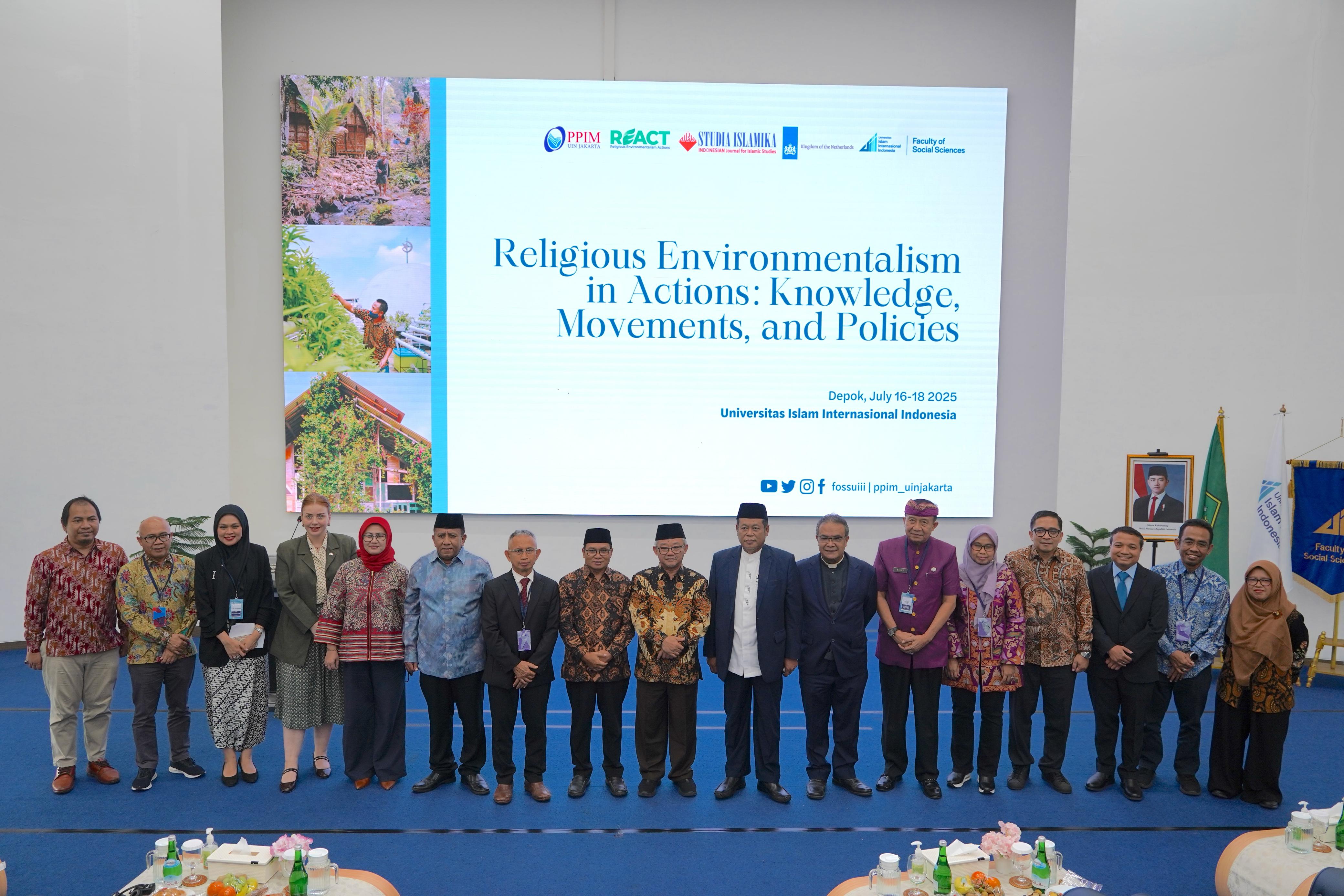
Research findings generated through international collaboration were also disseminated to wider academic and policy audiences. During the International Conference on Religious Environmentalism in Action: Knowledge, Movements, and Policies, held in July 2025, researchers and stakeholders from multiple countries discussed evidence concerning religion, environmental behaviour, policy, and sustainable development. The conference involved participants from international academic institutions, government bodies, environmental organisations, and religious communities. This provided an international platform through which research data and sustainability findings could be compared, discussed, and communicated.
10. Contribution to SDG 17: Partnerships for the Goals
Syarif Hidayatullah State Islamic University Jakarta demonstrates active participation in international collaboration for gathering and analysing sustainability-related data. Through collaboration with Greenpeace Middle East and North Africa, Ummah for Earth Greenpeace Indonesia, and the Embassy of the Kingdom of the Netherlands, the University has contributed to research measuring:
-
climate-change education;
-
institutional sustainability readiness;
-
environmental literacy;
-
community environmental innovation;
-
religious environmentalism; and
-
sustainable practices in Islamic educational institutions.
The evidence generated through these collaborations has been used to identify challenges, develop interventions, support curriculum innovation, inform policy discussion, and strengthen sustainable-development programmes.
The collaborations therefore provide substantive evidence for SDG Indicator 17.2.3: International Collaboration on Gathering or Measuring Data for the Sustainable Development Goals.
Source :
https://ppimcensis.or.id/program/ummah-for-earth-u4e-greenpeace-mena-indonesia/
https://studiaislamika.ppimcensis.or.id/index.php/studia-islamika/article/view/42956
https://uinjkt.ac.id/id/press-release-mengintegrasikan-perubahan-iklim-dalam-kurikulum-pendidikan-tinggi-islam-ini-hasil-penelitian-ppim-uin-jakarta-dan-greenpeace-indonesia
https://ppimcensis.or.id/2024/01/20/ppim-uin-jakarta-dan-kedutaan-besar-belanda-luncurkan-proyek-react-untuk-meningkatkan-aksi-lingkungan-berbasis-agama-di-indonesia/
https://www.uinjkt.ac.id/index.php/id/survei-ppim-2025-muslim-lokal-mainkan-peran-signifikan-dalam-pelestarian-lingkungan
https://ppimcensis.or.id/profil/research/