
Six UIN Jakarta Graduate School Students Complete Their Studies with Support from BAZNAS Islamic Philanthropy Scholarships
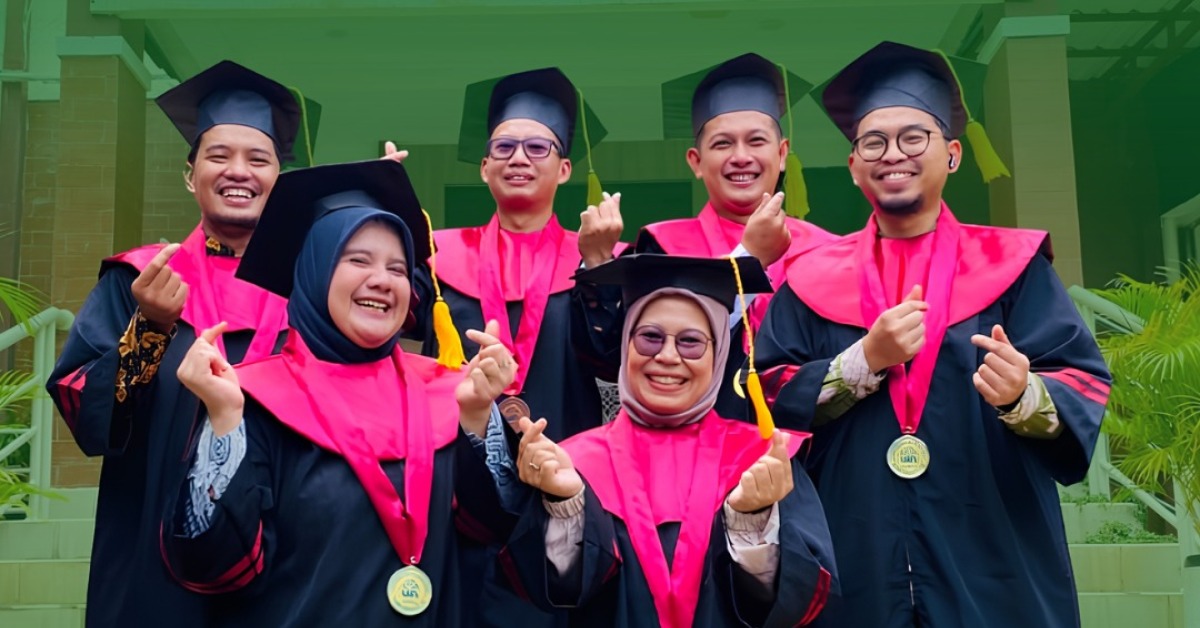
Jakarta, UIN News Online– Six recipients of the 2024 Islamic Philanthropy Scholarship from the National Board of Zakat (BAZNAS) of the Republic of Indonesia have successfully completed the Master's Program in Islamic Studies, specializing in Islamic Philanthropy, at the Graduate School (SPs) of UIN Syarif Hidayatullah Jakarta. All six graduated on Thursday (November 19, 2026), achieving commendable academic results.
According to an official statement from the UIN Jakarta Graduate School received on Saturday (November 21, 2026), five graduates earned Cum Laude honors, while one received a Very Satisfactory distinction. One of the scholarship recipients, Arief Budiman, was also named the top graduate at the master's level.
The six graduates are zakat administrators (amil) and practitioners from Islamic philanthropy institutions: Arief Budiman, Zyra Yunka Aulia, Marwan Hadid, Ahmad Badrun Kosasih, Erick Agung Pamungkas, and Wulandari. They completed their studies with the degree of Master of Arts (M.A.) through a concentration designed to strengthen human resource capacity in zakat management and Islamic philanthropy through academic and research-based approaches.
Arief Budiman achieved a GPA of 3.81, earning Cum Laude honors and the distinction of top graduate. The other five graduates were Wulandari (GPA 3.78), Ahmad Badrun Kosasih (GPA 3.78), Erick Agung Pamungkas (GPA 3.76), Marwan Hadid (GPA 3.76), and Zyra Yunka Aulia (GPA 3.72). All except Zyra received Cum Laude honors, while Zyra graduated with a Very Satisfactory distinction.
These achievements were announced earlier at the 142nd Graduate School Graduation Send-Off Ceremony, held on Wednesday (November 18, 2026), at the Prof. Dr. Suwito, M.A. Auditorium. During the event, Arief Budiman was also selected to represent the master's graduates in delivering remarks. He expressed his gratitude to the Graduate School leadership, faculty members, and administrative staff for their guidance and support from the beginning of the academic program through its completion.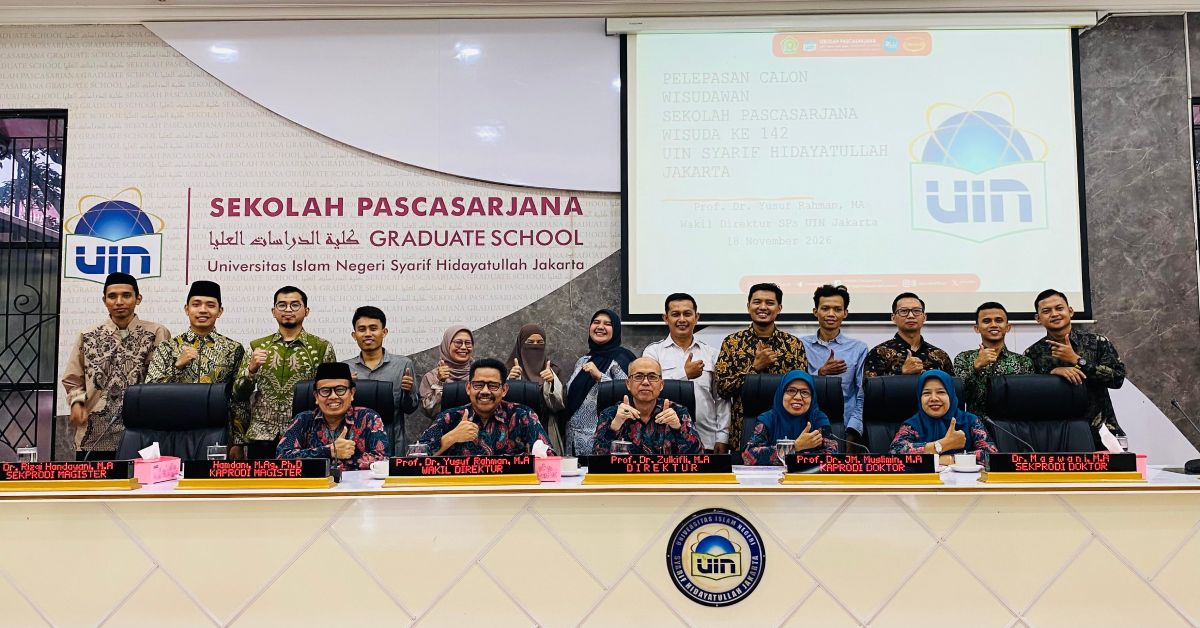
In his remarks, Director of the UIN Jakarta Graduate School, Prof. Zulkifli, M.A., Ph.D., congratulated all prospective graduates on successfully completing their studies. He described them as resilient individuals who had overcome various challenges throughout their academic journey.
Prof. Zulkifli emphasized that the academic and familial bond between alumni and their alma mater does not end when students complete their education. The ties established during their time at the Graduate School will remain throughout their lives. He therefore encouraged the graduates to uphold the reputation of their alma mater wherever their professional paths may take them.
He also expressed his hope that alumni would share their positive experiences studying at the Graduate School with the wider community. In addition, he encouraged them to provide constructive criticism and feedback directly to the university as part of ongoing efforts to improve the quality of educational services.
These messages are in line with the Graduate School's slogan, “Membaca Dunia, Dibaca Dunia” (“Reading the World, Being Read by the World”), which encourages graduates to remain productive, pursue their work and writing, and contribute knowledge to society. On the same occasion, Deputy Director of the Graduate School, Prof. Dr. Yusuf Rahman, M.A., encouraged the master's graduates not to become complacent and to prepare themselves to continue their education at the doctoral level.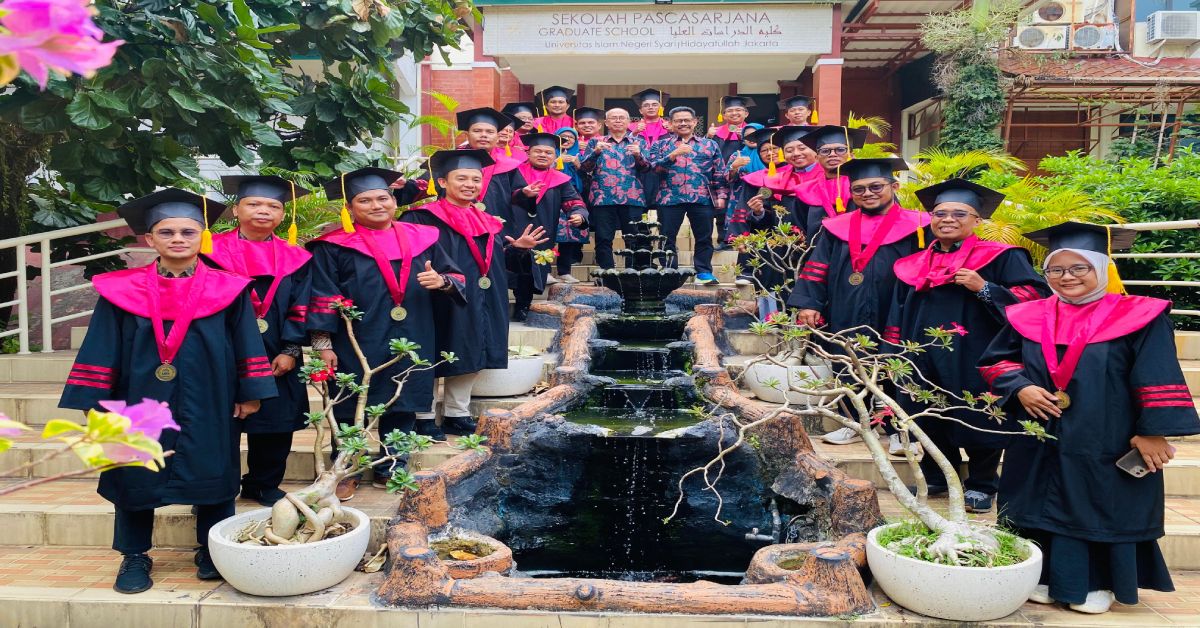
Research Addressing Challenges in the Zakat Ecosystem
In addition to their academic achievements, the six graduates produced research directly relevant to the development of Islamic philanthropy governance. Their thesis topics cover three important dimensions of the zakat ecosystem: fundraising, zakat distribution and utilization, and public donation behavior.
Arief Budiman's thesis, Optimalisasi Pengumpulan Sedekah Konsumen Alfamart dengan Implementasi Integrated Marketing Communication (IMC) Tahun 2024–2025 (Optimizing Alms Collection from Alfamart Consumers through the Implementation of Integrated Marketing Communication (IMC) in 2024–2025), examines integrated communication strategies to increase alms collection. His research concludes that synergy among various communication channels, particularly digital platforms, has the potential to broaden public participation in charitable giving.
Zyra Yunka Aulia explores Islamic financial inclusion through her thesis, Inklusi Keuangan Syariah dalam ZIS: Analisis Dampak Kolaborasi BSI dan BAZNAS (Islamic Financial Inclusion in ZIS: An Analysis of the Impact of Collaboration between BSI and BAZNAS). The study shows that collaboration between BAZNAS and Bank Syariah Indonesia (BSI) contributes to transforming mustahik (zakat recipients) from unbanked to bankable individuals. The program also contributes to increased household income among beneficiaries, enabling them to surpass the had kifayah threshold, or the minimum standard of adequacy for meeting basic needs.
Focusing on zakat utilization for education, Marwan Hadid examines Pendayagunaan Zakat untuk Infrastruktur Madrasah Swasta di Daerah 3T: Studi Kasus BAZNAS RI (Utilizing Zakat for Infrastructure Development in Private Madrasahs in Underdeveloped, Frontier, and Outermost Regions: A Case Study of BAZNAS RI). His research establishes the Sharia-based legitimacy of using zakat funds to develop madrasah infrastructure through an expanded interpretation of fī sabīlillāh (in the cause of God), guided by the principle of public benefit (maslahah).
Ahmad Badrun Kosasih investigates productive zakat management through his thesis, Manajemen Pembiayaan Zakat Produktif Berbasis al-Qarḍ al-Ḥasan dengan Pendekatan Balanced Scorecard (BAZNAS Microfinance Desa Matraman) (Productive Zakat Financing Management Based on al-Qarḍ al-Ḥasan Using the Balanced Scorecard Approach: A Case Study of BAZNAS Microfinance Desa Matraman). The study records that at least 754 mustahik have benefited from the program. Approximately 80 percent experienced increases in business capital and income, while 51 MSME partners successfully strengthened their business capacity and gained access to banking services, becoming bankable.
From the perspective of community empowerment models, Erick Agung Pamungkas examines Model Bisnis Sosial Filantropi Islam pada Kawasan Pemberdayaan Terpadu: Studi Kasus Zona Madina Dompet Dhuafa (Islamic Philanthropy Social Business Models in Integrated Empowerment Areas: A Case Study of Zona Madina, Dompet Dhuafa). His research shows that an integrated empowerment-area model is more effective in addressing multidimensional poverty than fragmented or partial empowerment approaches.
Meanwhile, Wulandari focuses on Perilaku Praktik Filantropi Islam pada Generasi Zilenial di Kota Bandung (Islamic Philanthropic Practices and Behaviors among Generation Z and Millennials in Bandung City). Her research identifies three typologies of generosity among young people. It also finds that the gap between charitable intentions and actual giving is influenced more by limited economic capacity than by a lack of commitment to donating.
Strengthening the Academic Competence of Zakat Administrators
Academically, the six graduates are recorded as the 2,820th Master's graduate in Islamic Studies, Arief Budiman; the 2,835th, Wulandari; the 2,837th, Erick Agung Pamungkas; the 2,841st, Marwan Hadid; the 2,842nd, Ahmad Badrun Kosasih; and the 2,844th, Zyra Yunka Aulia, at the UIN Jakarta Graduate School.
In its official statement, the UIN Jakarta Graduate School leadership expressed appreciation and congratulations to all scholarship recipients for successfully completing their studies. Their research findings are expected to serve not merely as academic documents but also as references for policy development and improvements in the governance of zakat fundraising, distribution, and utilization in practice.
The BAZNAS Islamic Philanthropy Scholarship is designed to prepare zakat administrators and philanthropy practitioners who possess not only professional competencies but also the ability to understand the challenges faced by mustahik comprehensively through scientific approaches. Through master's-level education at the UIN Jakarta Graduate School, scholarship recipients are expected to translate academic knowledge into innovations and more professional, productive, and impactful zakat management practices that contribute to community empowerment. (Contributor/Zm)