Religious Affairs Minister: Indonesia Sets an Example in Educating Women Ulama
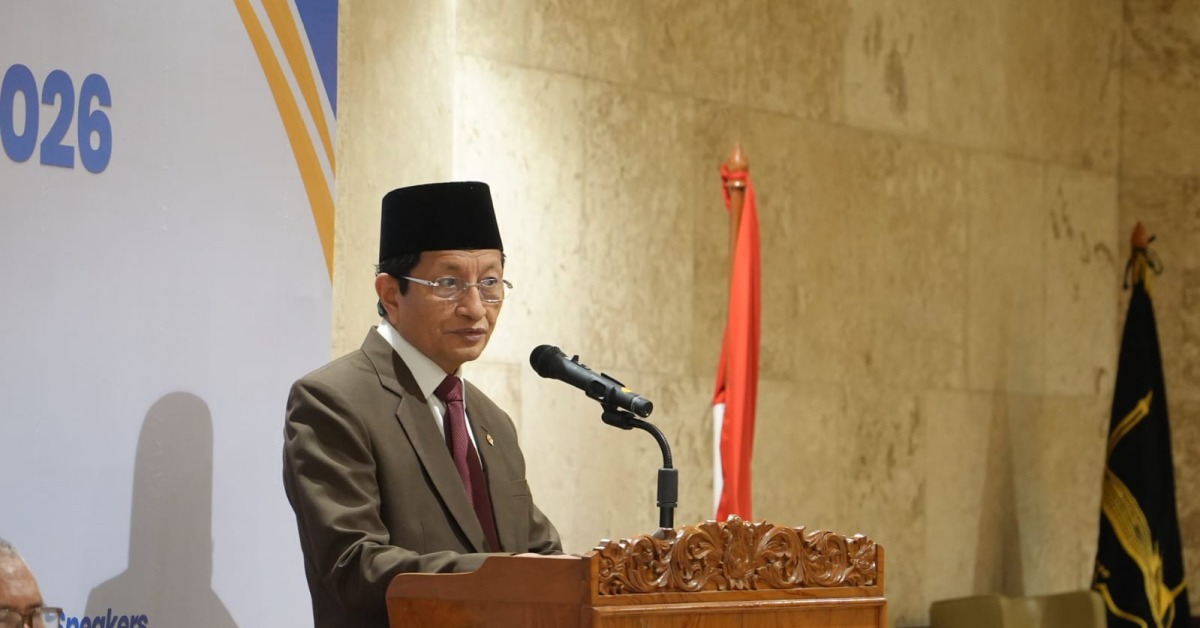
Jakarta, UIN Jakarta Online News – Indonesia is emerging as a global pioneer in providing structured education for women ulama, Minister of Religious Affairs Prof. Dr. K.H. Nasaruddin Umar said. He described the country’s experience in developing women’s religious scholarship as an important breakthrough that could serve as a model for other countries.
He made the remarks at the opening of the International Short Course 2026: Learning Islam Through Women Ulama, Knowledge, Justice, and Social Transformation in Indonesia, held at Istiqlal Mosque in Jakarta on Monday, (11/02/2026)
The international academic program is organized through a collaboration involving the Institute for Research and Community Engagement (LP2M) of UIN Syarif Hidayatullah Jakarta, UIN Siber Syekh Nurjati Cirebon, the Istiqlal Mosque Ulama Cadre Education Program (PKUMI), the Indonesian Women Ulama Congress (KUPI), the UIN Jakarta Social Trust Fund (STF), and the Peace Research Institute Oslo (PRIO), Norway.
In his remarks, Nasaruddin specifically highlighted PKUMI, which was developed in collaboration with Universitas PTIQ Jakarta, the Ministry of Women’s Empowerment and Child Protection, and the Indonesia Endowment Fund for Education (LPDP) under the Ministry of Finance.
“Indonesia is a global pioneer in providing structured education for women ulama. The model we have developed at PKUMI has even attracted academics and women ulama from Egypt, who have come to learn from our experience because they intend to replicate a similar program at Al-Azhar University in Cairo,” he said.
The minister added that efforts to strengthen the development of women ulama are also supported by international academic networks. Around 100 PKUMI students are currently conducting research in the United States, while dozens of others are taking part in intensive programs at Al-Azhar University.
He also noted that women ulama affiliated with KUPI have broadened the scope of Islamic scholarship. Women are no longer positioned merely as subjects of academic study but are increasingly recognized as producers of religious knowledge, contributing to the interpretation of religious texts, the formulation of Islamic law, and responses to contemporary social issues.
Drawing on the principles of mubadalah (reciprocity), substantive justice, and maqasid al-shariah, women ulama have developed religious approaches that respond to changing social realities while remaining rooted in the classical Islamic intellectual tradition.
“The regeneration of women ulama in Indonesia brings perspectives that enrich a field historically dominated by male scholars. Their authority in formulating fatwas and ethical guidance makes the body of Islamic scholarship more complete and comprehensive,” Nasaruddin explained.
He also called for stronger support for the development of future generations of women ulama through closer collaboration among universities, pesantren, media networks, and interfaith dialogue platforms, enabling their contributions to reach wider audiences nationally and internationally.
In line with this vision, UIN Jakarta, through LP2M, is hosting the International Short Course 2026 from November 2 to 9. The program brings together 18 selected participants, 14 women and four men from six countries: Algeria, Morocco, Pakistan, The Gambia, the Philippines, and Indonesia.
LP2M Chair and head of the organizing committee Prof. Amelia Fauzia said the program was designed to introduce participants to Indonesia’s Islamic intellectual landscape, particularly the contributions of women ulama to gender justice, peacebuilding, and social transformation.
Over eight days, participants take part in academic lectures, interactive discussions, comparative research workshops, and field-based learning sessions with academics, religious scholars, and practitioners. A key part of the program is a visit and residential experience at Pesantren Kebon Jambu in Cirebon, where participants can gain firsthand insight into its intellectual traditions, women’s religious leadership, and community empowerment initiatives.
“We want participants to understand how Islamic teachings are interpreted and translated into concrete action, from advancing gender justice and peacebuilding to protecting the environment,” Amelia said.
UIN Jakarta Vice Rector Ali Munhanif welcomed the collaboration across institutions and countries. He said the program provides an important platform for exchanging ideas while introducing international participants to how Muslim communities in Indonesia preserve Islamic intellectual traditions and promote equality in religious public life.
“This program gives international participants the opportunity to see firsthand how pesantren traditions and traditional Muslim communities in Indonesia preserve the classical Islamic intellectual heritage while maintaining a firm commitment to equality in religious public life,” he said.