
Reimagining Islam and Citizenship: International Seminar Highlights Indonesia’s Democratic Experience
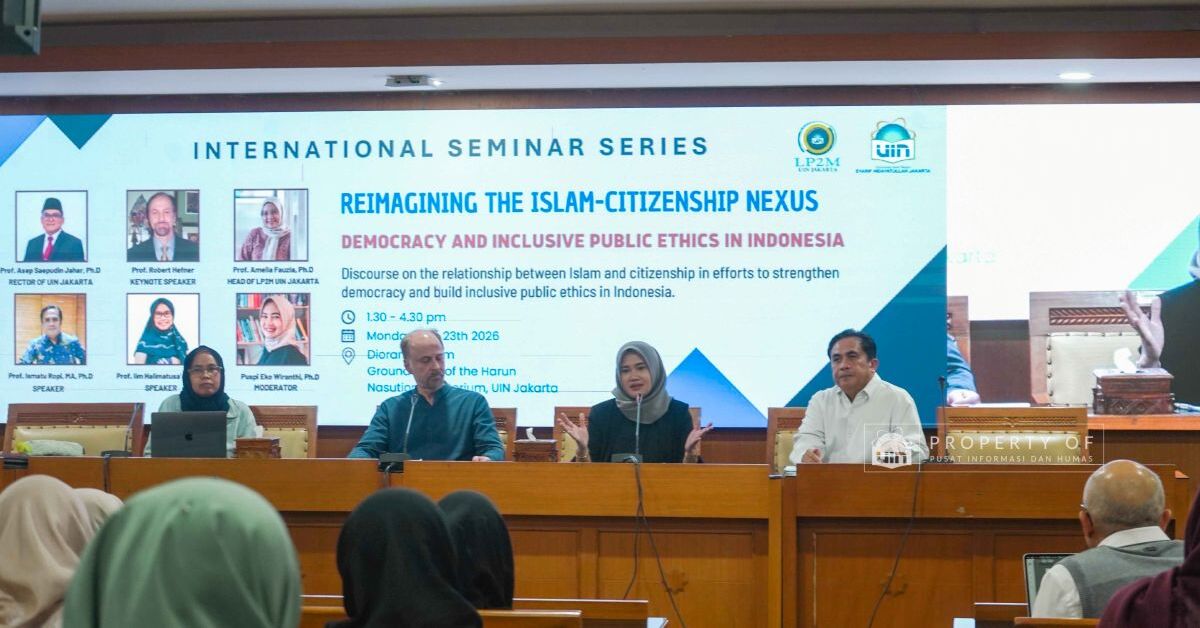
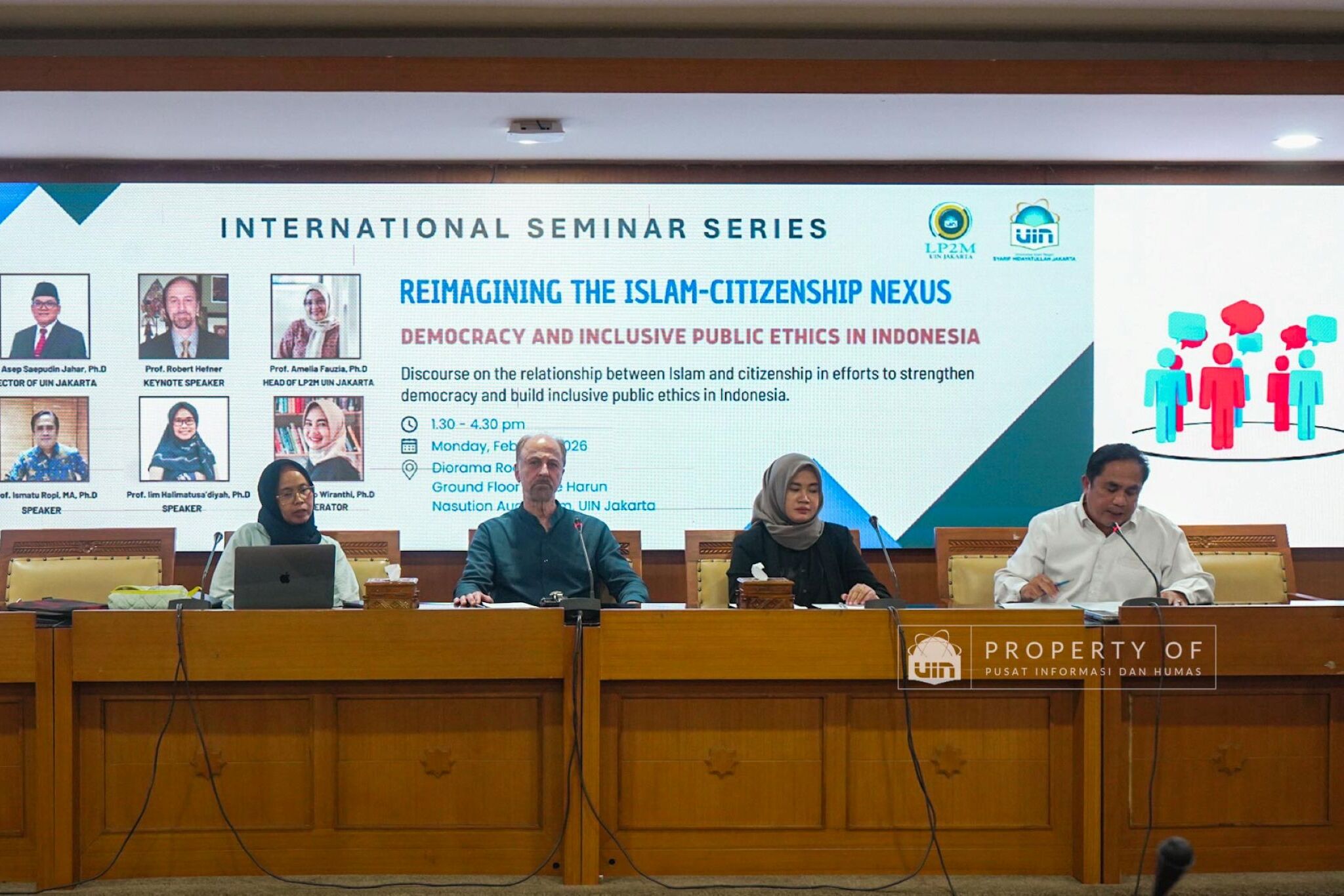
Diorama Room, UIN Online News—UIN Syarif Hidayatullah Jakarta reaffirmed its commitment to strengthening democracy and public ethics by holding an International Seminar Series themed “Reimagining the Islam-Citizenship Nexus: Democracy and Inclusive Public Ethics in Indonesia.” Organized by the Institute for Research and Community Service (LP2M), the event took place at the Diorama Room, Harun Nasution Auditorium, on Monday (2/23/2026).
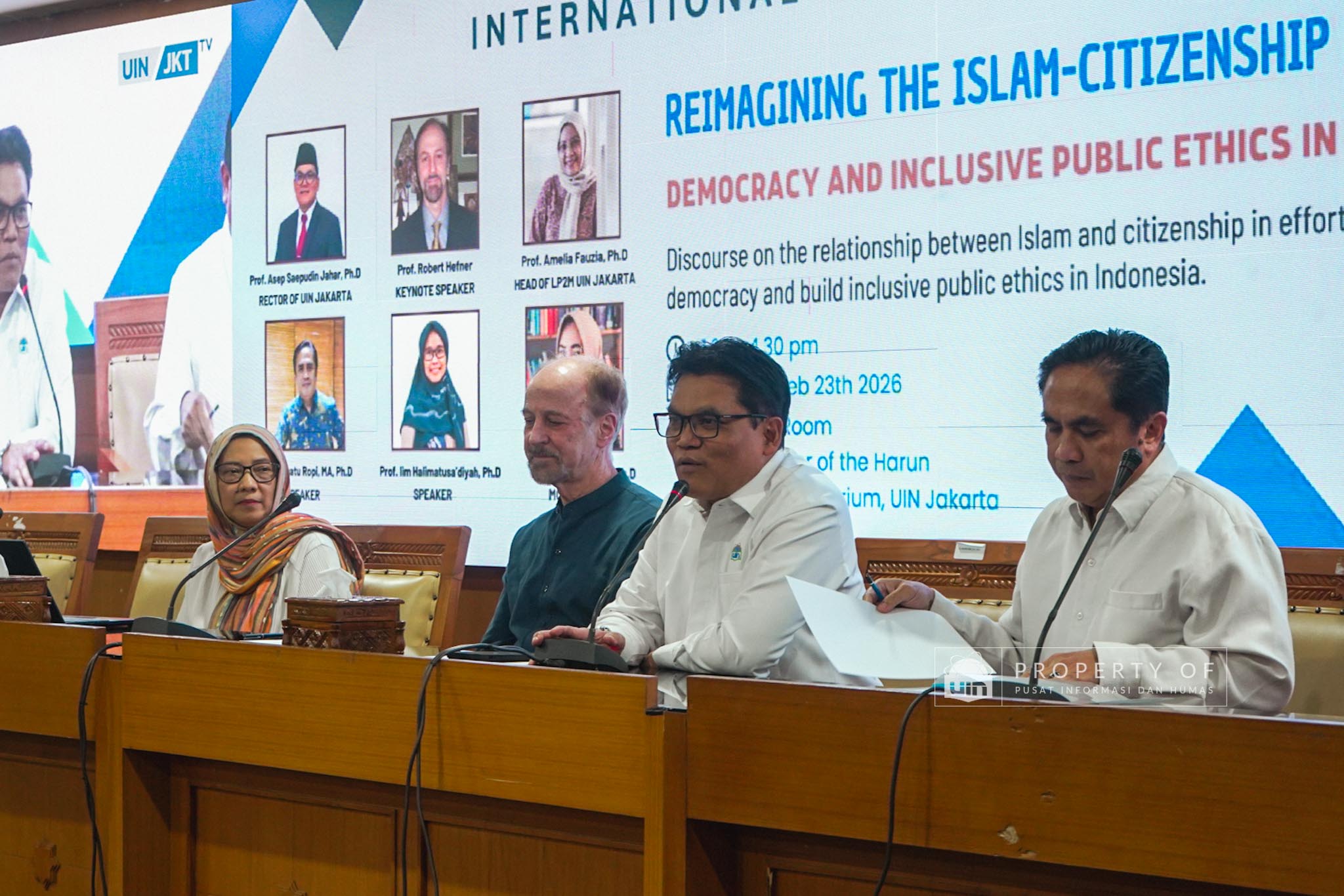
The seminar featured Prof. Robert Hefner as the keynote speaker. Also in attendance were UIN Jakarta Rector Prof. Asep Saepudin Jahar, M.A., Ph.D.; Vice Rector for Cooperation and Institutional Development Prof. Dr. Din Wahid, M.A., Ph.D.; Head of LP2M Prof. Amelia Fauzia, Ph.D.; speakers Prof. Ismatu Ropi, M.A., Ph.D., and Prof. Iim Halimatusa’diyah, Ph.D.; moderated by Puspi Eko Wiranthi, Ph.D. The event was attended by academics from various faculties and invited guests.
In his remarks, Rector Prof. Asep Saepudin Jahar emphasized the importance of academic forums in enriching perspectives on the relationship between Islam and democracy.
“This seminar is very important so that we can share knowledge and experiences with Prof. Hefner regarding developments in Islam, citizenship, and democracy in Indonesia. We need to continue learning and listening to new findings from research conducted over decades,” he said.
He also highlighted contemporary dynamics such as conservatism, moderatism, and global democratic challenges.
“Indonesia has a unique democratic experience among Muslim-majority countries. However, democracy always faces challenges. Therefore, academic discussion forums like this must continue to be sustained,” he added.
Head of LP2M, Prof. Amelia Fauzia, Ph.D., stressed that discourse on Islam and citizenship is increasingly relevant in Indonesia’s current democratic context.
“The question of how inclusive our public space is becomes very important, because democracy requires public ethics that are fair and inclusive for all citizens,” she stated.
She expressed appreciation to all speakers and hoped the event would strengthen UIN Jakarta’s position as a world-class university.
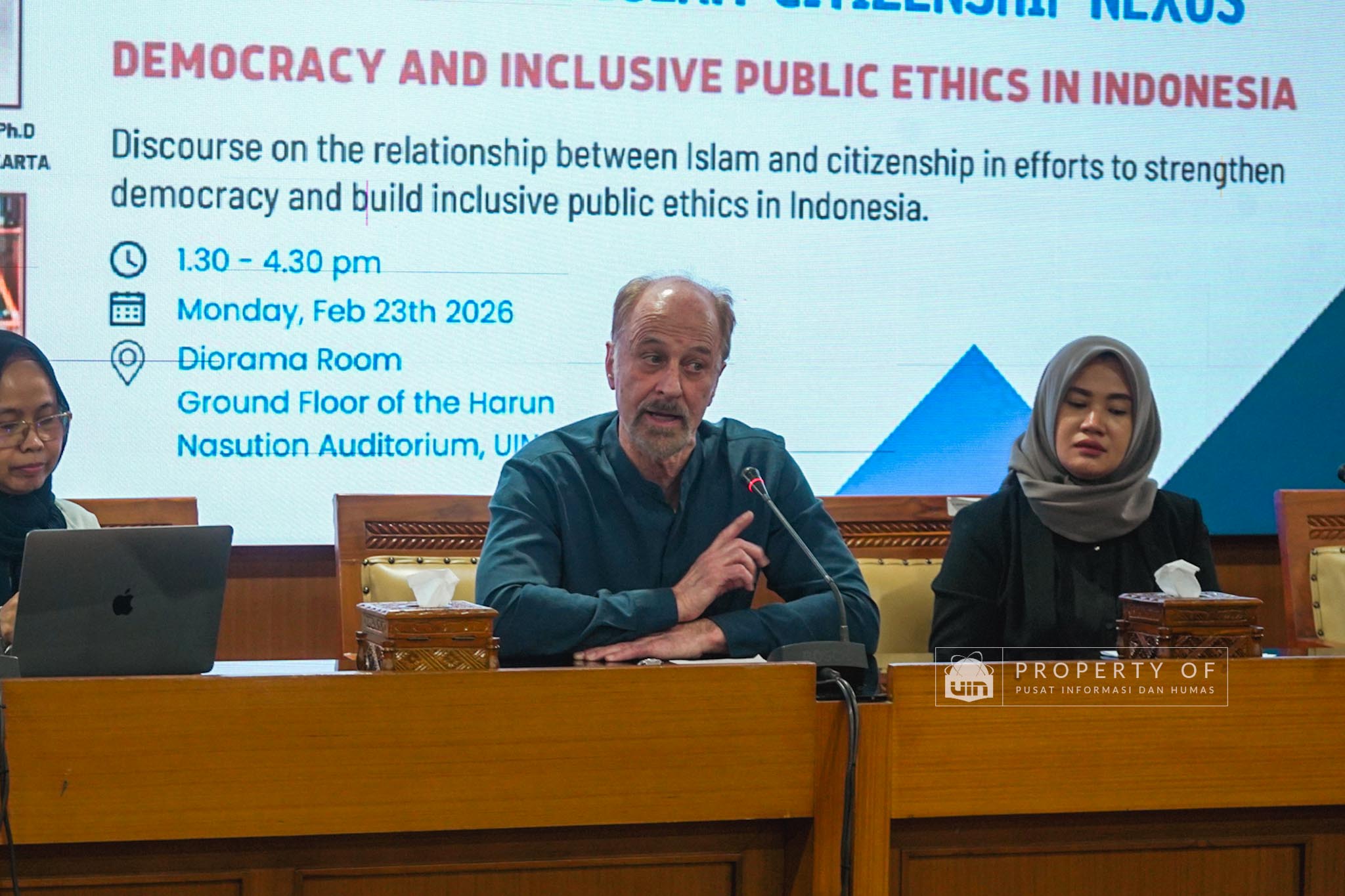
In his presentation, Prof. Robert Hefner described Indonesia as the only Muslim-majority country among the 49 member states of the Organization of Islamic Cooperation (OIC) that has successfully consolidated electoral democracy effectively.
“Indonesia has the remarkable distinction of having developed one of the most forward-looking Islamic higher education systems in the world,” he said.
He emphasized that Indonesia’s democratic success does not stand alone but is supported by complex interactions between the state and civil society, including the role of the world’s two largest Islamic organizations, Nahdlatul Ulama and Muhammadiyah.
According to him, these organizations are not only large in number but also contribute to building inclusive public ethics and supporting a democratic citizenship system based on national values.
As a speaker, Prof. Ismatu Ropi, M.A., Ph.D., asserted that Indonesia’s democracy is not a battle between religion and secularism, but rather an internal dynamic within Islamic discourse itself.
“We need to move from fragile tolerance toward equal and inclusive citizenship. Democratic citizenship must be understood as part of religious ethical obligations,” he explained.
Meanwhile, Prof. Iim Halimatusa’diyah, Ph.D., highlighted the perspective of moral citizenship and women’s struggle in the public sphere.
“Citizenship is an ethical struggle that continues to be negotiated. The question is whether inclusivity is realistic amid the ever-present dynamics of majority and minority,” she said.
She also underlined the importance of maintaining a critical civil society stance toward the state in order to preserve principles of justice and inclusivity.
The discussion was interactive, with active participation from students and lecturers across faculties. The seminar served as an important reflection on Indonesia’s position in the global democratic landscape while reinforcing UIN Jakarta’s role as a center for the development of moderate, inclusive Islamic thought oriented toward public ethics.
(Putri Khoirina N./Fauziah M./Zaenal M./Syandana Mazna Aisyah/Foto: Azka Raysa P.)