Reducing Disposable Items through Reusable Alternatives and Paperless Practices at UIN Jakarta
Syarif Hidayatullah State Islamic University Jakarta is committed to reducing the consumption of disposable items through formal institutional policy, reusable alternatives, paperless administration, and sustainable campus infrastructure.
The University recognises that disposable products contribute to unnecessary resource consumption and generate significant quantities of waste. Reducing dependence on single-use items therefore forms an important part of UIN Jakarta's Green Campus strategy and its contribution to Sustainable Development Goal 12: Responsible Consumption and Production.
During 2024–2025, the University implemented measures addressing disposable drinking containers, food-service items, paper use, and other single-use materials through formal policy and operational changes.
1. Establishing Institutional Measures to Reduce Disposable Items
On 9 July 2024, Syarif Hidayatullah State Islamic University Jakarta issued Rector's Circular Letter Number 09 of 2024 concerning Plastic Waste Reduction.
The policy establishes practical measures intended to reduce the use of disposable items in University activities. University units are instructed not to provide drinking water in disposable plastic packaging during meetings, seminars, workshops, and other campus activities. Instead, the policy promotes reusable alternatives including water dispensers, drinking glasses, and glass bottles.
The policy also encourages members of the University community to reduce their consumption of food and beverages packaged in disposable plastic and to carry reusable drinking bottles.
These measures shift institutional consumption away from disposable products and towards reusable alternatives.
2. Promoting Reusable Drinking and Eating Equipment
UIN Jakarta strengthened implementation of the policy through Green Campus awareness activities.
On 12 September 2024, the University's Green Campus Team encouraged students and members of the academic community to minimise disposable plastic use by carrying reusable drinking bottles and reusable eating utensils. The initiative demonstrated that reducing disposable items was promoted not only through formal regulation but also through daily behavioural guidance.
Reusable eating utensils and drinking containers reduce demand for disposable cups, bottles, food containers, and related materials. Promoting these alternatives supports a longer-term change in consumption habits across campus.

3. Providing Refill Infrastructure to Replace Disposable Bottles
The University's disposable-item reduction strategy is supported by the provision of water drinking fountains.
Water refill facilities are available at strategic locations including faculties, libraries, and supporting facilities.
These facilities allow members of the University community to refill reusable bottles rather than purchasing disposable bottled water.
The availability of drinking-water infrastructure provides a practical alternative that supports the implementation of the University's waste-reduction policy.
The programme also helps establish reusable drinking bottles as part of normal campus behaviour.
4. Reducing Disposable Paper through Paperless Administration
UIN Jakarta also addresses disposable items through its paperless initiatives.
The University's official waste-management documentation identifies a paperless policy as one of the measures used to reduce paper waste.
Administrative and academic activities are increasingly encouraged to use digital documents rather than printed materials.
The initiative reduces the consumption of disposable paper while also improving administrative efficiency and reducing physical document storage requirements.
The University's 2025 Performance Report further identifies Paper Less Office as part of its digitalisation strategy supporting Green Campus development.
Through the digitalisation of administrative processes, the University aims to reduce reliance on printed documents and minimise paper waste.
5. Implementing Paperless Academic Activities
Paper reduction has also been implemented at academic-unit level.
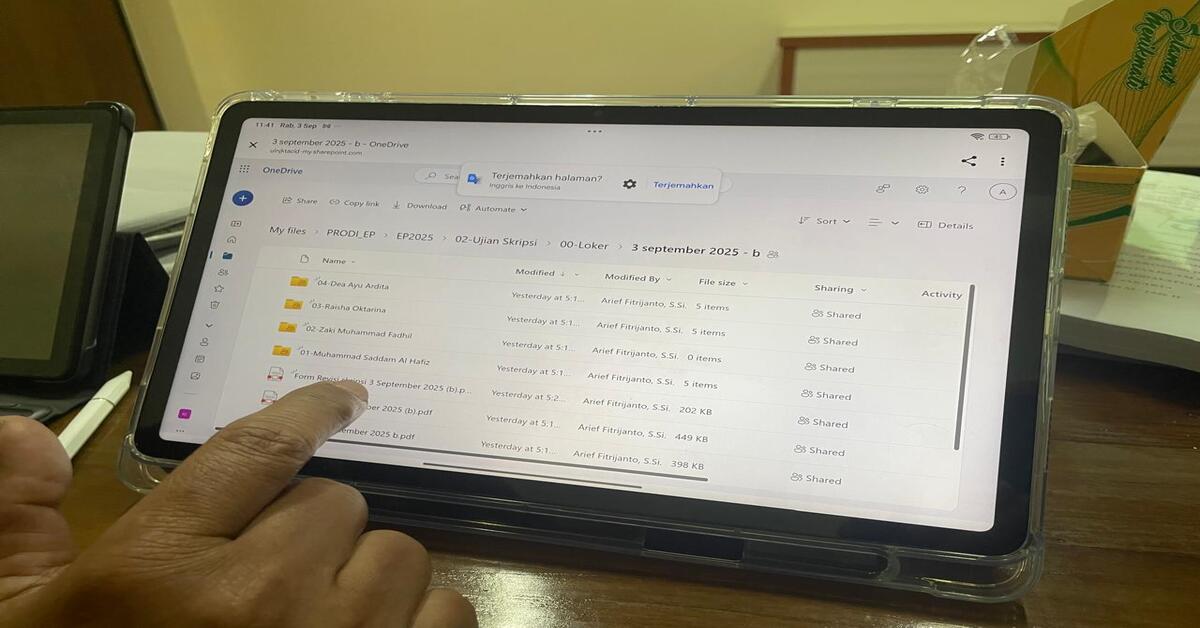
In September 2025, the Development Economics Study Programme at the Faculty of Economics and Business introduced a policy to conduct examinations without physical paper. The initiative replaced printed examination papers with digital processes. This practice reduces the quantity of single-use paper generated through routine academic activities.
The initiative demonstrates how the University's broader Green Campus and digitalisation objectives can be implemented through practical changes within individual academic programmes.
6. Integrating Waste Reduction with Green Campus Management
Reducing disposable items is part of the University's wider Green Campus framework.
UIN Jakarta's waste-management initiatives combine source reduction, reusable alternatives, waste separation, recycling, and digitalisation.
This approach recognises that sustainable waste management should begin by reducing unnecessary consumption before waste is generated. Reusable drinking bottles, eating utensils, drinking-water fountains, glass bottles, digital documents, and paperless processes all contribute to reducing the demand for products designed for short-term or single use.
These measures complement the University's wider waste-management systems and environmental awareness programmes.
7. Encouraging Responsible Consumption across the Academic Community
Institutional policies are most effective when accompanied by changes in everyday behaviour. UIN Jakarta therefore combines formal guidelines with environmental education and practical infrastructure.
Students are encouraged to carry reusable drinking bottles and food containers. University units are encouraged to replace disposable bottled water during meetings with reusable drinking equipment. Academic and administrative processes increasingly rely on digital documents. Water refill facilities support repeated use of personal drinking containers.
Together, these initiatives encourage students, lecturers, and administrative personnel to adopt more responsible patterns of consumption.
8. Supporting Long-Term Waste Prevention
The University's approach reflects the principle that preventing waste is more sustainable than managing waste after it has already been generated. Replacing disposable items with reusable alternatives reduces the quantity of materials entering the University's waste stream.
Digitalisation further reduces consumption of paper and printing materials. Providing appropriate infrastructure enables members of the academic community to adopt reusable practices without compromising access to necessary services.
Continued expansion of these initiatives can further reduce disposable-item consumption across academic, administrative, catering, and event activities.
9. Contribution to SDG 12: Responsible Consumption and Production
Syarif Hidayatullah State Islamic University Jakarta has established policies and operational practices that reduce the use of disposable products. Rector's Circular Letter Number 09 of 2024 directs University units to replace disposable bottled water with reusable alternatives and encourages reduced consumption of disposable plastic packaging.
Green Campus programmes further promote reusable drinking bottles and eating utensils. The University also provides water-refill facilities and implements paperless administrative and academic processes to reduce disposable paper consumption. Together, these documented policies and practices demonstrate UIN Jakarta's institutional commitment to minimising disposable items and promoting reusable and digital alternatives.
Through these measures, the University contributes to Sustainable Development Goal 12, particularly Indicator 12.2.6, by reducing waste generation at its source and encouraging more sustainable patterns of consumption.
Source :
https://asset.uinjkt.ac.id/uploads/fmXyXwZY/2025/02/Laporan-Kinerja-UIN-JAKARTA-2024-PUBLISH.pdf
https://uinjkt.ac.id/id/ciptakan-lingkungan-kampus-yang-nyaman-tim-green-campus-uin-jakarta-sampaikan-imbauan
http://uinjkt.ac.id/id/pengelolaan-limbah
https://www.uinjkt.ac.id/id/water-drinking-fountain
https://feb.uinjkt.ac.id/id/program-studi-ekonomi-pembangunan-dukung-green-campus-lewat-pengurangan-penggunaan-kertas
https://asset.uinjkt.ac.id/uploads/assets/pengumuman/Laporan_Kinerja_Universitas_2025___PUBLISH.pdf