
Ramadan: A Quiet Journey Back to the Self
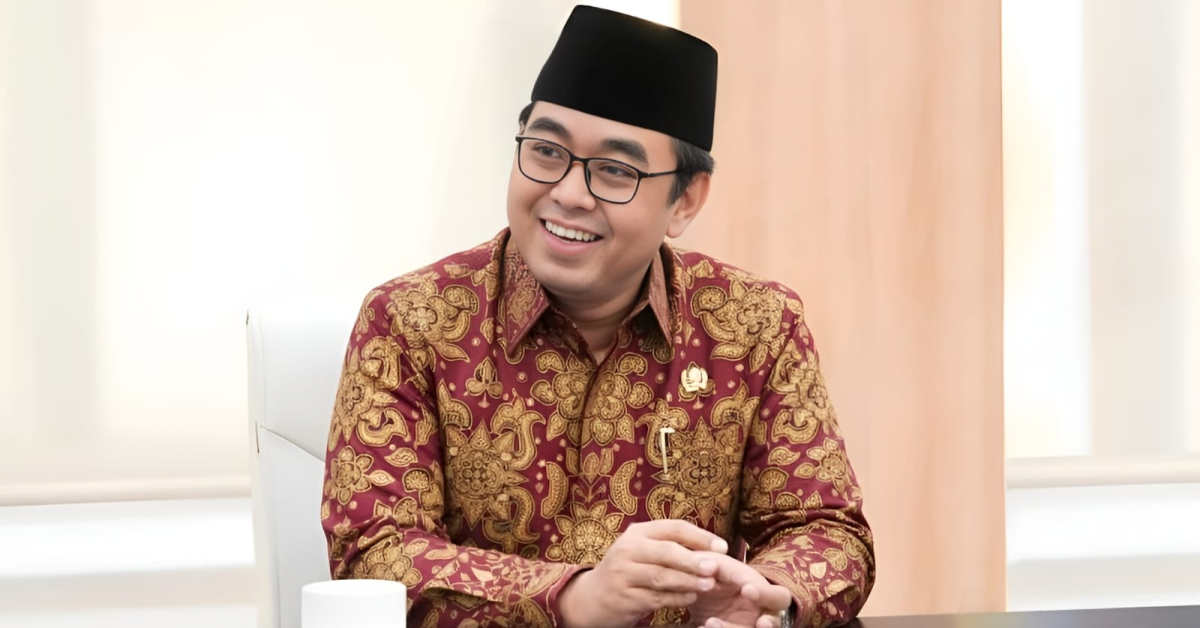
Ahmad Tholabi Kharlie
Amid the bustle of public life, Ramadan works quietly within the soul, guiding people back to a clearer self, one that is aware of God’s omnipresence.
In the stillness of pre-dawn meals and the calm of dusk before breaking the fast, people are invited into an inner space rarely touched in the rush of everyday life. In Sufi language, this is when the soul returns to fitrah al-qalb—its original clarity before being covered by the dust of the world.
Fasting, in its deepest sense, is not merely about holding back hunger and thirst. It is a journey toward clarity of the heart. The wise call it riyadhah al-nafs, a discipline of the soul to free itself from the endless pull of desire.
Hunger is not the goal, but the path. Thirst is not suffering but a reminder that humans are not fully self-sufficient. We are fragile, and in that fragility, we learn to rely on something greater. As al-Junayd al-Baghdadi (d. 910) reminded us, the path to God begins when a person realizes their own helplessness.
In Sufi tradition, fasting is often understood as the art of emptying oneself. Not empty in a void sense, but empty to be filled. A heart crowded with ambition, anxiety, and worldly distractions cannot receive deeper meaning.
Fasting slowly removes the layers that cover awareness. It cleanses—not loudly, but in silence. Ibn ‘Athaillah al-Sakandari (d. 1309) said that divine light does not enter a heart filled with anything other than Him.
Imam al-Ghazali (d. 1111) explained that fasting has levels. The fasting of ordinary people is abstaining from food and drink. The fasting of the devoted is guarding all limbs from harmful acts. But the fasting of those who truly know God is the fasting of the heart—protecting the inner self from everything but Him.
At this level, fasting brings calm and peace, going beyond a physical obligation. In this inner experience, fasting becomes a path of ma‘rifah—knowledge that is felt and lived, not just understood.
When the body weakens from hunger, awareness often becomes sharper. People can hear their inner voice more clearly. They become more sensitive to subtle meanings that are usually drowned out by the noise of desire.
In this state, fasting becomes a mirror. It reveals who we truly are—without decoration, without justification. Jalaluddin Rumi (1207–1273) described hunger as “a cloud that reveals the inner sun.”
Many think fasting is about withdrawing from the world. In truth, it is about restoring a proper relationship with it. Hunger teaches gratitude. Thirst builds patience. Limitation brings gentleness.
Fasting does not distance people from life—it guides them to live with deeper awareness: not being controlled, but being conscious.
In the spiritual experience of the Sufis, hunger is often seen as a hidden light. Not because suffering itself is noble, but because in limitation, people more easily recognize the essence of their existence.
They realize that what matters most in life is not what they possess, but whom they face—God, who is always present, even when forgotten.
Fasting also teaches silence. Not just silence from useless words, but from unnecessary inner restlessness. In that silence, the heart learns to listen—to the rhythm of existence, to the whisper of conscience, and at times, to a closeness beyond words. The Sufis call this "uns," an intimate connection with the Divine.
The calm that comes from fasting is not passive. It is a living peace—one that makes a person gentler toward others, more patient in hardship, and more honest with themselves. True fasting always produces softness. If the heart remains hard, then perhaps only the body is fasting, not the soul.
Ramadan, therefore, is not merely a series of rituals but a journey of inner purification. It is a season of healing—from emotional fatigue, mental noise, and loss of meaning. With each mindful day, fasting slowly instills a quiet sense of peace that reshapes how life is seen.
In the end, fasting is the art of becoming whole again: recognizing one’s limits, rediscovering the softness of the heart, and finding a long-lost inner peace.
It guides both outward self-control and inward tranquility.
And when Ramadan passes, what should remain is clarity of heart, openness of soul, and a deeper closeness to the source of all peace.
Because true fasting does not end at sunset. It continues as a light within the heart—a light of awareness that, once lit, is not easily extinguished by time.
The author is a professor and vice rector for Academic Affairs at UIN Syarif Hidayatullah Jakarta. This article was published in the opinion column of Detik.com on Sunday, March 1, 2026.