
PSGA UIN Jakarta Equips Students to Become Content Creators Empathetic to Gender Issues


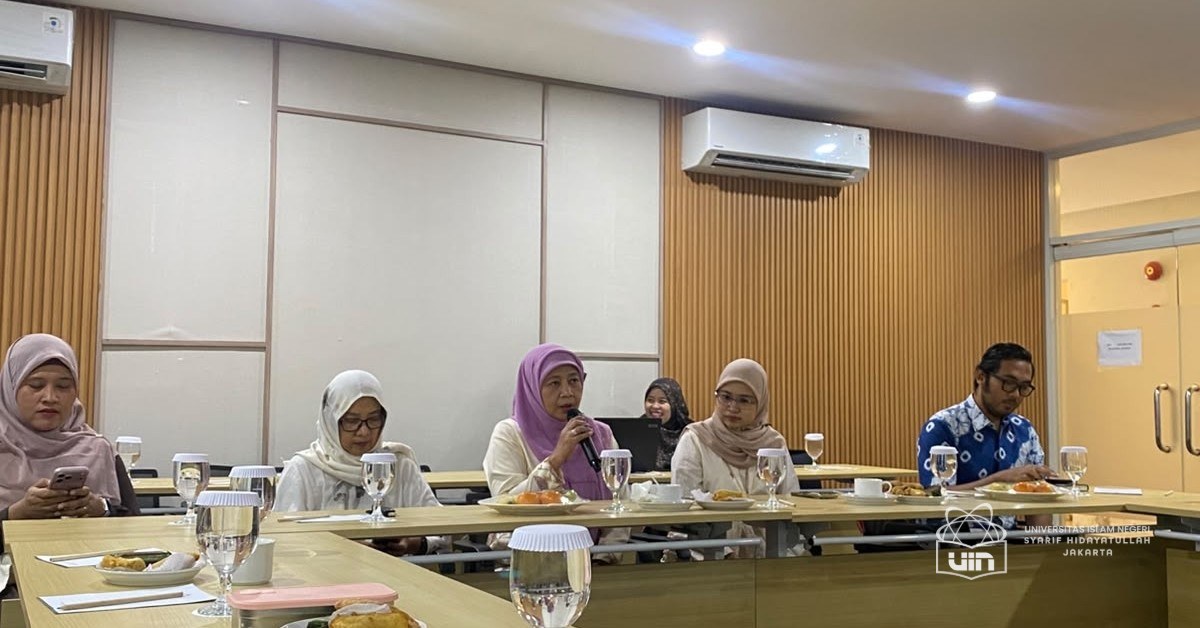
Adia Suites, UIN News Online - The Center for Gender and Child Studies (PSGA) at UIN Syarif Hidayatullah Jakarta organized a Content Creator Class Workshop for students to enhance content creation skills while building an understanding of design, editing, and empathy in digital content production. The event spans three days, September 15–17, 2026, with the first day held at Adia Suites, Wednesday (16/09/2026).
The workshop was attended by Head of LP2M Prof. Amelia Fauzia, Ph.D., Head of PSGA Dr. Hj. Wiwi Siti Sajaroh, M.Ag., PSGA staff members, and student workshop participants. The session commenced with an opening ceremony, socialization of the Task Force for the Prevention and Handling of Sexual Violence (Satgas PPKS), followed by a presentation delivered by content creator Indra Dwi Prasetyo.
In her welcoming speech, Prof. Amelia shared that this workshop represents an initiative by PSGA to socialize the prevention of sexual violence through social media platforms.
“Indeed, this is a very commendable initiative, in my opinion, from the PSGA team to socialize sexual violence prevention through social media,” stated Prof. Amelia.
Head of PSGA Dr. Hj. Wiwi explained that workshop participants were selected representatives from each faculty, aiming to expand PSGA's educational outreach regarding gender and child issues.
“The participants consist of selected faculty representatives. The objective is for them to become information mouthpieces and extensions of PSGA in providing public education, particularly surrounding gender and child issues,” Wiwi expressed.
During the workshop session, Indra explained that content creation should not merely start from deciding what one wishes to say, but must begin with understanding the problems and perspectives of the target audience. According to him, creators need to uncover the pain points or real challenges experienced by people before formulating content ideas.
“The first step in content creation is empathy. Empathy means placing ourselves in the shoes of those who will listen to that content,” Indra noted. He emphasized that creators must consider whether the message is understandable, relevant, and respectful of the target audience's circumstances.
He also urged participants to understand that impactful content requires a clear rationale and purpose. Creators should not only contemplate what content is being made and how to convey it, but also why—namely why the content matters and what benefit it brings to others.
“Always start with why. Why should I tell this story? What is its effect? Why must I speak about this, what is its impact, and so on,” Indra said. According to him, asking these questions helps creators ensure their content holds distinct value and a clear purpose when delivered to the public.
In addition to building empathy, participants were encouraged to develop storytelling capabilities so that messages within content become easier to digest and remember. Indra introduced the concept of humans as Homo Narrans—beings naturally inclined toward storytelling—making narrative construction a vital aspect of sharing information via digital media.
Indra further motivated participants to courageously explore diverse perspectives and delivery formats in content creation. He noted that creators must seek fresh approaches so that messages do not become repetitive, causing audiences to lose interest.
“Can we create another angle that others haven't thought of?” Indra questioned. He illustrated that when many creators address an issue using identical angles, another creator can explore a fresh perspective to render the discussion more engaging and distinct.
This approach can also be applied through content format selection. Indra elaborated that creators can utilize knowledge-based content, evoke human emotion, or employ entertainment and humor, provided the delivery mode supports the intended message.
During the practical session, participants were guided to craft content ideas based on issues close to their everyday lives. Participants were asked to first define the empathy framework and pain points, select a content approach based on three discussed neurological responses—dopamine, oxytocin, and endorphins—and subsequently draft the content structure and hook.
The first day, (15/09/2026), featured Indra Dwi Prasetyo covering content creation fundamentals followed by hands-on practice and Q&A. On the second day, (16/09/2026), Virdinda La Ode Achmad featured as the speaker continuing content development and production practice.
Throughout the workshop series, participants were guided not only to produce content, but also to familiarize themselves with PSGA through hands-on content creation and design tasks related to the institution. The curriculum also covered design and editing skills as well as content ethics, establishing empathy as the cornerstone to ensure messages remain mindful of human dignity, context, and impact.
Through the Content Creator Class Workshop, PSGA UIN Jakarta encourages students not merely to generate engaging content, but to comprehend the rationale, target audience, delivery strategy, and empathy behind every piece of media. This capability is expected to amplify educational outreach concerning gender and child issues, including the prevention of sexual violence via social media. Consequently, technical skills in content creation and editing can develop hand in hand with empathy and responsibility in conveying digital messages.