Providing Accessible Campus Facilities for Persons with Disabilities at UIN Jakarta
Syarif Hidayatullah State Islamic University Jakarta is committed to providing an inclusive campus environment in which students, academic staff, administrative personnel, and visitors with disabilities can participate in university activities with greater independence, safety, and dignity. The University recognises that equal access to higher education requires not only inclusive admission procedures and academic support but also the availability of physical infrastructure that accommodates different mobility and accessibility needs.
Through the development of disability-accessible facilities, institutional infrastructure standards, and the involvement of its Center for Students with Special Needs (CSSN), Syarif Hidayatullah State Islamic University Jakarta has taken steps to reduce physical barriers to educational participation. During 2024–2025, these commitments were reflected in the University's documented provision of accessible sanitation facilities, building access arrangements, parking facilities, and institutional standards for inclusive learning environments.
1. Providing Disability-Accessible Sanitation Facilities
An important component of Syarif Hidayatullah State Islamic University Jakarta's accessibility infrastructure is the provision of sanitation facilities designed for persons with disabilities. The University's official infrastructure information identifies disability-accessible toilets as part of its commitment to an inclusive campus environment.
More specifically, the Faculty of Sharia and Law maintains a publicly available building-facilities inventory documenting the provision of a designated disability-accessible toilet. The facility is identified as Room 4.01.003, located on the first floor, with an allocated area of 16 square metres.
The inclusion of this facility in the Faculty's official room inventory provides concrete evidence that disability-related accessibility has been incorporated into building infrastructure. Such facilities support the independent use of campus amenities by students and visitors with mobility-related disabilities.
2. Improving Accessible Building Entrances and Campus Mobility
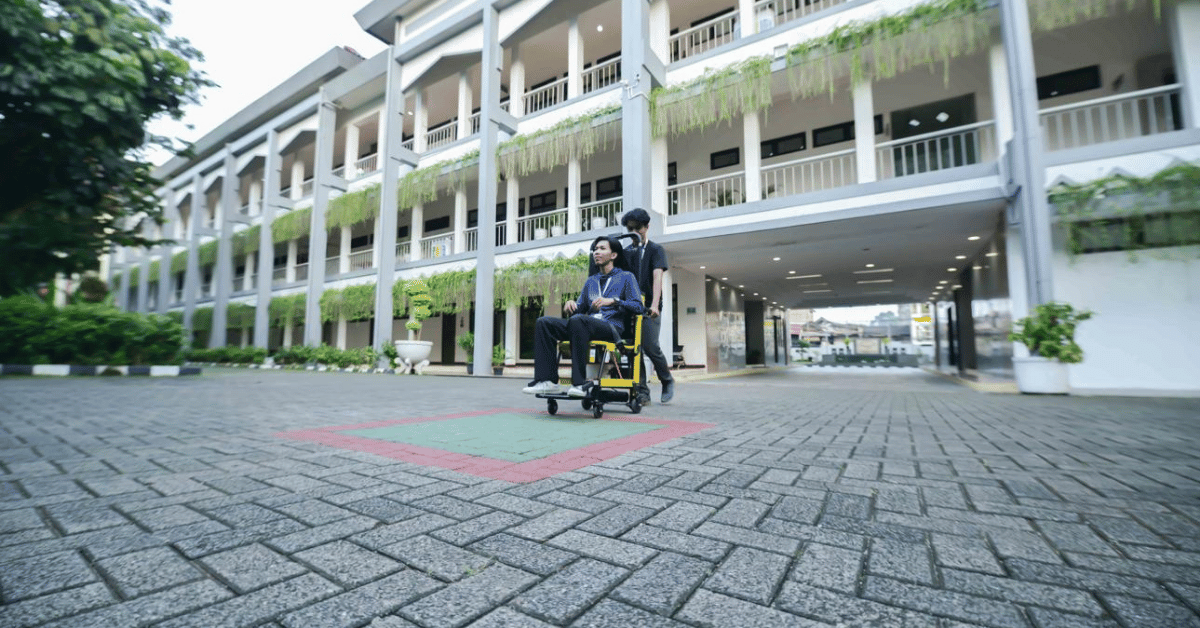
Syarif Hidayatullah State Islamic University Jakarta has also documented efforts to improve access to academic and administrative buildings for persons with disabilities. The University's 2025 Performance Report specifically identifies accessible building entrances, toilet facilities, and parking areas as components of its disability-friendly campus infrastructure.
These measures aim to reduce mobility barriers that could otherwise prevent persons with disabilities from accessing University services and participating in academic activities. Accessible entrances and circulation arrangements are essential for supporting independent movement between classrooms, academic offices, and other campus facilities. The University's infrastructure development therefore reflects an institutional effort to address accessibility as a practical requirement of educational participation.
3. Integrating Accessible Facilities into Institutional Quality Standards
Syarif Hidayatullah State Islamic University Jakarta's Faculty of Education and Teacher Training has incorporated disability-accessible facilities into its internal education quality standards. Its published Education Standards include Indicator IND-84, which specifies the availability of at least four categories of facilities supporting persons with disabilities:
-
Accessible toilets;
-
Lift facilities;
-
Accessible stairway or circulation arrangements;
-
Learning facilities accommodating disability-related needs.
The presence of this indicator demonstrates that disability accessibility is recognised within the Faculty's educational quality-assurance framework. Rather than treating accessible infrastructure solely as an optional building feature, the standard identifies accessibility-related facilities as an institutional quality consideration. This framework provides a basis for evaluating and improving the learning environment for students with disabilities. The standard should be understood as a documented institutional requirement; it does not, by itself, confirm that every specified facility has been implemented in every building.
4. Strengthening Disability Inclusion through Institutional Coordination
The development of accessible facilities is supported by the University's Center for Students with Special Needs (CSSN). CSSN contributes to the University's disability-inclusion agenda through educational support, accessibility facilitation, and disability-awareness programmes. The University's institutional performance reporting identifies the strengthening of CSSN as part of its efforts to develop an inclusive learning environment.
The Centre provides an organisational mechanism through which disability-related requirements can be recognised and communicated within the University. On 2 December 2024, Syarif Hidayatullah State Islamic University Jakarta also organised an International Day of Persons with Disabilities seminar addressing inclusive higher education and disability literacy. The programme reflected the University's efforts to strengthen institutional understanding of disability rights and the importance of accessible academic environments. These activities complement physical infrastructure initiatives by supporting greater awareness of accessibility needs among the academic community.
5. Supporting Increasing Participation of Students with Disabilities
The University's commitment to accessibility is particularly relevant given the documented participation of students with special needs. According to the University's 2025 Performance Report, Syarif Hidayatullah State Islamic University Jakarta admitted 69 new students with special needs in 2024 and 91 in 2025.
This represents an increase of approximately 31.9 percent. The University identifies increased participation among students with special needs as part of its institutional performance monitoring.
This development reinforces the importance of ensuring that academic buildings, sanitation facilities, learning spaces, and campus services are accessible to students with different physical and learning needs. The reported increase in admissions does not independently demonstrate the technical compliance of campus facilities, but it illustrates the continued importance of accessibility within the University's institutional development.
6. Developing Inclusive Infrastructure and Continuous Improvement
Accessible campus infrastructure is an ongoing institutional responsibility. Syarif Hidayatullah State Islamic University Jakarta's official publications demonstrate that the University has established dedicated accessibility facilities and incorporated disability-related infrastructure into institutional reporting and educational standards.
These efforts provide a foundation for further improvements to building entrances, circulation routes, sanitary facilities, parking areas, and academic spaces. Continued assessment of accessibility across individual campus buildings would enable the University to identify remaining barriers and prioritise improvements based on the needs of students, staff, and visitors. The development of comprehensive facility inventories, accessibility assessments, and photographic documentation would further strengthen institutional transparency and support long-term accessibility planning.
7. Contribution to SDG 10: Reduced Inequalities
Syarif Hidayatullah State Islamic University Jakarta demonstrates a commitment to reducing physical barriers for persons with disabilities through the provision and development of accessible campus facilities. The University's official infrastructure information confirms the provision of disability-accessible toilets, while the Faculty of Sharia and Law documents a dedicated accessible sanitation facility within its building inventory.
The University's 2025 Performance Report identifies accessible building entrances, toilets, and parking facilities as components of its disability-inclusive infrastructure. Furthermore, the Faculty of Education and Teacher Training incorporates disability-related facilities into its educational quality standards, and CSSN supports the University's wider disability-inclusion initiatives.
Together, these measures demonstrate that Syarif Hidayatullah State Islamic University Jakarta provides facilities intended to improve accessibility for persons with disabilities and recognises accessibility as an important element of its institutional infrastructure and educational quality framework. Through the continued improvement of accessible facilities and disability-support mechanisms, the University contributes to Sustainable Development Goal 10, particularly Indicator 10.6.7, by supporting more equitable access to academic facilities and campus services.
Source :
https://fsh.uinjkt.ac.id/id/fasilitas
https://uinjkt.ac.id/id/setting-dan-infrastruktur
https://fitk.uinjkt.ac.id/id/sm-spmi-01-standar-pendidikan
https://uinjkt.ac.id/id/seminar-hari-disabilitas-internasional-2024-menuju-kampus-inklusif-dan-literasi-disabilitas-di-uin-jakarta