Protecting Terrestrial and Aquatic Ecosystems through Water Discharge Management at UIN Jakarta
Syarif Hidayatullah State Islamic University Jakarta demonstrates its commitment to environmental protection and sustainable campus management through institutional policies governing wastewater treatment, water conservation, and environmentally responsible discharge practices. The University recognises that inadequately managed wastewater can threaten soil quality, aquatic ecosystems, biodiversity, and human health. Wastewater originating from domestic activities, laboratories, and other campus facilities therefore requires appropriate treatment and environmental safeguards.
As part of its Green Campus initiatives, Syarif Hidayatullah State Islamic University Jakarta established institutional wastewater management guidelines in 2024 and continued developing wastewater treatment infrastructure and maintenance practices during 2025. These initiatives contribute to Sustainable Development Goal 15: Life on Land, particularly Indicator 15.4.1 concerning water discharge guidelines and standards.
1. Establishing Institutional Guidelines for Wastewater Management
On 21 October 2024, Syarif Hidayatullah State Islamic University Jakarta established Rector's Circular Letter Number 18 of 2024 concerning Wastewater Management. The circular provides institutional guidance on managing wastewater generated through campus activities, including domestic wastewater and wastewater associated with laboratory operations.
Its provisions emphasise the importance of preventing environmental contamination by introducing appropriate wastewater treatment and management practices. The circular establishes directions for filtering and treating contaminated water, reducing the potentially harmful impacts of wastewater, and protecting the cleanliness and health of the surrounding environment.
It also recognises the importance of protecting plant life and aquatic environments from pollution. Furthermore, the circular encourages the development of wastewater treatment installations to reduce the environmental risks associated with wastewater disposal. Through this policy, Syarif Hidayatullah State Islamic University Jakarta has established a formal institutional framework for managing wastewater before its release or reuse.
2. Integrating Wastewater Protection into the Green Campus Policy
The University's wastewater management framework is supported by Rector's Decree Number 1415 of 2024 concerning the Green Campus Policy. Established on 21 October 2024, this policy provides a broader framework for implementing sustainability initiatives across University faculties, departments, and administrative units.
The policy supports the integration of environmental management into institutional planning and performance reporting. Water conservation, wastewater management, and environmental protection are important components of the University's Green Campus commitments.
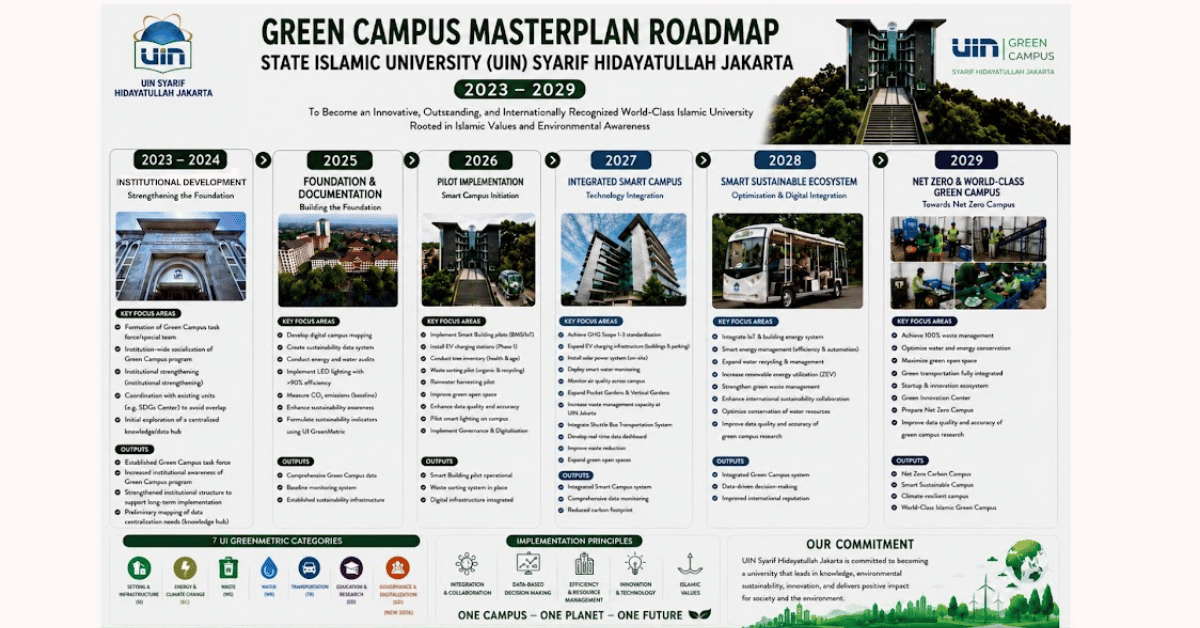
The University's Green Campus Roadmap and Masterplan 2023–2029 also includes water management among its strategic areas. Together, these institutional documents demonstrate that wastewater protection is recognised as part of the University's long-term environmental management strategy.
3. Strengthening Water Conservation and Responsible Water Reuse
Syarif Hidayatullah State Islamic University Jakarta reinforced its wastewater policy through Rector's Circular Letter Number 22 of 2024 concerning Water Management. The circular addresses water conservation, improvements in surface-water quality, drainage maintenance, rainwater harvesting, and the development of infiltration facilities.
It also promotes the reuse of appropriately treated domestic wastewater for non-potable purposes. Potential applications include landscape irrigation, vehicle washing, and toilet-flushing systems, subject to the suitability and quality of the treated water.
These measures are intended to reduce unnecessary freshwater consumption while improving the management of water resources within the campus environment. The University's water-management framework therefore connects pollution prevention with sustainable water use.
4. Implementing Laboratory Wastewater Treatment
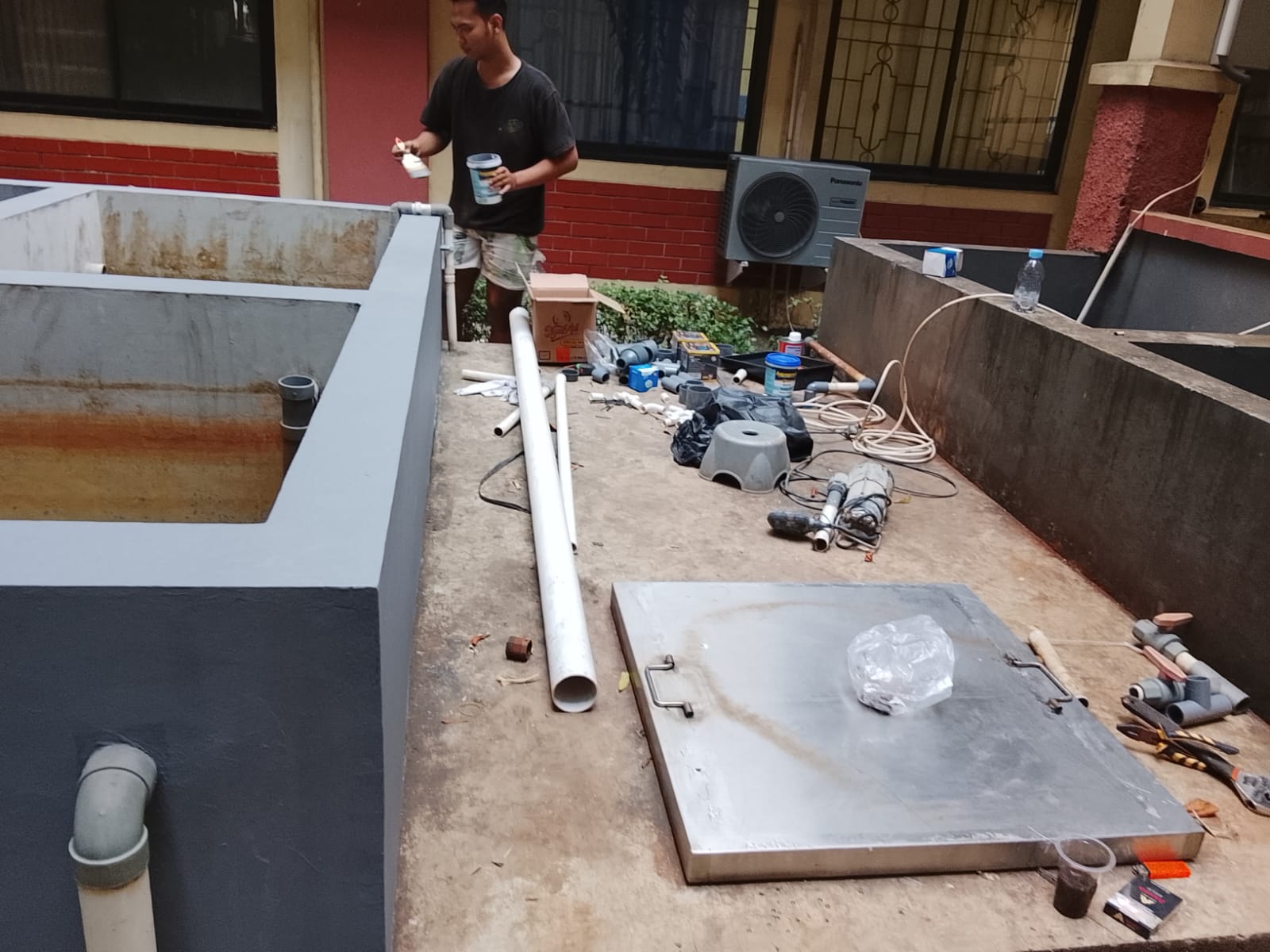
Wastewater generated by laboratory activities requires appropriate management because it may contain substances that could harm the environment if discharged without treatment. Syarif Hidayatullah State Islamic University Jakarta's Faculty of Science and Technology operates a Wastewater Treatment Plant, locally known as an Instalasi Pengolahan Air Limbah (IPAL), through its Integrated Laboratory Centre.
The facility serves the University's education, research, and testing activities by providing infrastructure for the management of laboratory wastewater. Its purpose is to reduce the risk of releasing untreated wastewater into the surrounding environment. The operation of this wastewater treatment infrastructure demonstrates the University's practical implementation of environmentally responsible wastewater management.
5. Maintaining Wastewater Treatment Infrastructure
On 8 August 2025, the Integrated Laboratory Centre of the Faculty of Science and Technology documented maintenance activities involving its Wastewater Treatment Plant. The maintenance programme included inspections of the wastewater treatment installation, pumps, piping systems, treatment tanks, and related components.
Cleaning and inspection activities were conducted to support the continuing functionality of the treatment system. Routine preventive maintenance is important for reducing equipment failures and minimising the risk of uncontrolled wastewater releases.
The documented maintenance activities provide operational evidence that wastewater treatment is addressed through infrastructure management as well as institutional policy. These activities support the University's efforts to maintain an environmentally responsible laboratory environment.
6. Supporting Ecosystem Conservation through Water Management
The University's Green Campus initiatives also include water conservation infrastructure and aquatic ecosystem management. Internal Green Campus documentation identifies rainwater harvesting systems, infiltration wells, water conservation areas, and campus ponds as components of ongoing water-management activities.
Infiltration wells support groundwater recharge, while rainwater harvesting systems help improve the management of rainfall within the campus environment. Campus ponds and surrounding vegetation also form part of the University's landscaped environmental spaces.
Maintaining appropriate water quality within these areas is relevant to the protection of aquatic organisms, surrounding vegetation, and ecological functions. Although these measures are not substitutes for wastewater discharge standards, they complement the University's broader efforts to protect land and water ecosystems.
7. Applying Environmental Quality Standards
Syarif Hidayatullah State Islamic University Jakarta's wastewater management guidelines operate within Indonesia's national environmental regulatory framework. For domestic wastewater during the 2024 reporting period, Minister of Environment and Forestry Regulation Number P.68 of 2016 provided the applicable national wastewater quality standards.
In September 2025, this regulatory framework was updated through Minister of Environment/Environmental Control Agency Regulation Number 11 of 2025. Relevant wastewater-quality considerations include parameters such as acidity or alkalinity, biological oxygen demand, chemical oxygen demand, suspended solids, and other parameters specified for the applicable wastewater category.
Such standards provide a technical basis for assessing whether wastewater is suitable for discharge into the environment. The University's existing wastewater treatment policies and infrastructure support the implementation of appropriate water-quality management practices. However, institution-specific effluent testing results, discharge limits incorporated into operating procedures, and compliance records require additional documentation.
8. Strengthening Wastewater Monitoring and Environmental Accountability
Effective water discharge management requires both documented operational guidelines and appropriate verification of wastewater quality. The University's Green Campus documentation establishes a policy and environmental planning framework, while the Faculty of Science and Technology provides operational evidence of wastewater treatment and maintenance.
Together, these measures support prevention of water pollution and the protection of ecosystems. Further documentation of wastewater sampling procedures, laboratory analyses, relevant discharge thresholds, and monitoring results would strengthen the University's ability to demonstrate compliance with applicable environmental standards.
These records would also support evidence-based evaluation of wastewater management and continuous improvement of campus environmental practices.
9. Contribution to SDG 15: Life on Land
Syarif Hidayatullah State Islamic University Jakarta has taken documented measures to protect terrestrial and aquatic ecosystems through institutional wastewater management policies and wastewater treatment practices. Rector's Circular Letter Number 18 of 2024 establishes guidance for wastewater management, while Rector's Circular Letter Number 22 of 2024 strengthens water conservation and responsible water reuse.
These policies are complemented by Rector's Decree Number 1415 of 2024 concerning the Green Campus Policy and the University's environmental management roadmap. Operational implementation is demonstrated by the Faculty of Science and Technology's wastewater treatment infrastructure and documented maintenance activities in August 2025.
Together, these measures demonstrate that Syarif Hidayatullah State Islamic University Jakarta has established institutional wastewater management guidelines and implemented practices intended to reduce water pollution and protect the surrounding environment. The University's approach supports Sustainable Development Goal 15, particularly Indicator 15.4.1, through wastewater management, environmental safeguards, and measures designed to protect ecosystems, biodiversity, and human health.
Further publication of wastewater-quality monitoring results and institution-specific discharge standards would strengthen the evidence of technical compliance and environmental performance.
Source :
https://biroauk.uinjkt.ac.id/id/dokumen
https://asset.uinjkt.ac.id/uploads/fmXyXwZY/2024/10/sk-rektor-1415---green-campus-policy.pdf
https://plt.puslab.net/archives/2949
https://peraturan.bpk.go.id/Details/345620/permen-lhbplh-no-11-tahun-2025