Professorial Oration at UIN Jakarta: Prof. Dr. Hasani Examines the Development of Maqasidi Exegesis in the Indonesian Context
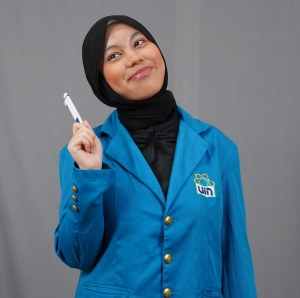
Harun Nasution Auditorium, UIN News Online – Throughout the Open Senate Session at UIN Syarif Hidayatullah Jakarta, a solemn atmosphere prevailed as thirteen full professors were officially inaugurated. Among the newly inducted professors was a leading figure in the field of Maqasidi Exegesis (Tafsir Maqasidi), Prof. Dr. Hasani Ahmad Said, S.Th.I., M.A. The academic, born in Pabean, Cilegon, who carved his trajectory from traditional Islamic boarding schools (pesantren) to the highest academic rostrum, captivated attention through his scientific oration dissecting new directions for Quranic studies in Indonesia at the Harun Nasution Auditorium on Wednesday (30/09/2026).
His stellar intellectual track record includes completing a Bachelor's degree in Quranic Exegesis and Hadith in 2005 and a Master's degree in Islamic Studies in 2007. Furthermore, Prof. Dr. Hasani achieved the distinction of Best Doctoral Graduate at UIN Jakarta in 2011 at the exceptionally young age of 28. His achievements in National Quran Recitation Competitions (MTQ) include 1st Place at the National MTQ Oxford Indonesia-Ministry of Religious Affairs RI in 2004 and 2008, and 2nd Place at the Student MTQN PIONIR at IAIN Bandung in 2004. Additionally, Prof. Dr. Hasani earned the title of Best Graduate from the Mufassir Cadre Education at the Pusat Studi Al-Qur'an (PSQ) in 2010, along with the Presidential Satyalancana Karya Satya Honor Award in 2010 at UIN Jakarta.
His rich academic background and keen sensitivity toward contemporary dynamics formed the foundation of the major vision presented in his professorial oration titled “Developing Maqasidi Exegesis in the Indonesian Context: Epistemological Construction and Scholarly Prospects in Islamic Higher Education Institutions.” Prof. Dr. Hasani highlighted the necessity of shifting religious understanding paradigms so that Islamic thought can address ecological crises, social inequality, and digital era challenges. In his oration, Prof. Dr. Hasani emphasized that comprehending Sharia must not stop at legal texts alone, but must reach the fundamental objectives of law creation itself. This framework builds upon the theoretical foundations of classical and modern scholars such as al-Juwaynī, al-Ghazālī, and al-Syāṭibī with their hierarchy of ḍarūriyyāt, ḥājiyyāt, taḥsīniyyāt, and al-kulliyyāt al-khamsah, extending to Ibn ‘Āsyūr and Jasser Auda.
“Maqāṣidī Exegesis can be formulated through a unified trajectory where the text generates context, which then yields maqasid. Maqasid drives contextualization, and contextualization produces transformation,” he stated.
To present a Quranic interpretation relevant to the modern era, Prof. Dr. Hasani offered four epistemological exegesis frameworks tailored for Indonesia: integrative, contextual, interdisciplinary, and transformative. This approach fosters open dialogue with modern science while focusing on improving human quality of life. Maqāṣidī Exegesis is deemed uniquely aligned with the character of Indonesian Islam, anchored in the principles of al-wasaṭiyyah (moderation), al-tawāzun (balance), and al-tasāmuh (tolerance).
“How does the Quran speak to Indonesia without surrendering its universality? The answer lies in reading the universal message of the Quran through the historical and social experience of Indonesian society. Maqasidi asks for what purpose guidance was revealed, what human values are to be realized, and how those values deliver public interest (maslahah),” he explained.
This vision rests upon four interconnected core pillars: nafs as legitimacy, intellect as argumentation, maqasid as orientation, and waqi’ (reality) as actualization. Through these pillars, he urged Islamic Higher Education Institutions (PTKI) to avoid treating Quranic studies merely as memorization or rigid textual reading. Areas capable of implementing Maqāṣidī Exegesis include preventing child marriage, strictly regulating polygamy, protecting women's and children's rights (maṣlaḥah al-ṭifl), zakat, waqf, Islamic economics, environmental jurisprudence (eco-fiqh), as well as digital ethics and AI.
“Students at Islamic Higher Education Institutions must master the Quran while simultaneously understanding society. They need to study Arabic alongside anthropology, master Quranic sciences alongside social sciences, and be capable of reading empirical data without losing spiritual sensitivity,” he elaborated.
To steer Islamic studies toward meaningful relevance, Prof. Dr. Hasani formulated five major prospects for Maqāṣidī Exegesis within PTKI environments. These five prospects encompass the development of exegesis methodologies, interdisciplinary research paradigms, responses to Indonesian social problems, serving as a bridge between Islamic studies and modern science, and acting as an ethical foundation for digital civilization.
“Faculties and study programs of Quranic Sciences and Exegesis must become intellectual laboratories, specifically spaces where texts are read, contexts are examined, theories are tested, realities are investigated, and solutions are formulated,” added Prof. Dr. Hasani.
Prof. Dr. Hasani's achievement in reaching the highest academic rostrum drew widespread congratulations and commendations from institutional leaders, national figures, international academics, and peers. Commendations and congratulations poured in from prominent figures including Minister of Religious Affairs RI Prof. Dr. KH. Nasaruddin Umar, M.A., Minister of Law RI Dr. Supratman Andi Agtas, S.H., M.H., Minister of Transmigration RI M. Iftitah Sulaiman Suryanagara, Governor of Lemhannas RI Dr. H. Tb. Ace Hasan Syadzily, M.Si., Chairman of KPU RI Mochammad Afifuddin, S.Th.I., M.Si., Deputy Chairmen of Central MUI, General Chairman of PB Mathla'ul Anwar Dr. H. Jazuli Juwaini, M.A., General Chairman of PB Al-Khairiyah H. Ali Mujahidin, S.H.I., M.M., Vice Rector of Qatar University Sheikh Prof. Dr. Hasan al-Khattaf, scholars from Hartford International University, USA, alongside dozens of Rectors and Professors from leading universities.