Professor Lilik Ummi Kaltsum Emphasizes Quranic Exegesis as a Social Reality
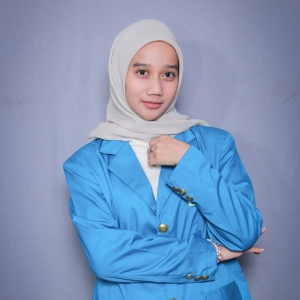
Harun Nasution Auditorium, UIN News Online - “How does the Quran remain present to address human issues as patterns of life continuously evolve?”
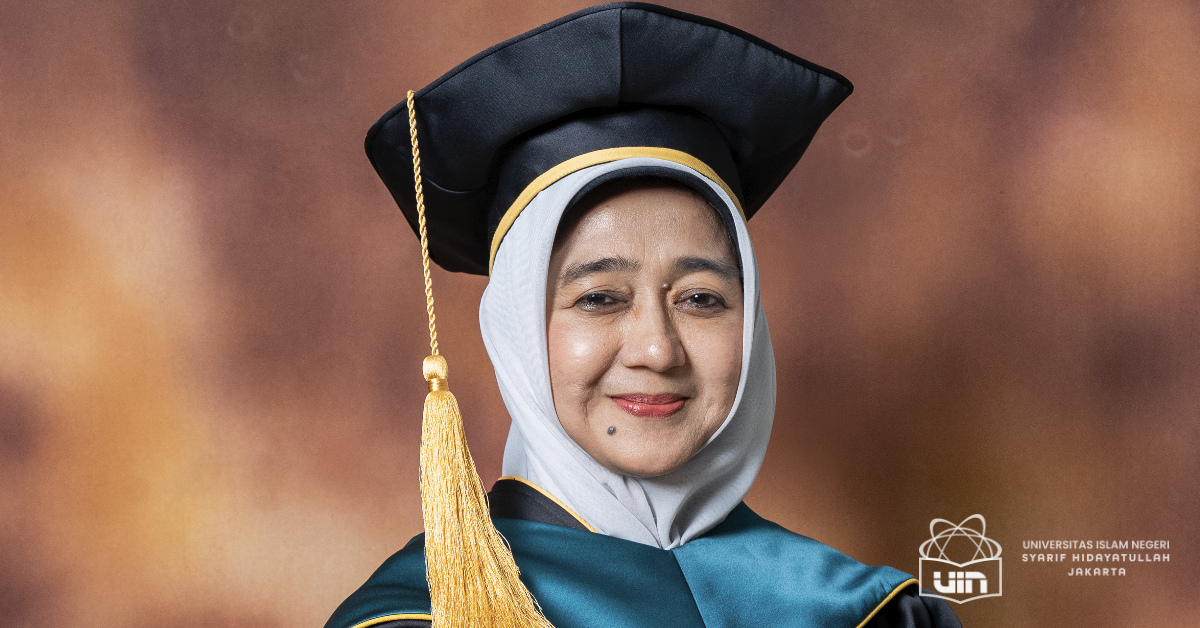
That question served as the departure point for Prof. Dr. Lilik Ummi Kaltsum, M.A., during her professorial address titled “Tafsir Tawḥīdī-Wāqi‘ī: Integrating Text, Reality, and Tawhid Consciousness in the Development of Quranic Exegetical Methodology” during the Open Senate Session for the Professorial Inauguration at UIN Syarif Hidayatullah Jakarta in the Harun Nasution Auditorium on Wednesday (30/09/2026). On this occasion, Prof. Lilik was officially inaugurated as Full Professor of Exegetical Methodology.
For Prof. Lilik, the core challenge of contemporary exegesis is no longer questioning whether the Quran is relevant, but how that relevance is discovered through a rigorous and responsible methodology. This is because the Quranic text remains fixed, whereas human conditions, technology, forms of injustice, and environmental challenges are constantly in motion. Therefore, exegesis must be capable of bringing revelatory messages into dialogue with reality without forcing novel issues into the text.
She formulated this framework through Tafsir Tawḥīdī-Wāqi‘ī. This approach is not claimed as an entirely novel method, but rather as an effort to reconstruct the relationship among key elements that have developed within the exegetical tradition. Four core elements converge: wāqi‘ (reality) as the point of departure, thematic exegesis as the analytical text procedure, tawhid (monotheism) as the ethical-spiritual principle, and social transformation as the ultimate orientation.
“Wāqi‘ determines where exegesis begins; thematic exegesis determines how the text is examined; tawhid determines how human character is forged; and transformation determines where exegesis is directed,” stated Prof. Lilik.
Under this framework, even simple daily issues can serve as gateways to exegetical study. She cited the improper disposal of used cooking oil as an example. For an individual household, this action might appear trivial, but when practiced by thousands or millions of households, it escalates into a severe environmental problem. Within the Tawḥīdī-Wāqi‘ī approach, this reality is first recognized, then formulated into a Quranic inquiry, analyzed through related verses, understood within its context, and brought into dialogue with environmental science.
Prof. Lilik highlighted an important caveat to ensure that reality is not arbitrarily imposed onto textual meaning. She emphasized that the term fasād (corruption/damage), for instance, cannot simply be defined as “used cooking oil.” What can be done is identifying its normative principles to evaluate human actions that contribute to environmental degradation. From there, exegesis is oriented toward concrete action—such as collecting, managing, and recycling used cooking oil—while cultivating the awareness that human deeds carry accountability before God.
A similar framework is applied to digital disinformaion. Prof. Lilik connected the reality of information overload with the principle of tabayyun (veracity verification), encouraging active dialogue between the Quran, communication studies, and digital literacy. The objective is not merely to produce rules against sharing unverified information, but to build an inner consciousness where individuals refrain from spreading false news out of a deep awareness of their accountability to God.
At this junction, according to Prof. Lilik, tawhid does not stop as a doctrine regarding the oneness of God. Tawhid becomes an operational principle connecting faith with action, worship with morality, personal piety with public responsibility, and human relationships with fellow human beings and nature. Consequently, values such as honesty, trustworthiness, justice, compassion, and environmental stewardship should not remain confined to private virtue, but must manifest as public virtue.
This vision aligns with Prof. Lilik's scholarly trajectory, which has been intimately connected with pesantren traditions and Quranic studies since her youth. After completing her education at Madrasah Al-Qur'an Ar-Roudlotul Munawwaroh, Sunan Pandanaran Islamic Boarding School, she earned her Bachelor's degree in Quranic Exegesis and Hadith at IAIN Sunan Kalijaga Yogyakarta, followed by her Master's and Doctoral degrees in Islamic Studies/Quranic Exegesis and Hadith at UIN Syarif Hidayatullah Jakarta.
That journey brought traditional exegetical scholarship into convergence with academic experience, teaching, research, and real-life issues she encountered. In her address, Prof. Lilik noted that academic inquiries often stem from intellectual disquietude, student questions, and societal problems. When such concerns are brought to the Quran through a rigorous methodology, they transform into scholarly inquiries.
Ultimately, Prof. Lilik views exegesis not as an intellectual task that concludes once textual meaning is deciphered. Reality generates questions, the Quran is read contextually, understanding shapes tawhid consciousness, consciousness fosters ethical agency, and action delivers social change.
“Exegesis truly discovers its social meaning only when that understanding enters active life,” she stressed.
In this way, Prof. Lilik measures exegesis not merely by how far humans comprehend the Quran, but by the extent to which human life actively embodies the meanings of Quranic interpretation.
Watch the complete proceeding of the Open Senate Session for the Professorial Inauguration on UIN Syarif Hidayatullah Jakarta's official YouTube channel: