
Prioritising Local and Sustainable Food Sources
Syarif Hidayatullah State Islamic University Jakarta supports a more sustainable campus food system by strengthening the use of local food suppliers, University-supported food production, local Micro, Small, and Medium Enterprises (MSMEs), and environmentally responsible agricultural practices.
During 2024–2025, the University continued to develop a food-sourcing ecosystem that connects campus food services with local businesses, internal catering services, local agricultural production, and sustainable food-production initiatives.
Prioritising Local Food Businesses
In 2025, the University's Business Development Center strengthened its collaboration with local Micro, Small, and Medium Enterprises as part of the management of campus food and business services.
The University's official performance report records cooperation with MSMEs for the provision of frozen food, as well as business-development activities involving MSMEs across South Tangerang.
The University also shifted part of its catering provision toward internal catering services, reducing reliance on external catering arrangements and strengthening food provision managed through the University's own business ecosystem.
These measures demonstrate an institutional approach that gives local and University-based food providers an increasingly important role in campus food services.
Integrating Local MSMEs into Campus Food Provision
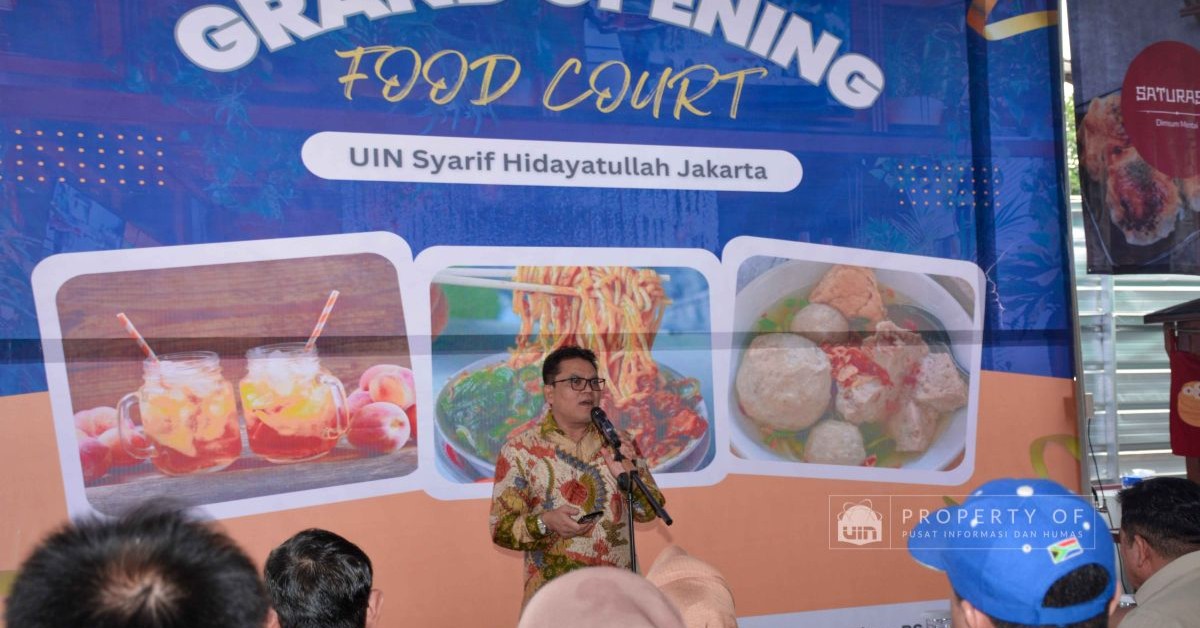
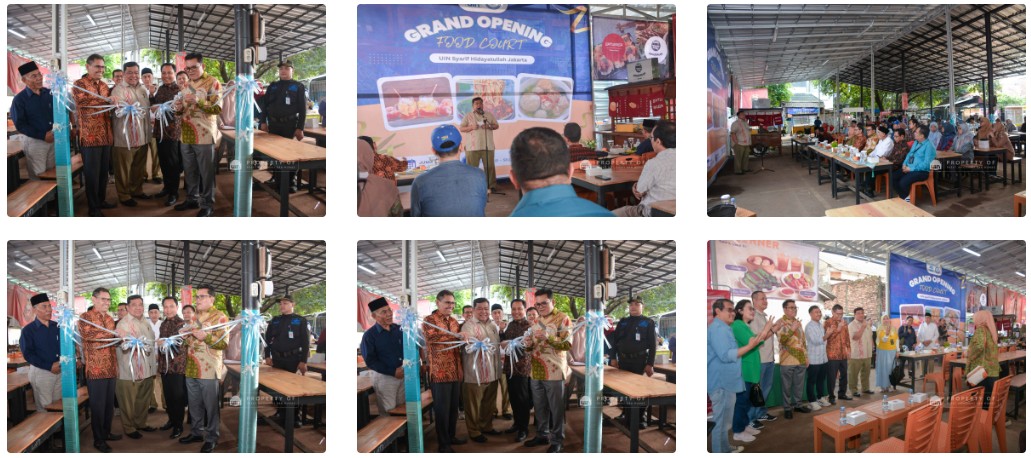
In June 2025, Syarif Hidayatullah State Islamic University Jakarta officially opened a new campus food court designed specifically to strengthen Micro, Small, and Medium Enterprises.
A total of 36 small-scale vendors joined the food court, bringing their own food carts and providing food and beverage products within the University environment.
The Business Development Center described the initiative as a direct effort to empower small local traders and strengthen the surrounding community economy.
More local vendors subsequently expressed interest in joining the facility.
Through this model, the University provides local food businesses with direct access to the campus market while increasing the availability of locally supplied food for students, staff, and visitors.
Supporting Sustainable University Food Production
Local sourcing is reinforced by sustainable food-production activities within Syarif Hidayatullah State Islamic University Jakarta. In 2024, the Agribusiness Study Program implemented hydroponic vegetable cultivation within the Faculty of Science and Technology.
Hydroponic cultivation enables vegetables to be produced in limited urban spaces while using water efficiently and reducing dependence on conventional soil-based cultivation. The harvested vegetables were made available to members of the University community at accessible prices. This initiative demonstrates how locally produced food can be integrated into the campus environment while simultaneously supporting agricultural education and more resource-efficient food production.
Developing Local Agricultural Production in Cikuya
The University is also developing agricultural land in Cikuya, Tangerang Regency. In 2025, the Faculty of Science and Technology continued efforts to develop this land through integrated agricultural models that combine productivity, environmental sustainability, research, and local community empowerment. Agricultural production from University-managed land creates additional opportunities to strengthen local food systems and establish closer connections between sustainable production and campus food needs.
Linking Procurement with Local Economic Development
Syarif Hidayatullah State Islamic University Jakarta recognises that sustainable food purchasing involves not only the environmental characteristics of food production but also the social and economic sustainability of food supply chains. Supporting local MSMEs reduces barriers for small food businesses to enter the campus market.
Developing internal catering strengthens local institutional supply chains. Hydroponic cultivation and University agricultural land promote shorter and more resource-efficient food-production systems. Together, these practices contribute to a campus food ecosystem that increasingly prioritises locally available and sustainably produced food.
Implementing Sustainable and Local Food Sourcing
Through cooperation with local MSMEs, internal catering, campus food courts, hydroponic food production, and sustainable agricultural development, Syarif Hidayatullah State Islamic University Jakarta has implemented practices that prioritise local and sustainable food sources within its campus food ecosystem. The University's approach combines procurement and food provision with local economic empowerment, environmentally responsible agriculture, and University-supported food production. By strengthening these connections, Syarif Hidayatullah State Islamic University Jakarta contributes to a more resilient, locally connected, and sustainable food supply system.
Source :
https://asset.uinjkt.ac.id/uploads/TkyZgnBj/2025/09/laporan-kinerja-tw-ii-tahun-2025-cetakcompressed.pdf
https://www.uinjkt.ac.id/en/uin-jakarta-officially-opens-food-court-boosting-msme-empowerment-and-student-creativity