
Preparing for the World’s Largest Pilgrimage: UIN Jakarta Junior Doctors Deploy for Hajj Medical Screening Rotation
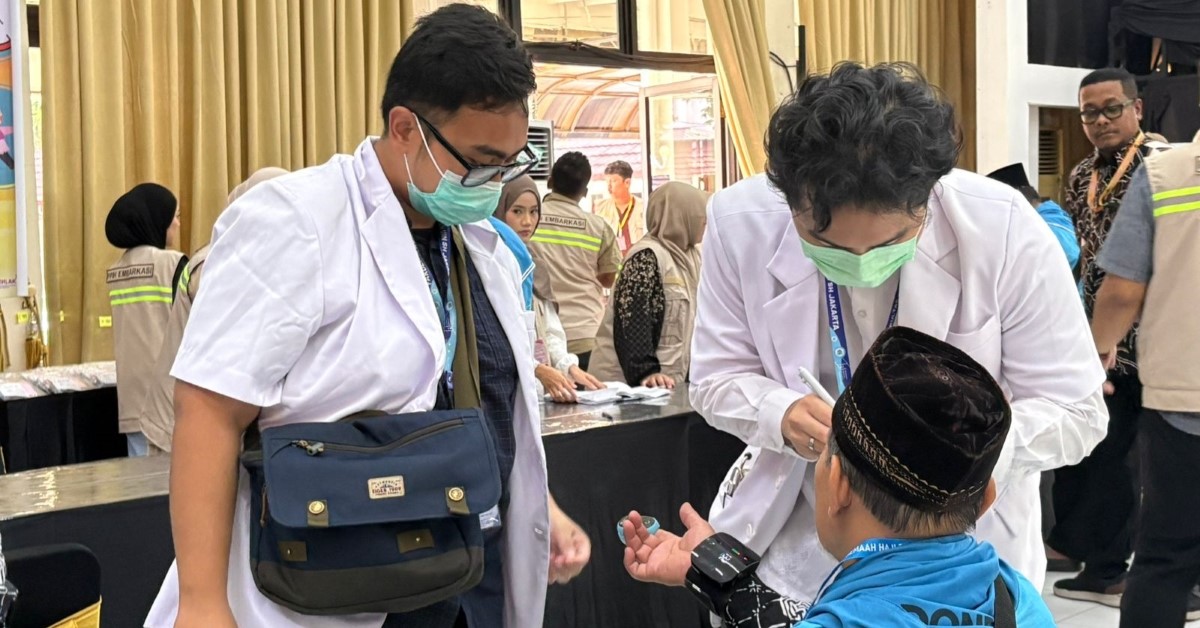
Bekasi Hajj Dormitory, UIN Online News – Junior doctors from the Faculty of Medicine at UIN Syarif Hidayatullah Jakarta recently underwent a specialized Hajj Medical Rotation at the Health Quarantine Office (BKK) of the Bekasi Hajj Embarkation Center on Sunday, May 3, 2026.
This program is a joint collaboration between UIN Jakarta’s Faculty of Medicine and the Health Quarantine Office. It aims to equip medical interns with hands-on experience in the Hajj healthcare services ecosystem, focusing specifically on the critical screening and medical evaluation phase before pilgrims depart for the Holy Land.
The Head of the Class I Health Quarantine Office in Bandung, dr. Sedya Dwisangka, explained that this initiative serves as an essential introduction to real-world, large-scale medical operations.
"This collaboration between UIN Jakarta and the Health Quarantine Office is designed to prepare medical students by exposing them directly to the complex operations at the Hajj embarkation centers," he stated.
He further noted that the healthcare workflow at the embarkation center is a vital component of an integrated system, as pilgrims have already undergone initial health screenings at medical facilities in their respective hometowns.
During the rotation, the junior doctors were directly involved in evaluating pilgrims through taking medical histories (anamnesis), conducting physical examinations, and analyzing clinical data to determine each pilgrim's fitness for travel. This experience provides an applicable learning model for population-based and mass-gathering medicine.
One of the participating junior doctors, Selvi Haura Zafirah, shared that the rotation offered invaluable practical clinical insights.
"We were given an incredibly valuable opportunity during this Hajj clinical rotation to work alongside Hajj management staff and senior physicians who guided us every step of the way," she said.
She added that the students had the opportunity to attend to hundreds of patients during the field exercise.
"There was so much to learn from the diverse cases we encountered, especially in conducting physical exams, interpreting diagnostic results, and making critical decisions on whether a patient is fit to fly or requires further medical intervention," she explained.
Furthermore, Selvi emphasized the importance of readiness among medical students to provide comprehensive healthcare.
"Our hope is to successfully deliver curative, preventive, and promotive healthcare services to the pilgrims, while remaining highly responsive and critical in managing various patient conditions," she added.
As a specialized component of medical education in Indonesia, the world's largest Muslim-majority nation with the largest annual Hajj quota, this Hajj Medical Rotation does not only strengthen the clinical skills of future doctors. It also prepares them to manage healthcare logistics and patient safety on a massive scale, a competency highly relevant to global mass-gathering medicine.