
Policy on hazardous waste disposal Have a policy, process or practice on waste disposal covering hazardous materials
1. Laboratory waste management practice at PLT FST
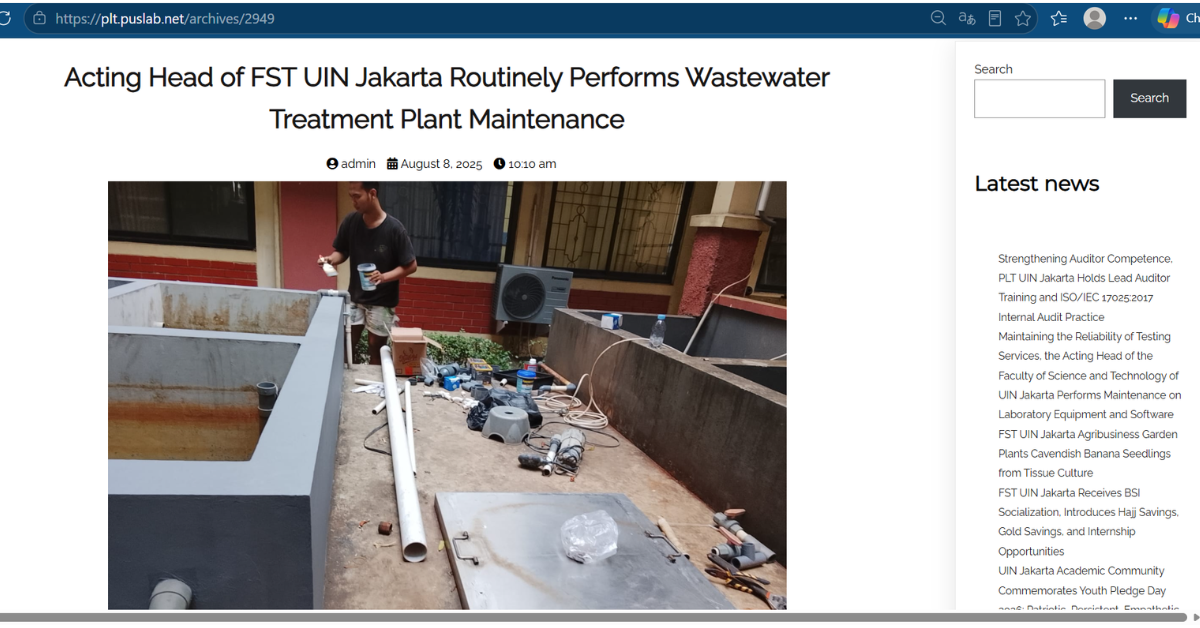
The Integrated Laboratory Center (PLT), Faculty of Science and Technology, Syarif Hidayatullah State Islamic University, continues to realize its commitment to a sustainable environment through routine maintenance of the Wastewater Treatment Plant (IPAL). This activity ensures that laboratory waste management runs safely, effectively, and in line with the principles of environmental sustainability. As a facility supporting education, research, and testing, PLT generates various types of waste that require proper management, so the IPAL plays a strategic role in treating wastewater before it is released to the environment. The maintenance is carried out periodically so that all components and treatment systems work optimally, and includes inspection of the installation, checking of pumps and piping, cleaning of components, and inspection of treatment tanks. The photo documentation shows maintenance work at the treatment tanks, with pipes, tools, and equipment set out around the tank cover.
2. Faculty waste disposal policy
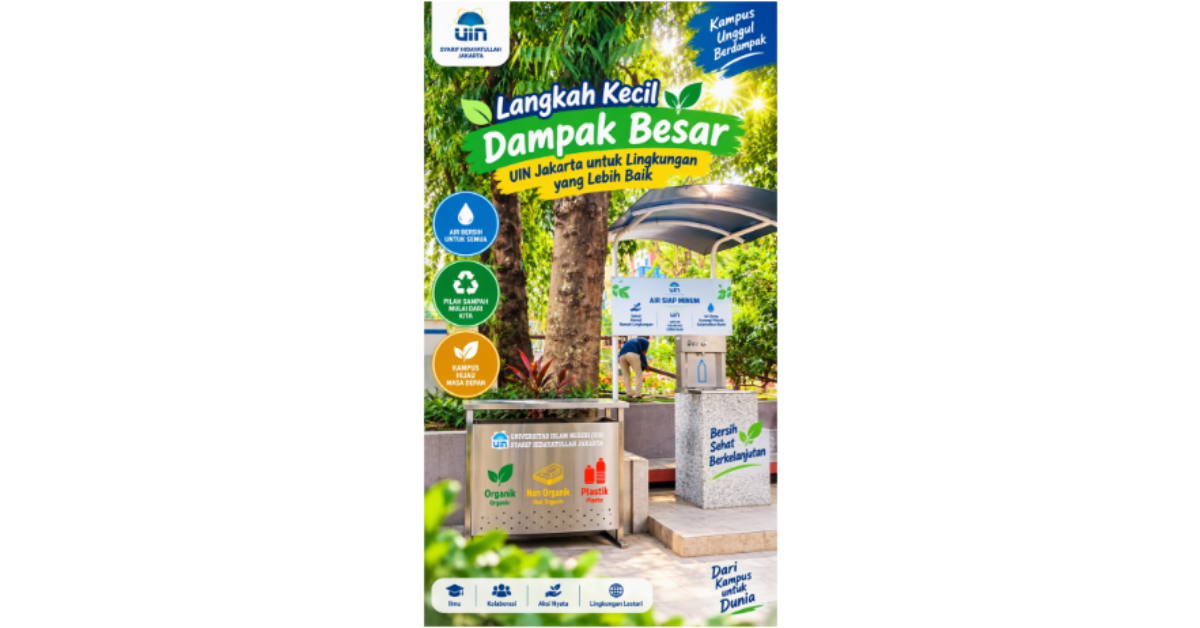
The Faculty of Dirasat Islamiyah has issued a policy on waste disposal processes and practices, including waste containing hazardous and toxic materials (B3), to ensure that sorting, handling, storage, and disposal are carried out safely, orderly, and responsibly. Hazardous waste is stored in closed, leak resistant, labeled containers, is not discarded in general trash bins, drains, or the open environment, and is transported and processed further by authorized units or partners. The photo shows a sorting bin with Organic, Non-Organic, and Plastic compartments next to a ready-to-drink water station, in acampaign poster titled “Langkah Kecil Dampak Besar” (Small Steps, Big Impact).
3. Campus waste sorting
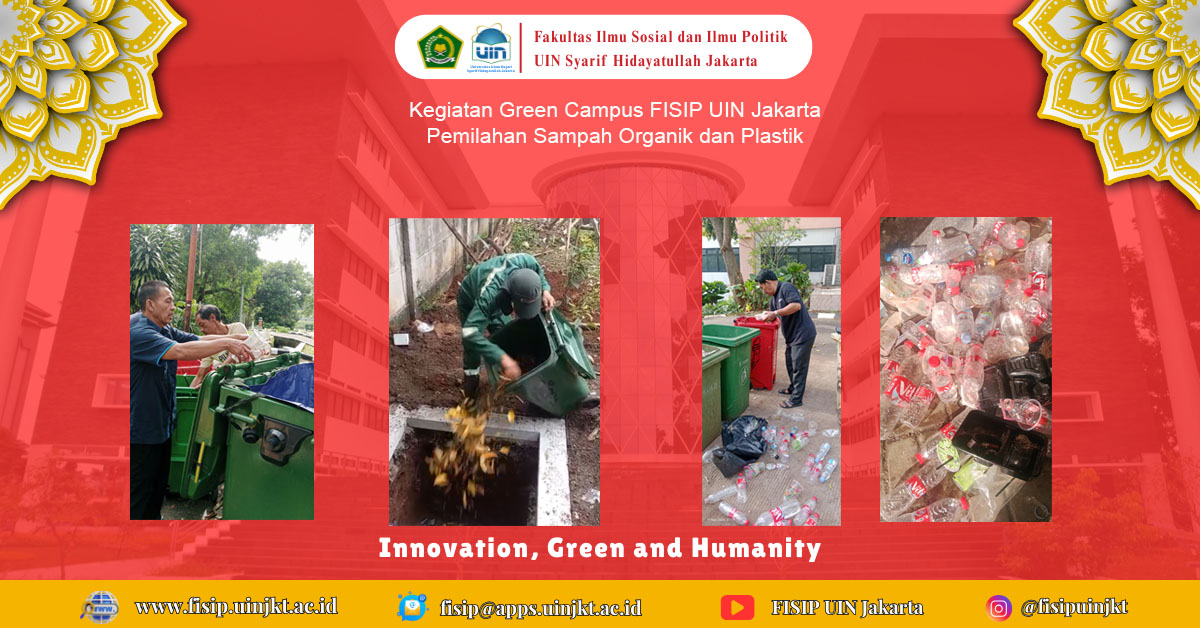
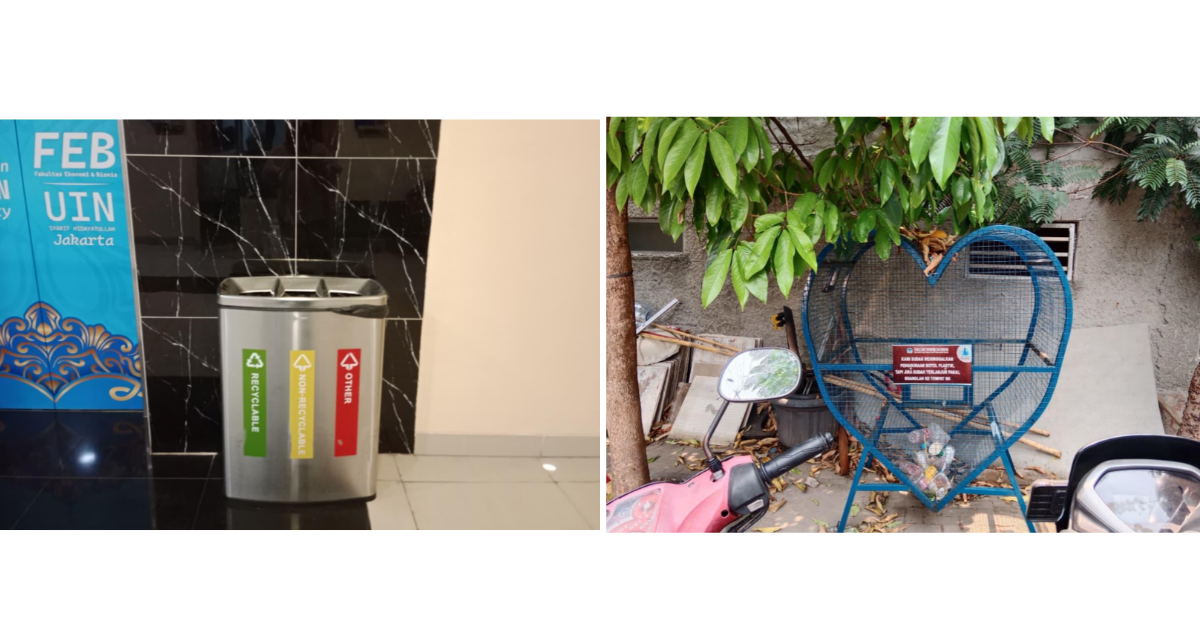
The Green Campus program at the Faculty of Social and Political Sciences (FISIP) Syarif Hidayatullah State Islamic University focuses on efficient cleanliness management and waste sorting within the academic environment. Waste sorting systems are implemented in lecture halls, lecturer lounges, and public areas, and students, education staff, and lecturers are encouraged to separate waste by type before disposing of it at the faculty’s final disposal site. The poster, titled “Kegiatan Green Campus FISIP Syarif Hidayatullah State Islamic University: Pemilahan Sampah Organik dan Plastik” (Green Campus Activity: Organic and Plastic Waste Sorting), shows waste being sorted into separate bins, organic waste being emptied from a bin into a pit, and collected plastic bottles.
Source: PLT FST UIN Jakarta Rutin Lakukan Maintenance IPAL - Pusat Laboratorium Terpadu