
Plan to reduce energy consumption Have an energy efficiency plan in place to reduce overall energy consumption
Reaffirming its commitment to environmental sustainability, Syarif Hidayatullah State Islamic University Jakarta has rolled out a comprehensive Greenhouse Gas (GHG) Emission Reduction Program. This ambitious initiative systematically targets direct and indirect emissions across the campus through a strategic blend of renewable energy adoption, technological upgrades, digital transformation, and campus-wide behavioral changes. The university's transition is deeply rooted in its official Green Campus Policy (Rector's Decree No. 1415 of 2024) and the Energy Management Circular Letter (No. 21 of 2024), demonstrating a clear institutional drive toward low-carbon development.
Pioneering Renewable Energy and Efficiency
At the heart of the initiative is a massive shift toward renewable energy and electricity efficiency to tackle Scope 2 emissions. Syarif Hidayatullah State Islamic University Jakarta has successfully installed Rooftop Solar Photovoltaic (PV) systems with a total capacity of 270.17 kWp across four main buildings, including the Rectorate and Auditorium. Furthermore, 396 solar-powered street lights now illuminate the campus, generating approximately 481,925 kWh annually and drastically reducing reliance on the national grid.
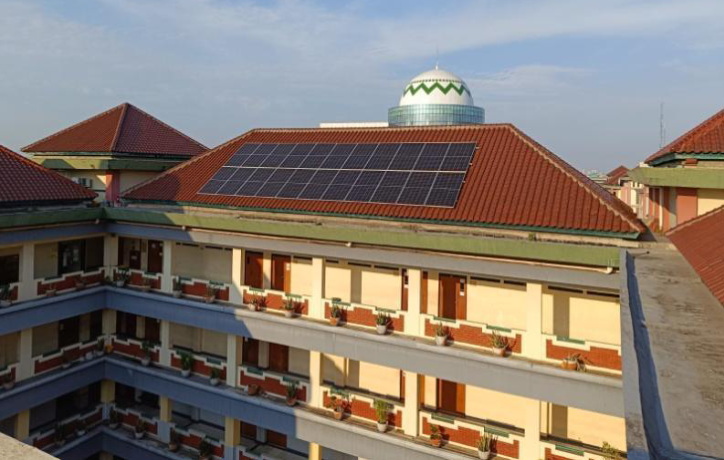
Combined with architectural optimizations for natural lighting and the adoption of 100% LED and motion-sensor lights, these efforts have yielded remarkable results. Campus electricity consumption plummeted from 6,863,497 kWh in 2025 to 4,912,621 kWh in 2026.
Promoting Clean and Green Mobility
To curb direct (Scope 1) emissions, Syarif Hidayatullah State Islamic University Jakarta is reimagining campus mobility. The university has introduced "BILIS" electric campus buses and "SALUT" electric bicycles, providing students and staff with eco-friendly alternatives for commuting around the grounds. To support this clean energy transition, dedicated Electric Vehicle (EV) charging stations have been installed on campus.

Additionally, the university has minimized institutional vehicle use, restructured parking zones to limit vehicle entry into academic areas, and transitioned from conventional diesel backup generators to cleaner, biosolar-fueled alternatives.
Digitalization, Reforestation, and Behavioral Shifts
Addressing Scope 3 emissions, Syarif Hidayatullah State Islamic University Jakarta is aggressively pushing toward a paperless administration. By implementing digital attendance systems, e-letters, cashless parking payments, and comprehensive online academic portals, the university is significantly cutting down on paper waste and logistics-related emissions. On the ground, environmental conservation is highly visible. The university recently planted 1,000 trees to expand green open spaces and increase carbon sequestration. Students are also actively engaged in sustainable practices, such as transforming organic waste into eco-enzymes through their Environmental Chemistry courses.

To foster a sustainable lifestyle among the academic community, the campus enforces a strict No Smoking Area policy and actively promotes the "Use Stairs, Reduce Elevator Use" campaign, marrying energy conservation with personal health. Through these integrated efforts, Syarif Hidayatullah State Islamic University Syarif Hidayatullah Jakarta is not only transforming its physical infrastructure but also cultivating a deep-rooted culture of sustainability, setting a powerful example for higher education institutions globally.
Source: