
Pancasila Sanctity Day Ceremony: Rector Affirms Harmony Between Pancasila and Islamic Values


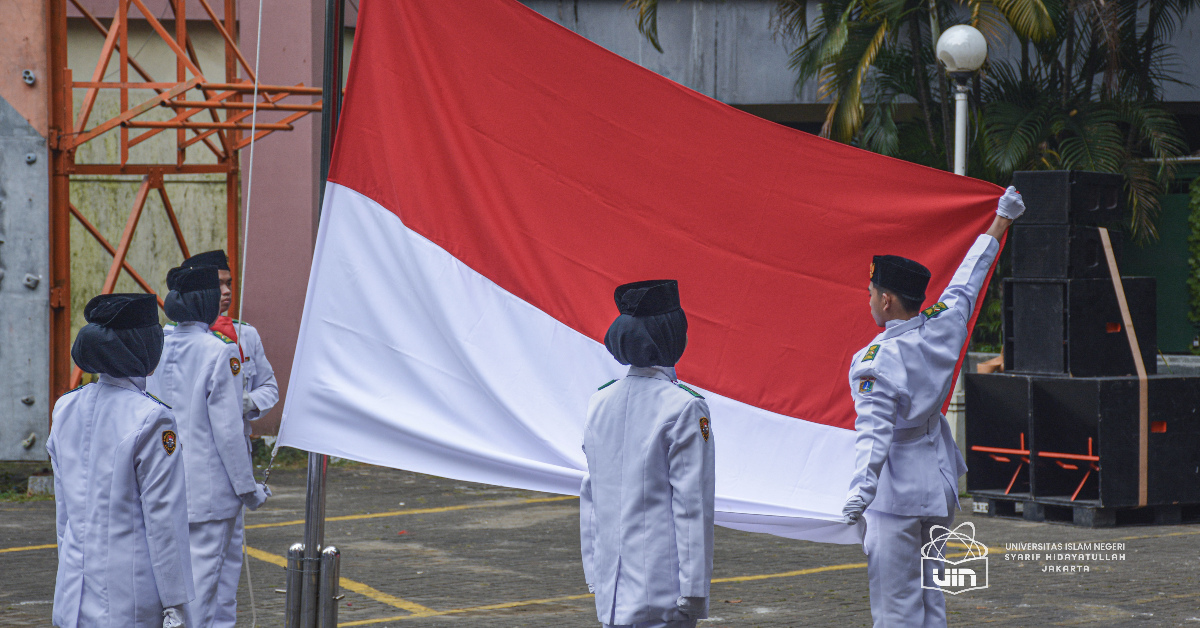
Student Center Field UIN Jakarta, UIN News Online – UIN Syarif Hidayatullah Jakarta once again held a solemn ceremony to commemorate Pancasila Sanctity Day (Hari Kesaktian Pancasila), reaffirming its commitment to practicing Pancasila principles within national life and across the academic community. The ceremony took place solemnly at the Student Center Field of UIN Jakarta on Thursday (01/10/2026).
The ceremony was attended by the Rector of UIN Jakarta, Prof. Asep Saepudin Jahar, M.A., Ph.D.; Vice Rector for Academic Affairs, Prof. Dr. Ahmad Tholabi, S.Ag., S.H., M.H., M.A.; Vice Rector for Student Affairs, Prof. Ali Munhanif, M.A., Ph.D.; alongside members of the UIN Jakarta academic community.
Serving as the inspector of the ceremony, Prof. Asep delivered an address emphasizing that every principle (sila) in Pancasila shares a fundamental point of convergence with the universal teachings of Islam. The first principle, "Belief in the One and Only God" (Ketuhanan Yang Maha Esa), directly aligns with the principle of Tauhid regarding the oneness of Allah SWT. Therefore, he noted, national life must be constructed upon divine consciousness and the faithful practice of one's respective religious teachings.
Elaborating on the second principle, "Just and Civilized Humanity" (Kemanusiaan yang Adil dan Beradab), he stated that it echoes Islamic values regarding respect for human dignity, justice, and harmonious interpersonal relations. He connected this to the Quranic message in Surah Al-Hujurat, Verse 13, which specifies that human nobility is not determined by tribe, nation, or social standing.
Furthermore, regarding the third principle, "The Unity of Indonesia" (Persatuan Indonesia), the Rector linked it to the spirit of brotherhood (ukhuwah) and maintaining solidarity amidst diversity. Meanwhile, the fourth principle, "Democracy Guided by Inner Wisdom in Deliberations Among Representatives" (Kerakyatan yang Dipimpin oleh Hikmat Kebijaksanaan dalam Permusyawaratan/Perwakilan), shares direct relevance with the Islamic mandate of consultative deliberation (musyawarah). Lastly, the fifth principle of social justice resonates with the Islamic command to uphold equity and do good, an obligation that must be maintained even when it applies to oneself.
“Thus, we at UIN Jakarta must continuously practice Pancasila to the best of our ability. In doing so, we are simultaneously upholding Islamic values. Conversely, tarnishing Pancasila means tarnishing the values of Islam in our civic and national life,” affirmed Prof. Asep.
He added that Pancasila Sanctity Day is defined not only by historical past, but by the extent to which its core principles are actively lived out in daily life. According to him, this embodiment must manifest directly in academic life and institutional governance at UIN Jakarta.
“These values must be reflected in our daily conduct, because ultimately, our presence at UIN is for the nation and for the public,” he noted.
This commitment was further reinforced through the recitation of the Pancasila Sanctity Day Pledge. The pledge underscored that various threats aimed at subverting the Unitary State of the Republic of Indonesia, from both internal and external sources, were made possible by weaknesses and a lack of vigilance against efforts to overthrow Pancasila as the state ideology. The event concluded with a collective prayer, the singing of the national anthem "Bagimu Negeri," and the final report from the ceremony commander.