
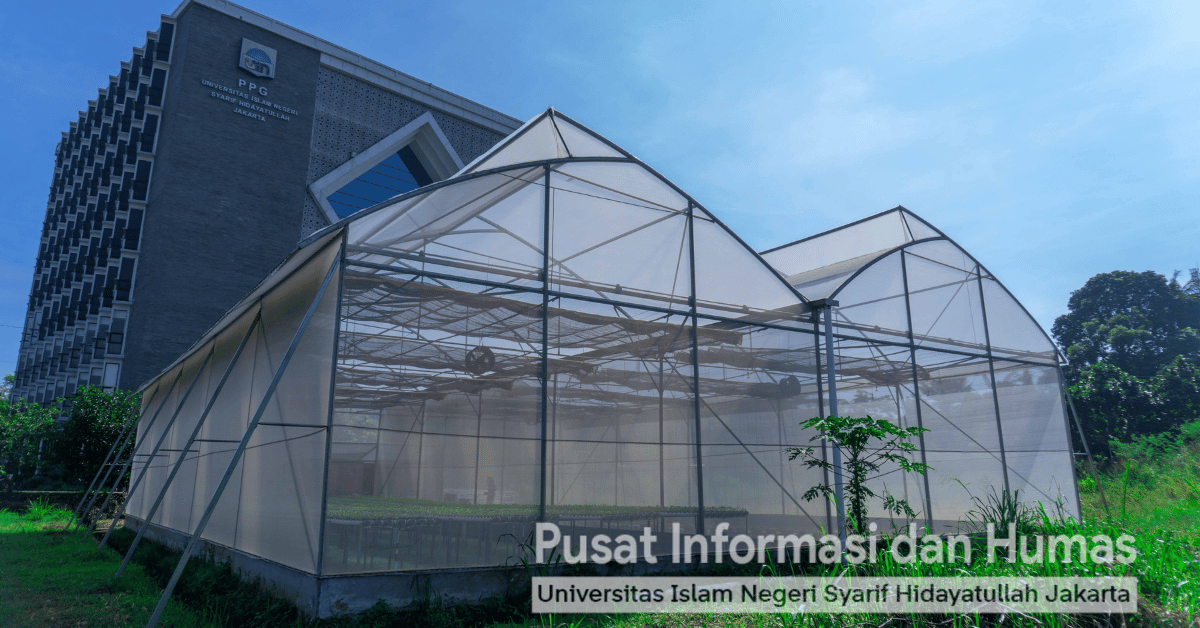
Monitoring and Protection of IUCN Red-Listed and Nationally Protected Species
Syarif Hidayatullah State Islamic University continues to strengthen its commitment to environmental sustainability and the Sustainable Development Goals (SDG 15) through comprehensive biodiversity conservation programs across its four campus areas. These strategic initiatives encompass flora inventory, urban wildlife protection, and the preservation of agricultural genetic resources.
Rare Flora Conservation and Environmental Education
As part of its long-term conservation strategy, Syarif Hidayatullah State Islamic University cultivates and monitors rare and protected plant species. These plant specimens are equipped with botanical identification labels containing their scientific names and QR codes for educational purposes, benefiting both students and visitors. One of the university's key achievements can be seen at the Ferns Garden of the Faculty of Educational Sciences (FITK), where the number of identified fern species increased significantly from 10 species in 2024 to 175 species in 2026.
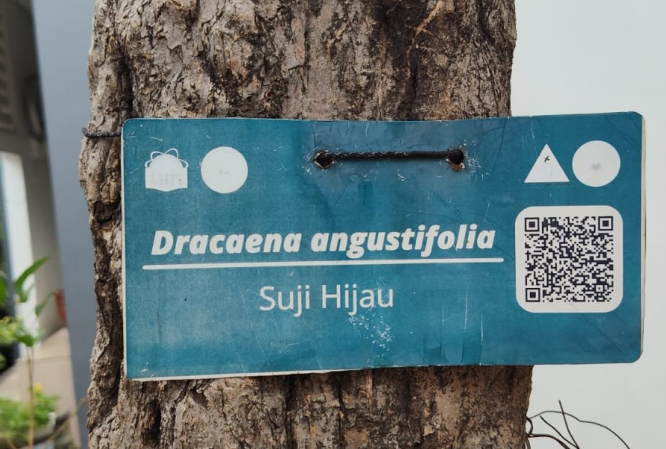
In addition, the Faculty of Islamic Studies (FDI) implements terrestrial ecosystem vegetation protection policies by maintaining and monitoring mature Green Suji trees (Dracaena angustifolia) to ensure their continued preservation within their natural habitats. The university's efforts to conserve rare trees on campus are rooted in a tradition initiated in the 1990s by former Rector Prof. Azyumardi Azra. This initiative involved planting trees with high ecological value, such as bisbul, puspa, flamboyant, and matoa trees, during ceremonies welcoming official guests.
Optimizing Limited Land and Promoting Sustainable Agriculture
To address land constraints at Campuses 1 and 2, the university has taken an innovative approach by developing vertical gardens on its main buildings and expanding its green infrastructure through the establishment of three new gardens and an additional green campus park.
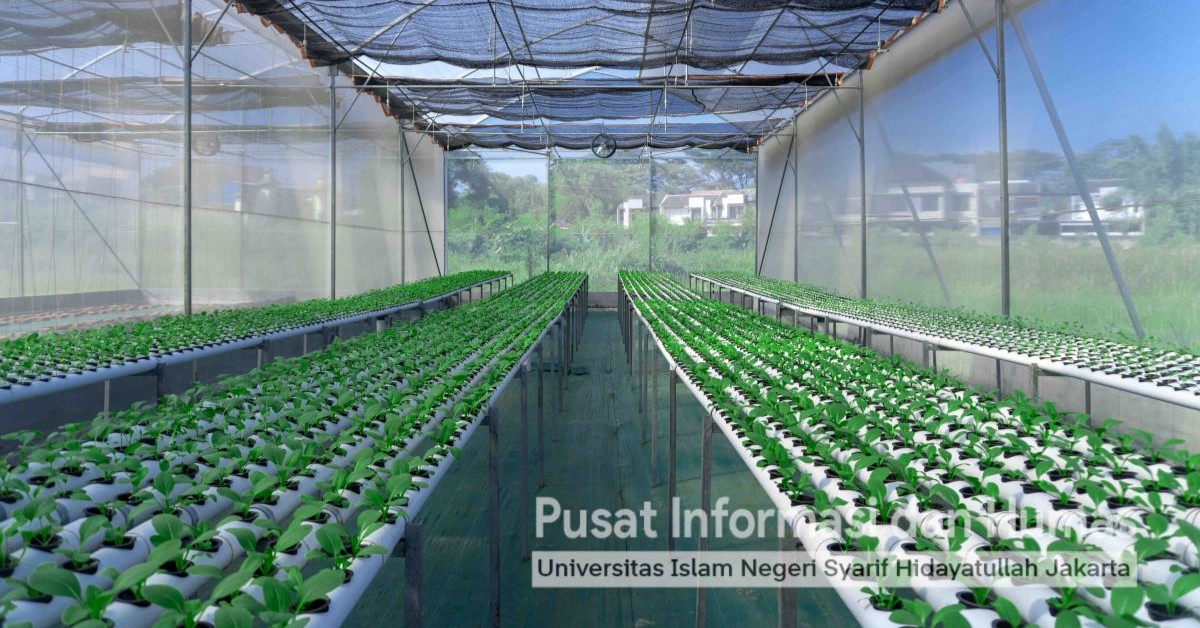
Meanwhile, Campus 3 is designated as a center for the conservation of Genetic Resources for Food and Agriculture (GRFA) through its Green House and Garden, which successfully maintained 24 different banana varieties in 2026. Campus 4 (Cikuya Agriland) has also been developed as a living laboratory spanning an area comparable to a natural forest, incorporating agricultural cultivation areas for food crops such as rice, corn, and cassava.
Wildlife Protection and Digital Mapping
In addition to preserving plant diversity, Syarif Hidayatullah State Islamic University actively protects wildlife within the urban green spaces of its campuses. These wildlife conservation initiatives include the establishment of fish ponds at Campus 1, a goose farm at Campus 2, and the provision of safe habitats for rabbits, cats, and various bird species.
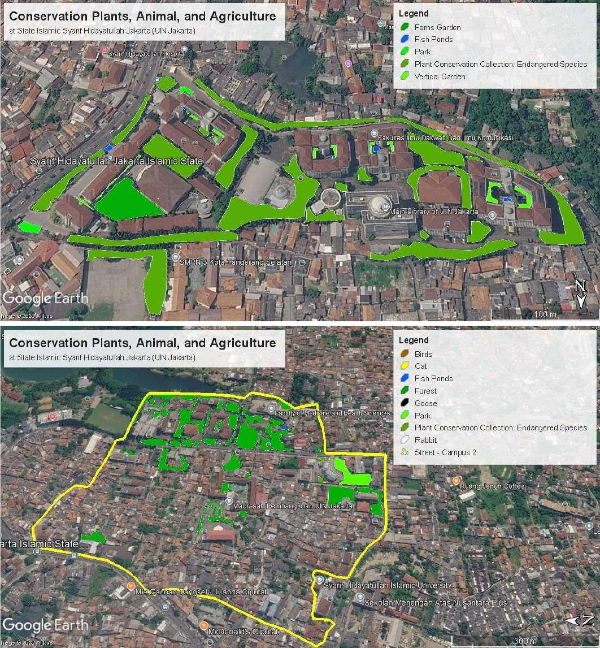
All flora and fauna conservation areas have been precisely mapped using Google Earth to facilitate accurate, location-based monitoring across the entire university campus network. As a further step toward strengthening its conservation policies, the university aims to integrate its plant inventory data—particularly its collections of rare trees and species in the Ferns Garden—with the standards of the IUCN Red List and Indonesia's national list of protected species. This alignment process will be formalized into a written policy to monitor and ensure the long-term sustainability of species affected by the university's campus operations.
Source:
https://uinjkt.ac.id/id/green-house-agribisnis-uin-syarif-hidayatullah-jakarta
https://semnas.biologi.fmipa.unp.ac.id/index.php/prosiding/article/view/1231