

Measure the Total Volume of Water Used In the University That Is Taken From Mains Supply, Desalinated, or Extracted From Rivers, Lakes, or Aquifers?
Campus groundwater and water balance depend on how much land can still absorb rainwater. Indicator WR.1 in the Water category of UI GreenMetric asks for the total campus area used for water absorption besides forest and planted vegetation. This data collection aims to show the open space and water absorption areas across the four campuses of Syarif Hidayatullah State Islamic University, so that their contribution to reducing surface runoff and supporting groundwater recharge can be verified.
Syarif Hidayatullah State Islamic University manages a total area of 742,739 m² with 670,334.76 m² of open space. After deducting the building footprint of 72,404.24 m², the open space ratio reaches 90.25%. The total area contributing to water absorption is 668,355.70 m², consisting of forest vegetation (329,069.40 m²), planted vegetation (264,482.30 m²), and water catchment areas (74,804.00 m²). The water catchment areas alone equal 10.07% of the total campus area and are the value for WR.1 (besides forest and planted vegetation). This spatial planning, which prioritizes open areas, helps minimize surface runoff and supports soil conservation and groundwater recharge.

Gardens, paved courtyards, and green open space around the Campus 1 buildings that serve as water absorption areas.
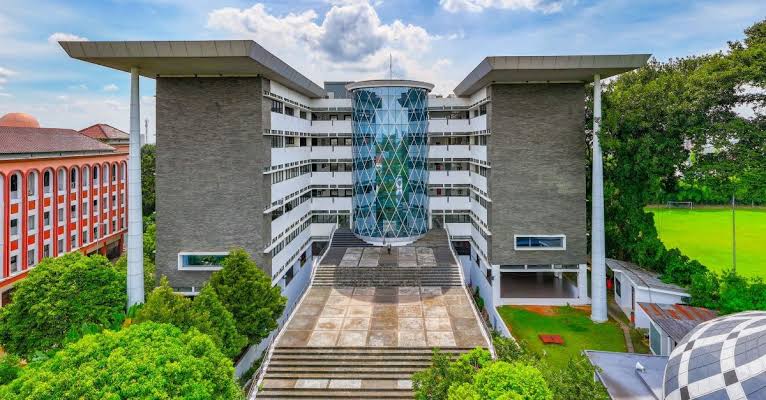
Paved roads and parking areas, pedestrian paths, shady trees, and gardens with a pond on Campus 2.
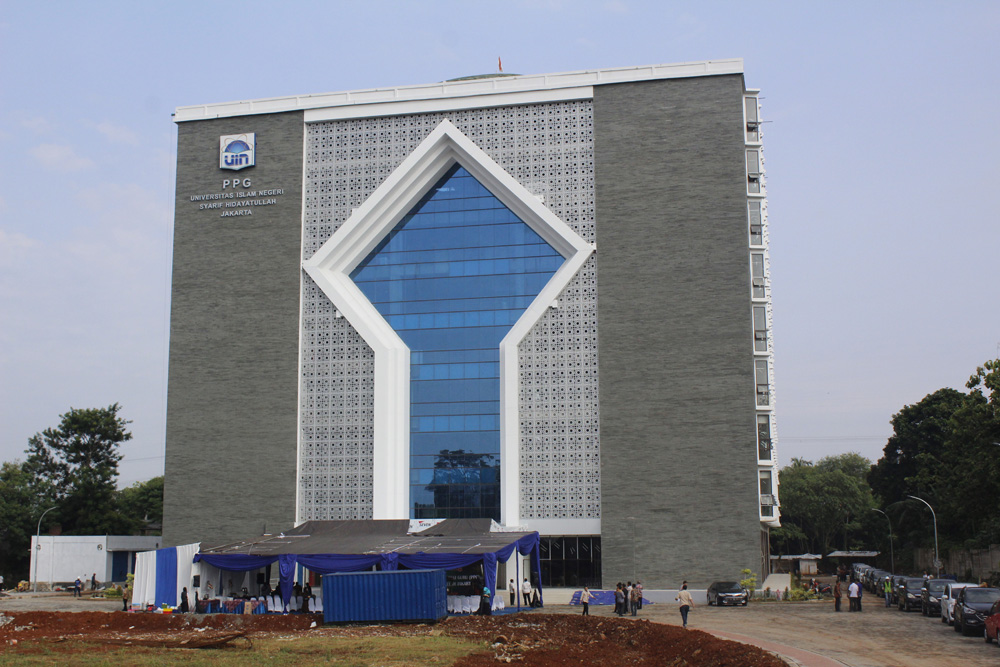
Grassy open land, paved parking area, vegetable beds, vertical planting towers, and a greenhouse on Campus 3.
Source:
Land and Buildings Syarif Hidayatullah State Islamic University