
Local Biodiversity Included in Planning and Development Include Local Biodiversity Into any Planning and Development Process
Syarif Hidayatullah State Islamic University continues to integrate local biodiversity considerations into its campus planning and development as part of its commitment to environmental sustainability and the Sustainable Development Goals (SDGs). Through its Green Campus initiatives, the university ensures that infrastructure development goes hand in hand with the preservation of green spaces, vegetation, and wildlife across its campus areas.
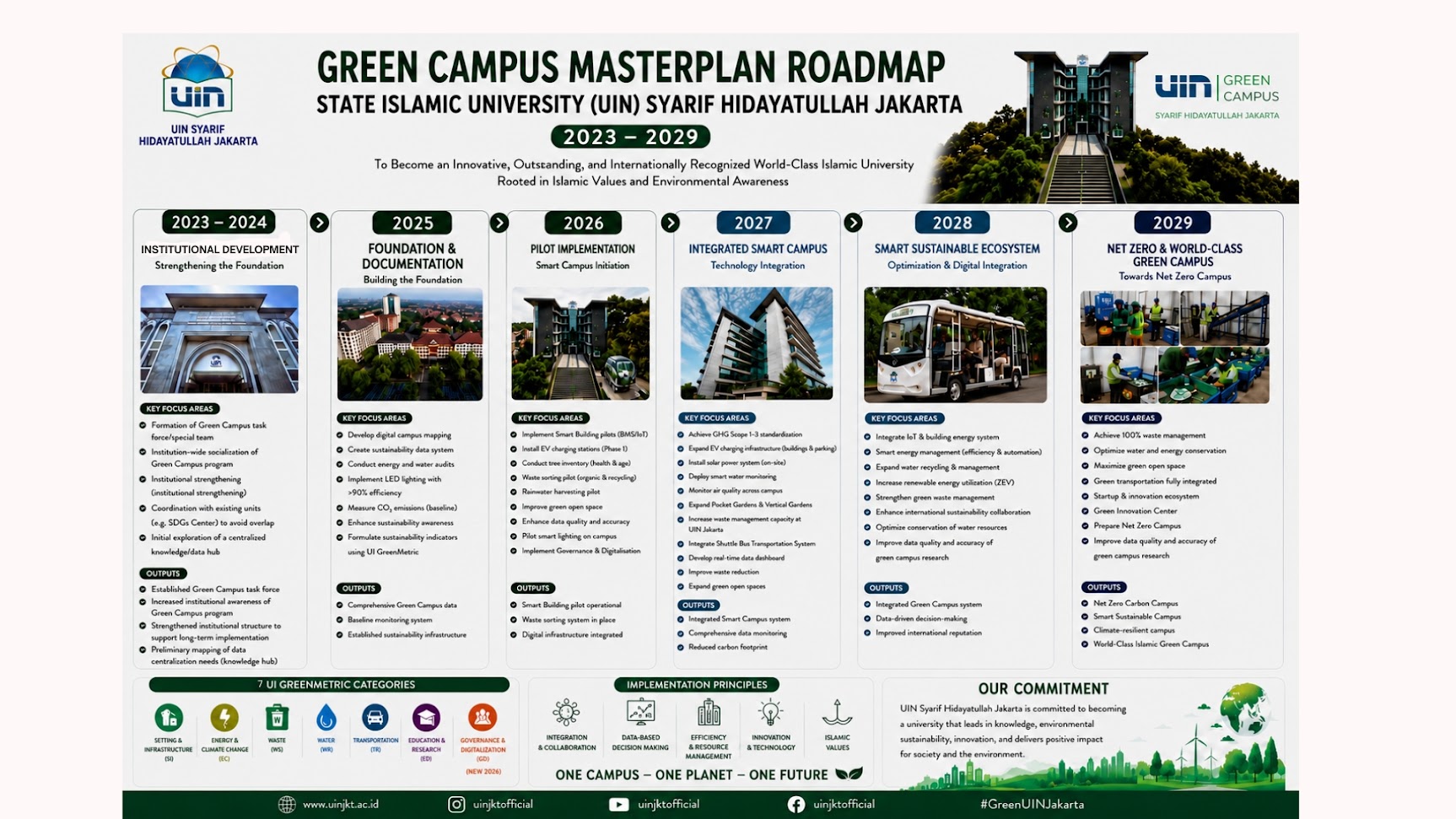
This commitment is guided by the Green Campus Roadmap 2023–2029, introduced under the motto “Green Innovation and Humanity.” The roadmap establishes seven strategic areas, including Setting and Infrastructure, Energy and Climate Change, Waste, Water, Transportation, Education, and Information Technology. Through this framework, campus development is directed toward creating an environmentally sustainable academic environment while supporting SDG 11 (Sustainable Cities and Communities) and SDG 15 (Life on Land).
Integrating Biodiversity into Building and Infrastructure Development
One of the university's approaches is the application of green building principles in the construction and revitalization of campus buildings. These principles include maximizing natural lighting and ventilation while incorporating renewable energy through solar panels. At Campuses 1 and 2, where land availability is limited, vertical gardens have also been introduced on major buildings. This initiative provides additional planted surfaces and supports plant conservation without requiring extensive ground space.
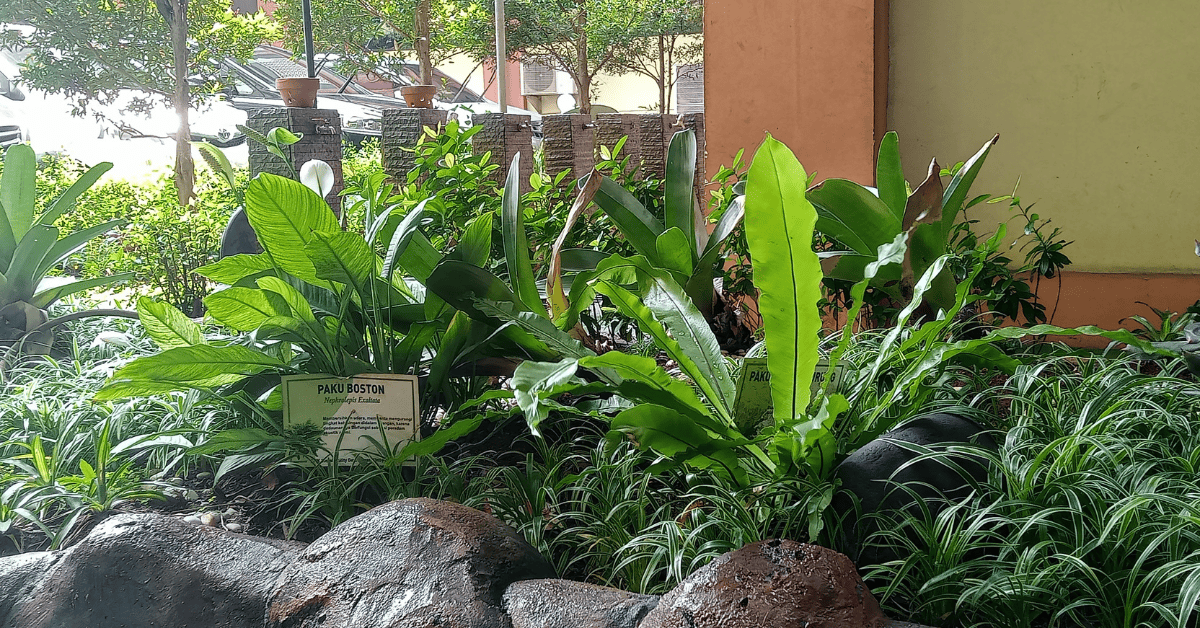
The university has further expanded its green infrastructure through the development of four new parks. These green open spaces feature landscaped gardens, trees, ponds, and shaded areas that support local biodiversity while improving air quality and providing a more comfortable environment for the academic community. Rainwater harvesting systems and infiltration wells have also been installed across campus green areas to improve groundwater recharge and support the sustainability of campus vegetation.
Providing Dedicated Spaces for Flora and Fauna Conservation
Beyond integrating greenery into buildings and infrastructure, the university incorporates dedicated biodiversity conservation areas into its campus development plans. The Green House and Garden at Campus 3 and Cikuya Agriland at Campus 4 serve as conservation centers for Genetic Resources for Food and Agriculture (GRFA), preserving 24 banana varieties and various food crops.
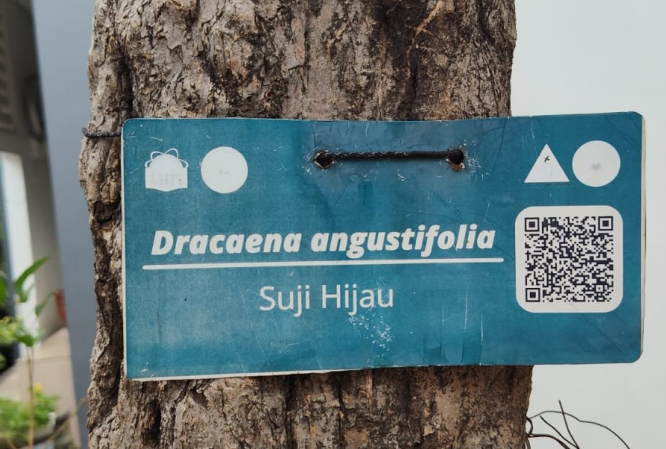
Other conservation initiatives include the Ferns Garden, which maintains 175 identified fern species, as well as collections of endangered plants and rare trees. Tree specimens are equipped with scientific identification labels and QR codes to support environmental education. The university also continues its tradition, initiated in the 1990s, of planting trees with high ecological value during official guest welcoming ceremonies.
Wildlife conservation is likewise incorporated into the campus environment through designated habitats and facilities for geese, birds, rabbits, cats, and fish. These include animal enclosures, bird aviaries, and fish conservation ponds integrated into campus green spaces.
Faculty-Level Implementation: Faculty of Medicine Preserves Green Spaces and Wildlife Habitats
The Faculty of Medicine at Syarif Hidayatullah State Islamic University also demonstrates this commitment by maintaining green open spaces as part of its campus planning and development. Rather than allocating campus areas exclusively for buildings and infrastructure, the Faculty retains landscaped gardens, ponds, and vegetated areas to accommodate local flora and fauna.
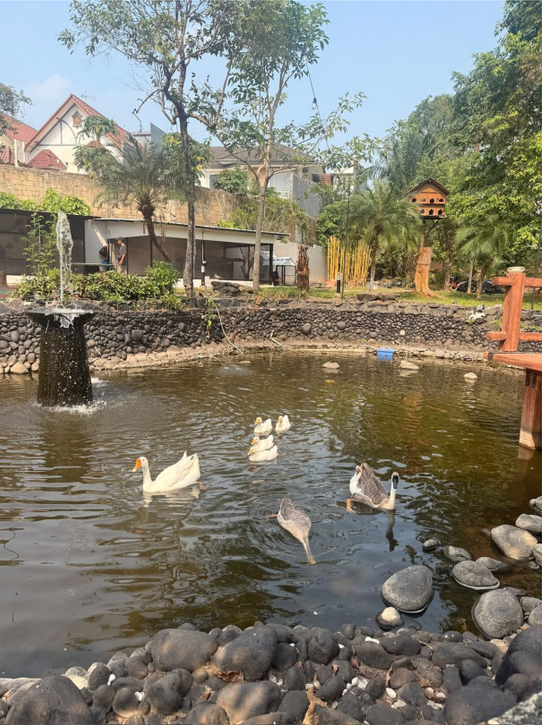
These spaces provide habitats for fish, geese, and various bird species through designated ponds, roaming areas, and garden aviaries. The integration of green spaces alongside academic infrastructure reflects the Faculty's commitment to balancing educational development with environmental preservation. It also creates a greener and more comfortable learning environment for students, lecturers, staff, and visitors.
Strengthening Biodiversity through Sustainable Campus Development
Through these initiatives, Syarif Hidayatullah State Islamic University demonstrates how biodiversity considerations can be incorporated into campus infrastructure and spatial development. The implementation of vertical gardens, new parks, water infiltration facilities, agricultural conservation centers, and wildlife habitats illustrates the university's efforts to maintain ecological functions alongside institutional growth.
These initiatives contribute to the preservation of plant and animal habitats, improved air quality, groundwater recharge, and the conservation of agricultural genetic diversity. They also support several Sustainable Development Goals, particularly SDG 15 (Life on Land), SDG 11 (Sustainable Cities and Communities), SDG 6 (Clean Water and Sanitation), SDG 2 (Zero Hunger), and SDG 14 (Life Below Water).
Moving forward, the university aims to strengthen the integration of biodiversity considerations into its planning and construction processes, including formalizing procedures to document existing vegetation and habitats before new development takes place. Through continuous evaluation of its Green Campus Roadmap, the university seeks to ensure that future infrastructure development remains aligned with environmental sustainability and biodiversity conservation.