
How Gig Economy Makes the American D(Sc)ream
Mohammad Nur Rianto Al Arif
Professor at UIN Jakarta
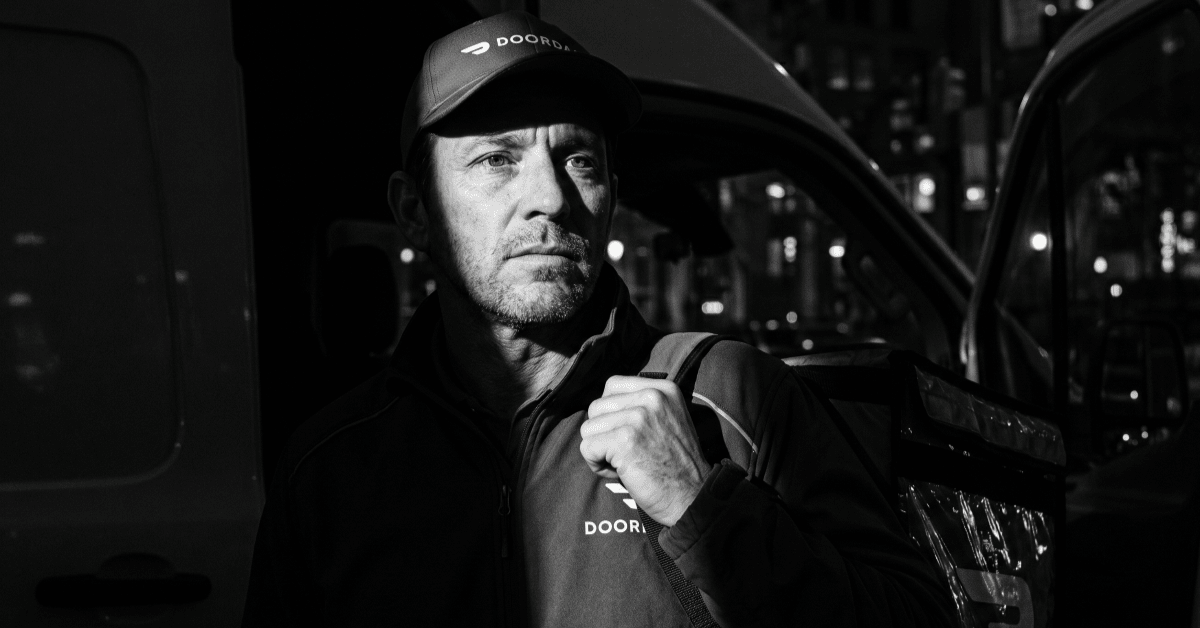
Step out onto any street in a major American city, and you will see them: a fleet of Uber drivers navigating relentless traffic, DoorDash couriers racing against a stopwatch, and digital freelancers grinding away in dimly lit apartments. This is the Gig Economy, a $2.7 trillion behemoth that was sold to us as the ultimate liberation. We were told we could be our own boss. Instead, we have traded the security of a cubicle for the cold indifference of an algorithm.
While Silicon Valley celebrates its asset-light efficiency, a critical question remains: In this frictionless economy, who is actually getting the grease? Is it the worker who is flexible but broke? The consumer who wants a $10 burrito delivered at midnight? Or the tech giants who have effectively outsourced their risks while privatizing their profits?
The Mirage of Flexibility
The grand narrative of the gig economy is the promise of freedom. You work when you want. You are the master of your time. In reality, for many Americans, this is forced flexibility. When your paycheck depends on a surge-pricing algorithm you can’t control, you don’t work when you want—you work ALL THE TIME.
Data shows that two-thirds of these independent contractors take home less than $2,500 a month. In a country where the average rent in major hubs exceeds $2,000, and a single trip to the ER can cost more than a year's earnings, this is not flexibility; it’s a high-wire act without a net.
The Insurance Trap and the Health Care Nightmare
Here is where the American version of this story gets truly dark. In the traditional 9-to-5 world, a job was your gateway to health insurance. In the platform economy, you are a partner, a legal euphemism that allows companies to evade providing benefits.
For the gig worker, a broken leg isn't just a medical issue—it is a financial death sentence. Even those who qualify for the Affordable Care Act (ACA) find themselves with high-deductible plans that feel like a cruel joke. You pay hundreds a month for coverage that only kicks in after you have already spent $8,000 out of pocket. In the platform economy, the worker bears 100% of the operational risk (gas, car maintenance, insurance) while the platform takes 20-30% of the gross.
The Final Boss of Human Resource
We’ve replaced human managers with Algorithmic Despotism. Platforms today control every variable: pricing, job distribution, and the dreaded rating system. There is a massive information asymmetry; the app knows everything about you, but you know nothing about the code that decides if you eat tonight.
This power allows platforms to squeeze wages to the absolute floor. It is a two-sided market where the middleman has all the leverage. They do not own the cars, neither they do own the bikes nor the employees—they just own the gate.
The Invisible Extraction
The real profit for these tech giants is not just the commission on your pizza delivery; it is the data. Every turn a driver takes, every customer preference, and every worker’s habit is harvested and analyzed.
Gig workers are essentially training the very AI that will eventually replace them (through autonomous vehicles or automated services). They are providing the labor and the data to build the "Platform Capitalism" of the future, yet they receive zero compensation for the intellectual property they generate every hour they are logged in.
A New Kind of Inequality
In developing nations like Indonesia, the gig economy is a desperate band-aid for unemployment. In the U.S., it is the dismantling of the middle class. We are witnessing a 30% gender pay gap even in the gig world, and a productivity trap where workers log 60-hour weeks just to stay stationary.
Regulation is perpetually ten steps behind. While governments debate whether a driver is an employee or a contractor, the platforms spend millions on lobbying to ensure the status quo of instability remains.
Old Problems, Modern Packaging
So, who is truly winning? The answer is clear: The Digital Platforms. They have built an empire on the back of data and discarded liability. The consumer gets a temporary win with cheap and fast service, but that convenience is subsidized by the desperation of the worker.
The gig economy is a mirror of our modern world: shiny, efficient, and technologically advanced on the outside, but hiding the same old structural inequalities on the inside. Unless we decouple basic human rights—like health care and social security—from the traditional employment contract, the platform economy will remain a high-tech so-called Hunger Games. It’s the same old exploitation, just wrapped in a sleek UI with a 4.9-star rating.
This article was published in Kompas on Wednesday (4/29/2026).