
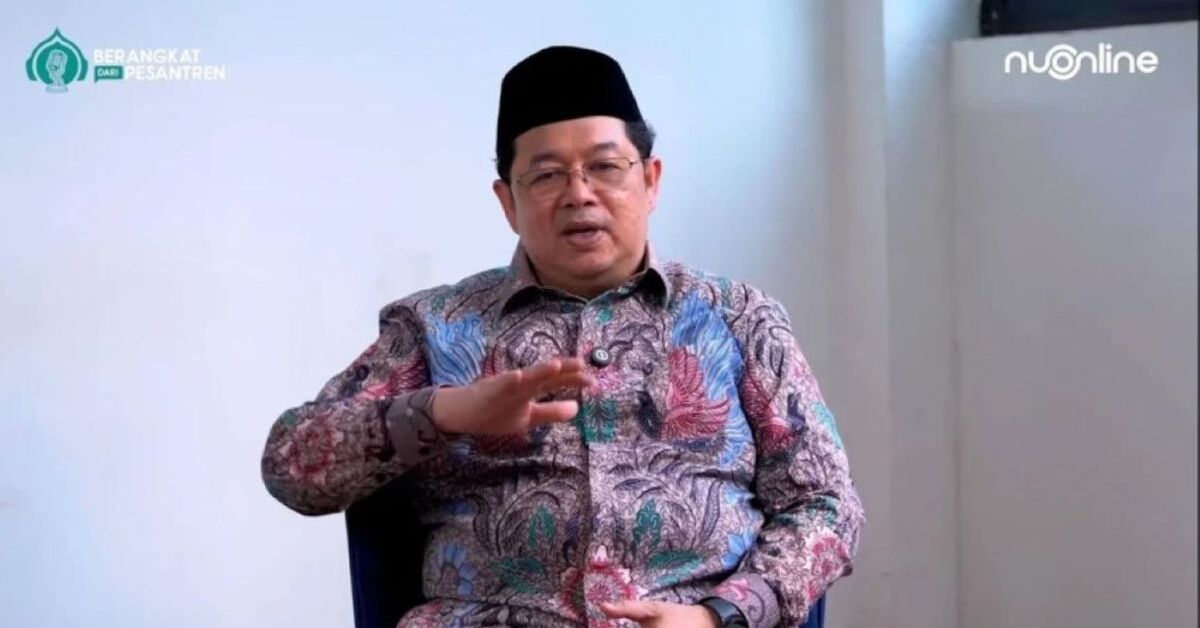
Guru Besar UIN Jakarta Soroti Keseimbangan Kurikulum, Pemanfaatan AI, dan Pemerataan Akses Pendidikan di Daerah 3T
Jakarta, UIN Online News — Prof. Muhammad Zuhdi, M.Ed., Ph.D., Professor of Curriculum Development at UIN Syarif Hidayatullah Jakarta, has emphasized the importance of designing an education system that balances a strong core curriculum with the flexibility to adapt to changing societal and technological demands. According to him, education should be built upon enduring foundational knowledge while remaining responsive to developments in the modern world. He shared these views during the Berangkat dari Pesantren program on Monday (6 April 2026).
Prof. Zuhdi explained that Islamic boarding school (pesantren) education has long maintained a set of foundational disciplines—including Arabic grammar (nahwu), morphology (sharaf), and logic (mantiq)—as essential building blocks of learning. He noted that Western education follows a similar principle by prioritizing fundamental competencies such as reading, writing, and arithmetic. Regardless of one's profession, he argued, every individual should master these basic forms of knowledge. While the substance of core learning remains constant, he stressed that teaching methods must continue evolving to meet the needs of each generation.
"There should be a set of core subjects or competencies that everyone is expected to master. At the same time, teaching methods must evolve with the times, and most importantly, teachers' mindsets must also change. Without that shift, educational reform will have little real impact," he said.
Despite numerous curriculum reforms in Indonesia, Prof. Zuhdi observed that many have produced only limited improvements because policy changes are often not accompanied by changes in teachers' approaches to teaching. As the primary agents of classroom learning, teachers play a decisive role in determining whether curriculum reforms translate into meaningful educational outcomes. He also pointed out that Indonesia's vast geographical landscape presents additional challenges, making it difficult to implement educational policies consistently from the national level to remote regions.
"Curriculum reform must be accompanied by a change in teachers' mindsets. If educators continue teaching in the same way, students will not experience meaningful change. Moreover, Indonesia's vast geography makes it difficult to implement policies uniformly across remote areas, resulting in persistent disparities in educational practice," he explained.
Addressing technological developments, Prof. Zuhdi described Artificial Intelligence (AI) as an inevitable part of contemporary education. Rather than viewing AI as a replacement for human capabilities, he argued that it should be used as a tool to expand human creativity, critical thinking, and exploration. He emphasized that qualities such as spiritual experience, emotional depth, and the ability to build meaningful social relationships remain uniquely human and cannot be replicated by even the most advanced technologies.
"AI should be used to make human life easier while enhancing our capacity for critical thinking and exploration. Nevertheless, people must continue thinking beyond what AI can do because experiences such as spirituality and human relationships cannot be replaced by technology, no matter how advanced it becomes," he said.
Prof. Zuhdi also underscored the importance of educational equity, particularly in addressing disparities in access across Indonesia. He argued that the government has a responsibility to ensure that every child, regardless of where they live, enjoys equal educational opportunities. According to him, expanding access to quality education must become the first priority if broader improvements in the education system are to be achieved.
He concluded by emphasizing that meaningful educational transformation cannot rely solely on policy reforms. Sustainable progress, he said, requires changes in teachers' perspectives, the responsible integration of technology into learning, and a long-term commitment to ensuring equitable access to education throughout Indonesia.