
From Survival to Direction: NU’s Civilizational Mandate
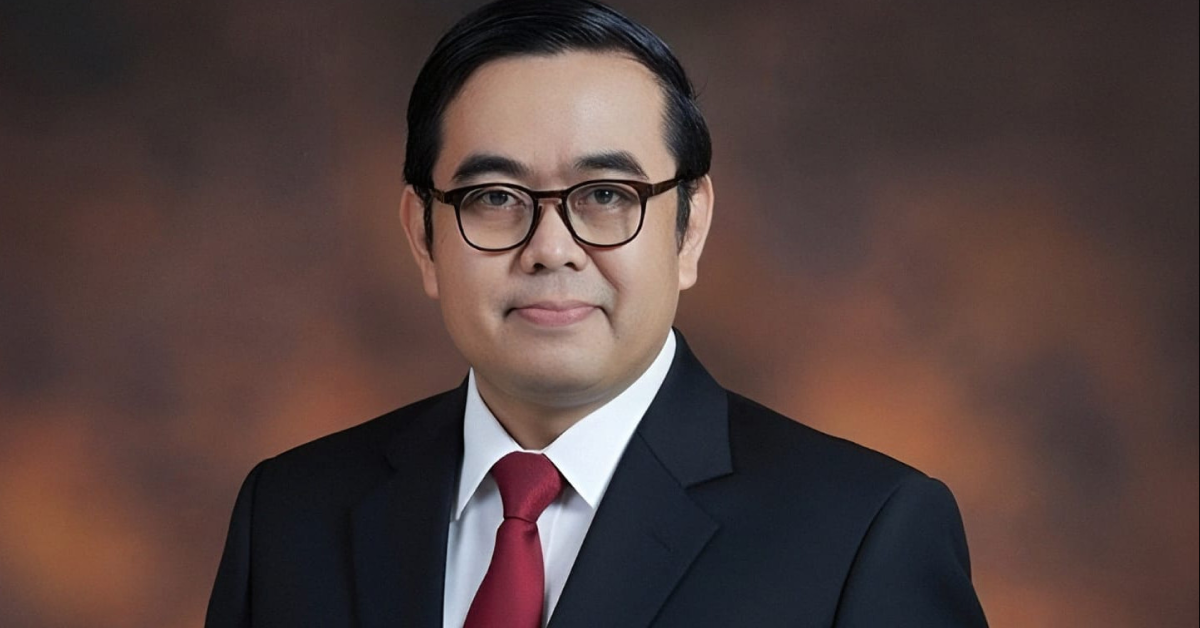
Ahmad Tholabi Kharlie
(Professor at UIN Syarif Hidayatullah Jakarta and Administrator of LPTNU PBNU)
One hundred years of Nahdlatul Ulama (NU) in the Gregorian calendar marks the long journey of a religious organization that has existed and grown within the landscape of civilization. NU’s involvement in highly dynamic social, cultural, and national developments has been clearly recorded over the past century.
Since its founding in 1926, NU has developed as a response to the anxieties of its time. Colonialism, shifts in religious authority, and global modernity shaped the early context of NU’s emergence and the direction of its role.
Now, as NU enters its second century, the challenge is no longer about survival but about how to define relevance. The world NU faces today is far more complex than it was a hundred years ago.
Digitalization has transformed patterns of religious authority; global capitalism pressures social solidarity; identity populism erodes public reason, while environmental crises and economic inequality demand a more courageous social ethic.
In this context, NU’s 100th anniversary cannot be celebrated merely with historical romanticism or demographic pride. NU is called upon to conduct an honest self-evaluation while also having the courage to shape its future.
A Moving Tradition
It cannot be denied that NU’s most distinctive strength from the beginning has been its ability to preserve tradition. The classical scholarly heritage (turats) has not been positioned as a relic of the past but as a source of ethics and methodology of thinking.
This is what Martin van Bruinessen (2011) called a living tradition—a tradition that lives because it continues to be reinterpreted according to its social context.
However, the challenges of the second century demand more than simply preserving tradition. Religious authority today is no longer singular. Social media has produced what can be called “algorithmic preachers"; viral religious opinions often overpower scholarly argumentation, and fragmentation within the community moves faster than institutional consolidation.
In this situation, NU faces a serious dilemma: how to maintain scholarly authority without being trapped in an elitist, closed, and exclusive clerical and pesantren culture.
If not read dynamically, NU’s traditionalism risks being misunderstood as a defensive stance toward change. Yet NU’s history shows the opposite. Bahtsul Masa’il, for example, is a highly adaptive intellectual practice because it teaches dialogue between text, context, and public benefit (maslahah).
The problem is that this mechanism often remains internal and has not fully emerged as a public reference in addressing current issues such as artificial intelligence, bioethics, ecological justice, the digital economy, and the crisis of democracy.
Greg Fealy (2020) notes that NU’s strength lies not only in the number of its followers but also in its social and moral capital. However, this capital will lose its transformative power if it is not translated into more concrete, systematic, cross-sectoral, and future-oriented agendas.
NU in Its Second Century
Entering its second century, NU’s challenges can no longer be answered merely with the slogan “return to khittah.” Khittah must be understood as an ethos, not as a static jargon.
NU must move from being merely a socio-religious organization (jam’iyyah) to becoming a civilizational actor that actively shapes the direction of the nation and global humanity.
First, NU must strengthen its strategic role in education and knowledge production. Pesantren, as the heart of NU, must be positioned as centers of value transmission as well as laboratories of Islamic thought that respond to contemporary problems.
Therefore, collaboration between pesantren and universities, engagement in interdisciplinary research, and the improvement of digital literacy are necessities, no longer options.
Second, NU faces serious challenges in leadership regeneration. Its large structure and broad network often complicate cross-generational vision consolidation. Young NU members live in a different global ecosystem. They are cosmopolitan, digital natives, and critical of symbolic authority.
If NU fails to bridge this gap, cultural loyalty will not automatically transform into substantive participation.
Third, issues of social and environmental justice must be placed at the center of the second-century agenda. The climate crisis, structural poverty, and inequality in access to education are not merely technical issues but moral ones. Here, the teaching of Islam as rahmatan lil ‘alamin (a mercy to all creation) finds its practical relevance.
Robert W. Hefner (2016) describes NU as one of the most important examples of civic Islam—Islam that is theologically rooted yet progressive in advocating public values.
Fourth, NU needs to be more confident in global conversations. The world today is searching for models of religiosity that are moderate, democratic, and community-based. NU’s experience, with all its dynamics and imperfections, is a highly valuable social laboratory.
However, without a strong narrative and structured intellectual diplomacy, this valuable experience will remain a local story unheard beyond its borders.
Nurturing Tradition
As it enters its second century, Nahdlatul Ulama steps into a phase of renewal rooted in its identity. NU’s traditionalism is understood as an ethic of prudence grounded in collective wisdom, while also serving as a foundation for responding wisely and sustainably to the dynamics of the times.
Yet this prudence must continue to be guarded so that it remains aligned with the fast pace of change.
NU’s self-evaluation must begin with the awareness that past strength does not automatically guarantee future relevance.
An organization as large as NU requires a civilizational roadmap: clear in values, flexible in strategy, and courageous in innovation. Modernity must be processed through the wisdom of tradition so that it aligns with the values and direction of the civilization being built.
NU’s 100th anniversary is a moment to reaffirm one important truth: NU was not born to become a museum of tradition but to become a guardian of meaning in times of change.
If the first century was a phase of growth, rooting, and survival, then the second century must be a phase of giving direction.
In a world increasingly noisy with extremism, injustice, and the loss of moral orientation, NU possesses historical, ethical, and social capital to emerge as a guide.
The challenge now lies in NU’s willingness to reorganize itself with clarity of vision and humility, as inherited from its founders a century ago.
This article was published in the Opinion column of Jawa Pos, Page 2, on Friday, January 30, 2026.