
From Ramadan to Lasting Piety: Prof. Ahmad Tholabi's Eid al-Fitr Sermon Calls for Lifelong Spiritual Growth
Ciputat, UIN Online News — Thousands of worshippers gathered at An-Noor Mosque in Ciputat, South Tangerang, to perform the Eid al-Fitr prayer (1447 AH/2026 CE) on 21 March 2026. Since early morning, the resonating chants of takbir created a solemn and uplifting atmosphere, filling the mosque and its surrounding areas with a profound sense of celebration and gratitude.
The congregation arrived steadily throughout the morning, filling the mosque's main prayer hall before extending into the courtyard and surrounding streets. Dressed in their finest attire, worshippers came together to celebrate the end of Ramadan with renewed hope and a deep sense of spiritual fulfillment, making this year's Eid a moment of collective reflection and thanksgiving.
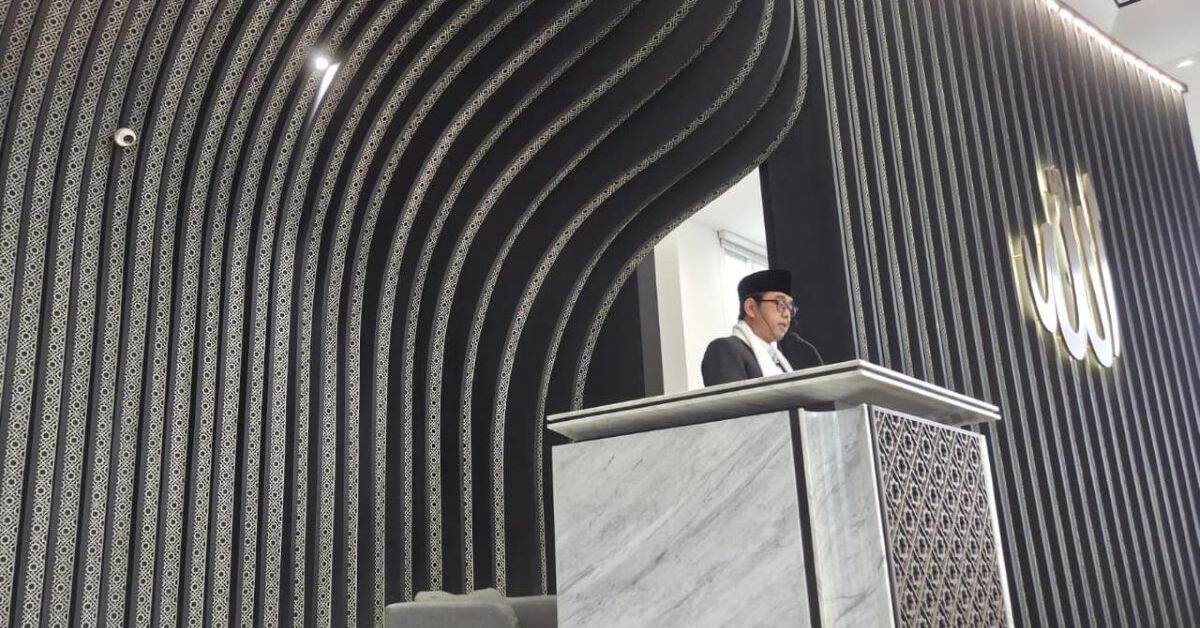
Following the prayer, many remained to listen attentively to the Eid sermon delivered by Prof. Dr. H. Ahmad Tholabi Kharlie, Professor at UIN Syarif Hidayatullah Jakarta and the university's Vice Rector for Academic Affairs. A respectful silence filled the mosque as he began his sermon.
"Today we gather on a glorious morning, a morning filled with gratitude and hope," Prof. Tholabi opened, inviting the congregation to understand Eid al-Fitr as a return to humanity's pure and original nature (fitrah).
According to him, Eid should be viewed as a profound moment of spiritual renewal.
"We return with hearts that are purer and souls that are clearer," he said, emphasizing that the true meaning of the celebration lies in inner transformation rather than outward festivities.
He then posed a reflective question that encouraged worshippers to examine their own spiritual journey.
"Ramadan has indeed passed, but has taqwa (God-consciousness) remained within our hearts?"
The question prompted a moment of quiet contemplation throughout the congregation.
Prof. Tholabi described Ramadan as a spiritual school that nurtures patience, self-discipline, and closeness to Allah.
"Ramadan is not merely about refraining from food and drink. It trains the soul to submit wholeheartedly to Allah," he explained.
He stressed that the real measure of a successful Ramadan is not the completion of the month's rituals but the transformation of one's character.
"Have we become more patient, more honest, and more compassionate after Ramadan?" he asked, underscoring the importance of sustaining moral growth beyond the holy month.
The sermon also reminded worshippers that the greatest challenge begins after Ramadan ends. The values cultivated during the month of fasting, he said, must continue to guide everyday life rather than fade amid the routines and distractions of the world.
Concluding his sermon, Prof. Tholabi encouraged the congregation to preserve the spiritual light kindled during Ramadan.
"If that transformation remains within us, then Ramadan has never truly left us," he said, emphasizing that lasting devotion and consistent good deeds are the true signs of spiritual success.
The sermon left a lasting impression on the congregation, framing Eid al-Fitr not merely as the conclusion of Ramadan but as the beginning of a lifelong commitment to nurturing faith, character, and God-consciousness.