From Comparative Research to Shared Practice: International Collaboration for Sustainable Development
Syarif Hidayatullah State Islamic University Jakarta actively uses international collaboration, comparative research, and global knowledge exchange to identify effective approaches and develop transferable practices for addressing sustainable-development challenges. Through the Center for the Study of Islam and Society (PPIM), the University has worked with international partners including Greenpeace Middle East and North Africa (MENA), Ummah for Earth, the Embassy of the Kingdom of the Netherlands in Indonesia, international universities, the United Nations Environment Programme (UNEP), and researchers from different countries. These partnerships enable Syarif Hidayatullah State Islamic University Jakarta to compare approaches to climate education, religious environmentalism, community-based environmental action, and environmental policy, while translating lessons from research and international dialogue into practical models, curriculum development, policy recommendations, and institutional interventions.
The activities contribute particularly to SDG 4: Quality Education, SDG 13: Climate Action, and SDG 17: Partnerships for the Goals.
1. Comparing Approaches to Climate Education through International Research Collaboration

A major example of international collaboration is the programme “Ulama (Imam) and Climate Change and Environmental Issues in Islamic Higher Education,” implemented through cooperation between PPIM of Syarif Hidayatullah State Islamic University Jakarta, Greenpeace Middle East and North Africa (MENA), and Ummah for Earth Greenpeace Indonesia. The programme was implemented from 2023 to 2025 to examine how Islamic higher education institutions respond to climate change and environmental challenges.
Rather than examining a single institution, the research compared practices and institutional conditions across 17 Islamic higher education institutions, including universities associated with major Islamic organisations such as Nahdlatul Ulama and Muhammadiyah. The comparative research identified common challenges, including limited dedicated climate-change courses, low institutional support, gaps in environmental literacy, and insufficient teaching methodologies. By reviewing practices across multiple institutions, the collaboration enabled researchers to distinguish recurring structural challenges from institution-specific experiences. The findings were then used to develop practical approaches that could be adapted across Islamic higher education institutions.
2. Developing Replicable Green Curriculum Models
The international research collaboration went beyond documenting problems. Based on comparative findings from Islamic universities, PPIM developed two curriculum models:
“Religion and Environment”, designed for integration into Introduction to Islamic Studies; and
“Environmental Citizenship”, designed for integration into Citizenship Education.
These models represent an effort to transform research findings into educational practices that can be replicated and adapted across institutions. The programme subsequently tested and strengthened these approaches through capacity-building activities. This process demonstrates a clear pathway from international collaboration to practice development:
comparative research → identification of common challenges → curriculum design → institutional testing → recommendations for broader implementation.
The programme also produced policy recommendations for the Directorate of Islamic Higher Education within Indonesia's Ministry of Religious Affairs to strengthen the integration of climate-change and environmental education in Islamic higher education. Through this approach, Syarif Hidayatullah State Islamic University Jakarta helped develop practices that can be adapted beyond a single campus.
3. International Conference as a Platform for Comparing Global Approaches
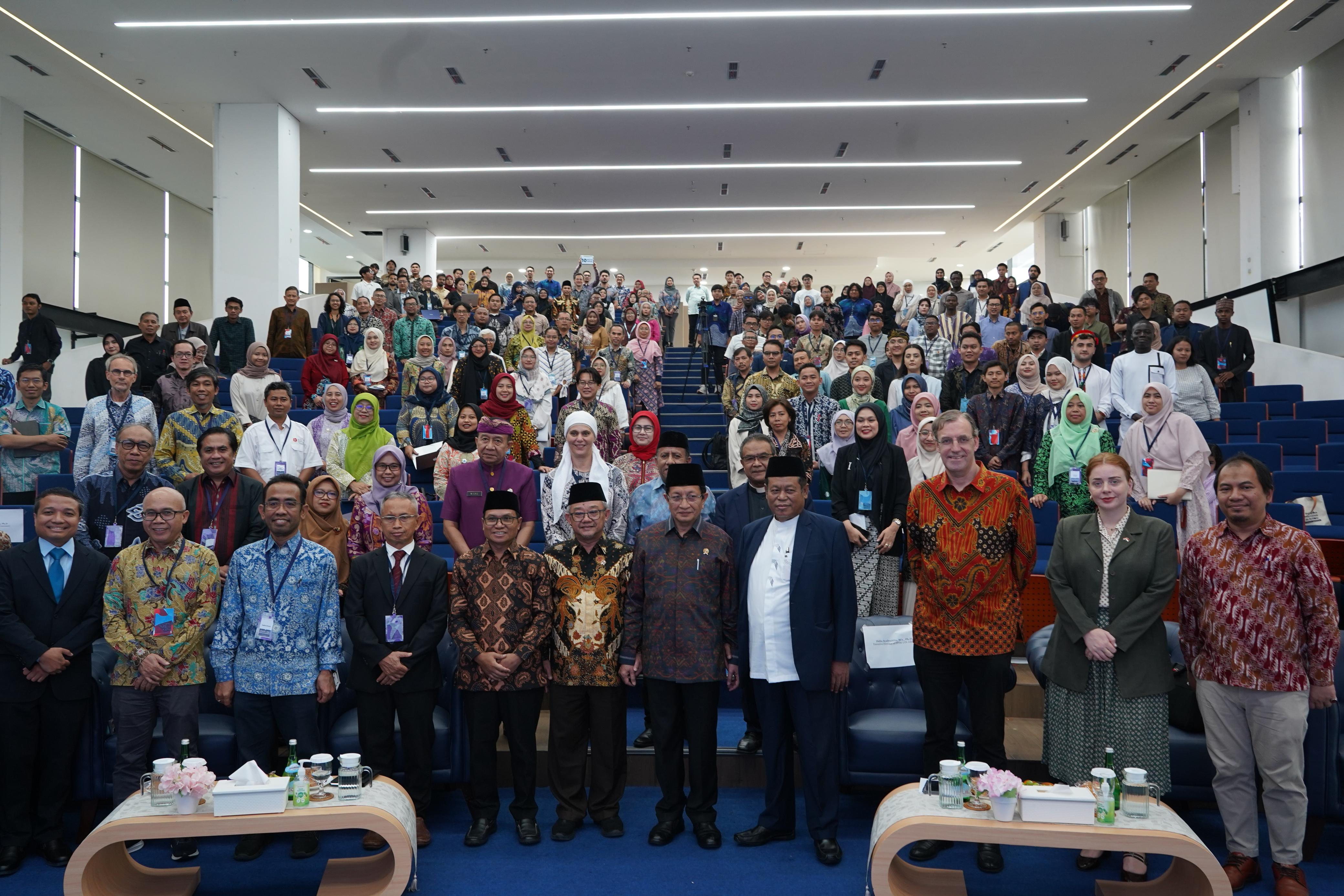
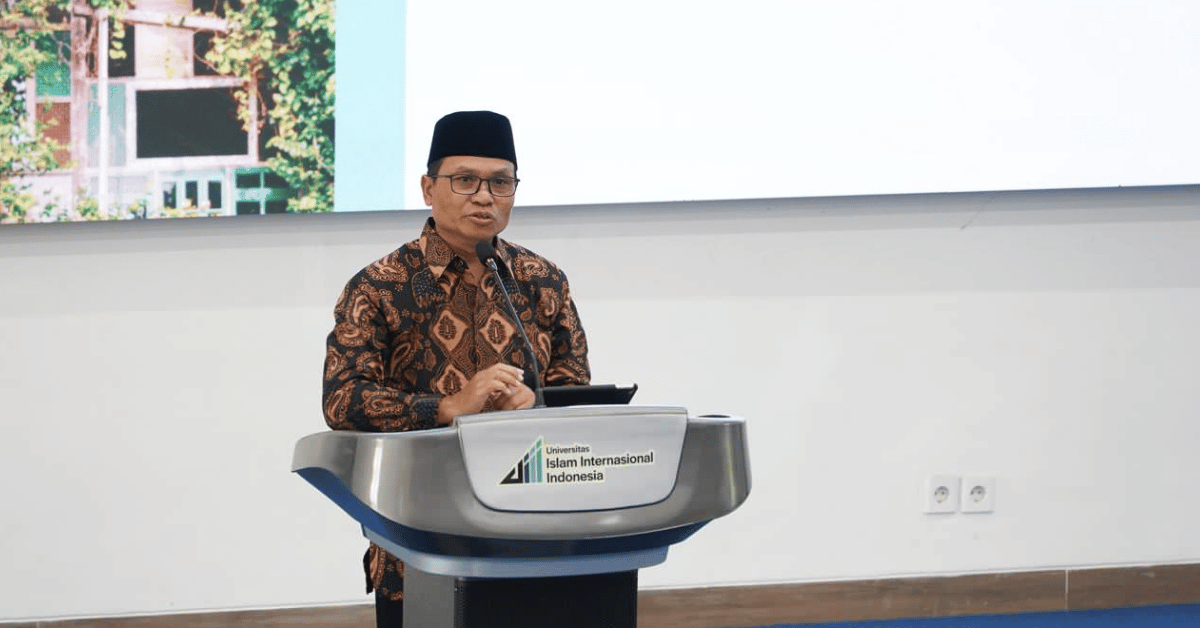
A second major mechanism for reviewing comparative approaches was the International Conference on Religious Environmentalism in Action: Knowledge, Movements, and Policies, held on 16–18 July 2025. The conference was organised by PPIM of Syarif Hidayatullah State Islamic University Jakarta in collaboration with the Faculty of Social Sciences at Universitas Islam Internasional Indonesia, Studia Islamika, and with support associated with the Embassy of the Kingdom of the Netherlands. The conference brought together scholars, policymakers, religious leaders, environmental activists, and researchers from Indonesia and abroad.
International contributors included experts associated with:
-
the United Nations Environment Programme;
-
the University of Wisconsin–Madison;
-
Radboud University;
-
universities and research institutions in Southeast Asia;
-
environmental organisations; and
-
international faith-based environmental networks.
Presenters came from countries including Indonesia, Malaysia, the Philippines, Singapore, the United Kingdom, the United States, and others. This international composition enabled participants to review different approaches to environmental sustainability across national, disciplinary, cultural, and religious contexts.
4. Learning from Global Environmental Leadership
The conference provided a platform for international experts to present approaches developed in different contexts. Dr. Iyad Abumoghli of the United Nations Environment Programme and founder of the Faith for Earth Initiative contributed experience in connecting faith communities with environmental policy and global environmental action. His work draws on international experience involving faith-based environmental programmes, interfaith partnerships, environmental education, and policy engagement.
Professor Anna Gade of the University of Wisconsin–Madison contributed research on Muslim environmentalism and community-based ecological practices. Professor Frans Wijsen of Radboud University contributed international experience concerning interreligious dialogue and environmental ethics, including research across different regions.
Bringing these perspectives together allowed participants to compare international and Indonesian experiences and consider which approaches could be adapted to local sustainable-development challenges. This process is particularly relevant to SDG 17.2.4 because international collaboration was used not simply for networking, but to examine how different approaches to sustainability operate across institutional and cultural settings.
5. Comparing Grassroots Environmental Innovations
International collaboration under the REACT Project was complemented by comparative research on community-level environmental innovation. PPIM researchers examined different Muslim communities to understand why some local environmental initiatives were able to develop successfully while others faced difficulties. Research covered multiple communities across several Indonesian provinces.
The study compared practices such as:
-
converting organic waste into compost;
-
using religious endowments for environmental programmes;
-
developing community-based ecotourism;
-
environmental education;
-
sustainable resource management; and
-
community mobilisation through religious institutions.
The comparative analysis identified three recurring factors associated with successful initiatives:
active community participation, supportive religious institutions, and effective local initiators.
These findings helped transform individual community experiences into broader lessons that could inform environmental programming and policy.
6. Reviewing Different Approaches through the REACT Expert Meeting

On 6 August 2025, PPIM organised the REACT Expert Meeting 2025: Strengthening the Role of Religion in Indonesia's Environmental Movement, with support from the Government of the Netherlands. The meeting brought together 38 environmental experts and activists representing diverse organisations and approaches. Participants included representatives associated with GreenFaith Indonesia, Greenpeace/Ummah for Earth, KEHATI, IESR, Eco Bhinneka Muhammadiyah, MUI, MOSAIC/Purpose, and other environmental initiatives. Rather than promoting a single environmental model, the meeting explicitly examined the opportunities and challenges of different approaches to environmental activism. Participants compared community mobilisation strategies, religious approaches, environmental advocacy, research findings, and grassroots innovation. Research findings from PPIM were presented as an empirical basis for discussion. The meeting therefore enabled practitioners from different institutional backgrounds to identify strengths, limitations, and opportunities for collaboration.
7. Turning International Dialogue into Research-Based Knowledge Products
International dialogue and comparative research were also translated into academic outputs. According to the PPIM unit activity report, the International Conference on Religious Environmentalism involved 110 participants, including 98 presenters across 31 thematic panels. Selected conference papers were subsequently published in a special volume of Studia Islamika, Volume 32 No. 3 (2025). This publication process is significant because it transformed conference exchange into a lasting body of comparative research. The resulting special issue examined relationships between environmental ethics, religious movements, politics, and policy.
Rather than treating religious environmentalism as a single uniform approach, the research examined different actors, institutional arrangements, political contexts, and strategies. Through this process, international dialogue became a source of documented knowledge that can be reviewed, compared, and applied by other researchers and institutions.
8. From Comparative Knowledge to Policy and Institutional Practice
The wider REACT Project demonstrates how comparative research can be translated into practical sustainable-development interventions. Research generated through the project informed policy recommendations, educational interventions, capacity-building programmes, and engagement with government institutions and civil society. The University's work on climate education resulted in curriculum models. Research on community environmental innovation identified transferable factors associated with successful environmental initiatives.
Studies on pesantren environmental practices generated recommendations concerning institutionalisation, environmental infrastructure, capacity building, and programme sustainability. International conferences and expert meetings provided mechanisms for comparing these Indonesian findings with international experiences. Taken together, these initiatives create a cycle of:
international collaboration → comparative research → knowledge exchange → identification of effective approaches → adaptation → policy and institutional recommendations.
9. Contribution to International Best Practice
Syarif Hidayatullah State Islamic University Jakarta does not claim to establish a single universal sustainability model. Instead, its international collaborations contribute to the development of transferable and adaptable good-practice approaches. These include:
-
integrating environmental and climate issues into university curricula;
-
connecting religious values with environmental education;
-
involving religious institutions in climate action;
-
using research evidence to design educational interventions;
-
strengthening collaboration between universities, civil society, government, and environmental organisations;
-
incorporating community participation into environmental innovation; and
-
linking academic evidence with environmental policy discussions.
The value of these practices lies in their capacity to be adapted across different institutions and communities rather than being limited to a single project location.
10. Contribution to SDG 17: Partnerships for the Goals
Through international collaboration and research, Syarif Hidayatullah State Islamic University Jakarta actively reviews different approaches to tackling sustainable-development challenges and translates research findings into practical models and recommendations. Collaboration with Greenpeace Middle East and North Africa and Ummah for Earth enabled comparative analysis of climate education across Islamic higher education institutions and led to curriculum models and policy recommendations.
The International Conference on Religious Environmentalism brought together international scholars and practitioners to compare approaches from multiple countries and institutional contexts. The REACT Expert Meeting enabled environmental organisations and faith-based actors to critically review different environmental strategies and identify opportunities for collaboration. The publication of selected international conference papers in Studia Islamika further transformed these exchanges into documented and transferable knowledge.
Together, these activities demonstrate that Syarif Hidayatullah State Islamic University Jakarta uses international collaboration, comparative research, and knowledge exchange to identify, adapt, and disseminate effective approaches for addressing the Sustainable Development Goals.
These initiatives provide substantive evidence for SDG Indicator 17.2.4: Collaboration for SDG Best Practice.
Source :
https://ppimcensis.or.id/program/ummah-for-earth-u4e-greenpeace-mena-indonesia/
https://studiaislamika.ppimcensis.or.id/index.php/studia-islamika/article/view/42956
https://uiii.ac.id/international-conference-on-religious-environmentalism-held-at-uiii-to-address-global-climate-crisis/
https://studiaislamika.ppimcensis.or.id/index.php/studia-islamika/article/view/46650
https://studiaislamika.ppimcensis.or.id/index.php/studia-islamika/article/view/46674
https://ppimcensis.or.id/2025/08/06/react-expert-meeting-2025-memperkuat-peran-agama-dalam-gerakan-lingkungan-di-indonesia/
https://ppimcensis.or.id/program/religious-environmentalism-actions-react/