
Eid al-Adha 2026 and the Call to Dismantle the Modern Ego
Bambang Irawan
Professor at UIN Jakarta
On May 27, 2026, millions of Muslims across the globe stand united in celebration of Eid al-Adha 1447 H. As the chants of Takbeer echo from the minarets of Jakarta to the community centers of Detroit, London, and the camps of Gaza, we are reminded that this day is far more than a red date on a calendar, a ritual of slaughter, or the return of the Hajj pilgrims from the Holy Land. Beneath the surface lies a profound, universal mandate: a call to re-examine our willingness to sacrifice for our families, our societies, and the global Ummah.
In a world increasingly driven by hyper-individualism and economic anxiety, the Muslim family has become the first battleground. Inflation is suffocating households, jobs are precarious in the age of automation, and parents carry silent exhausts they cannot speak aloud. Many homes still stand, but the conversations within them have died. Families look intact from the outside, but inside, a heavy silence has taken root.
The Levelling of the Ego at Hajj
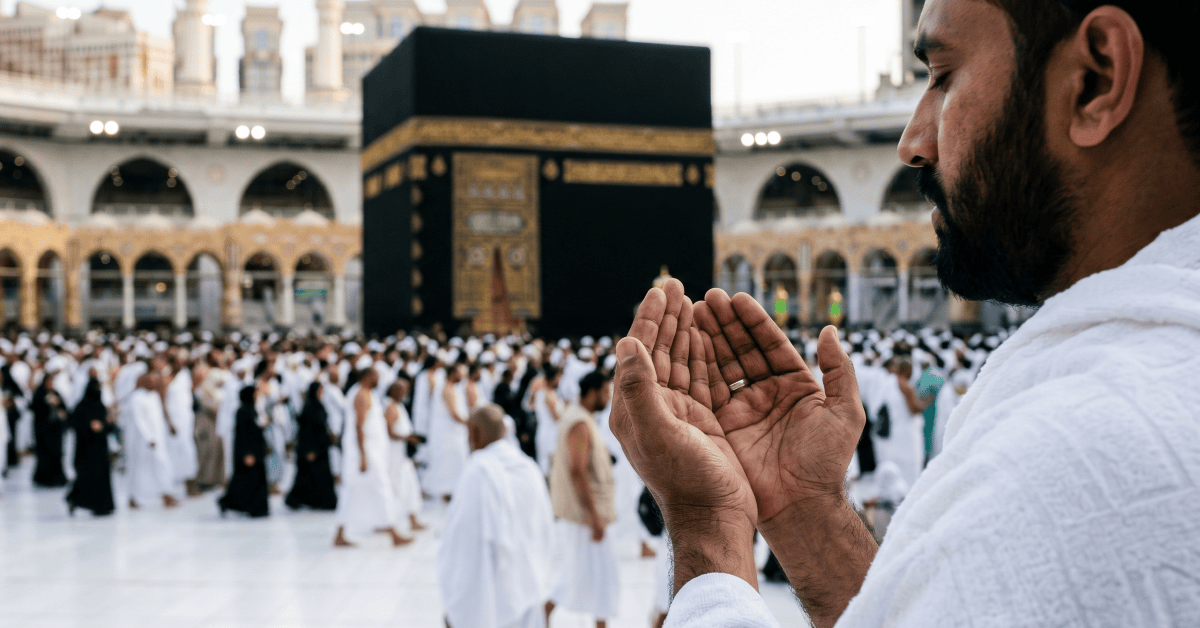
This is where the spirit of Hajj and Eid al-Adha meets our daily survival. The pilgrimage to Makkah is not a mere geographical journey; it is a spiritual demolition of the human ego. Before the Ka’bah, titles, corporate ranks, wealth, and national borders dissolve into nothingness. Everyone wears the same white cloth—the Ihram. Everyone stands as a humble servant. No human has the right to feel superior to another in the presence of the Almighty.
This lesson becomes razor-sharp when we look at the legacy of the family of Prophet Ibrahim (Abraham). There is Ibrahim, tested by absolute obedience; Hajar (Hagar), tested by terrifying isolation; and Ismail (Ishmael), tested by ultimate submission. They are not mere characters in an ancient text; they are a mirror for any modern Muslim family fighting to preserve faith, love, and hope against the odds.
Consider Mother Hajar, left in a barren desert with her infant child. There was no visible safety net, no community, no corporate insurance. Yet, she did not surrender to despair. She ran between the hills of Safa and Marwah—searching for water, searching for a way out, proving that life must be fought for. It was from the desperate yet unyielding strides of a mother that the well of Zamzam gushed forth.
The Modern Sa'i of the Ummah
Today, countless Muslim families around the world are running their own Sa’i. There is the father working multiple gig-economy shifts before dawn just to keep the lights on. There is the mother hiding her burnout so her children feel safe. There is the young Muslim graduate trying to remain hopeful while facing a job market that views them as replaceable data points. There are families holding together not because they lack problems, but because they choose to hold onto each other’s hands.
Therefore, sacrifice does not always have to be cinematic. Sometimes, sacrifice is swallowing a harsh word when your heart is burning with rage. Sometimes, it is logging off early so your child doesn't grow up alone. Sometimes, it is being the first to apologize, even when you aren't entirely wrong. Sometimes, it is choosing a simple life over the destructive illusions of prestige.
A resilient family is not one that never cries; it is one that refuses to let tears become an excuse to abandon one another. A blessed home is not one free of trials, but one that uses trials as a highway to get closer to Allah and to become softer toward each other.
From the Household to the Global Conscience
Yet, the message of sacrifice cannot be quarantined within the home. Historically, the liberty of the Muslim world was not handed down as a gift. It was carved out by generations who refused to bow to colonial oppression. Throughout history, from the anti-colonial resistance in North Africa and the Levant to the cultural preservation of Islam in Southeast Asia, the Ummah was built by those willing to lose their wealth, status, and freedom for a higher truth.
Great scholars and freedom fighters did not live for themselves. They were exiled, slandered, and imprisoned because their devotion to justice disrupted the machinery of colonial powers. They understood that love for justice demands a price. They did not just lecture on sacrifice; they embodied it.
From our righteous predecessors, we learn that Qurban (sacrifice) is not merely the slaughter of an animal on Eid morning. It means slaughtering our internal greed. It means cutting out narrow self-interest, the cowardice that keeps us silent in the face of systemic injustice, and the unchecked egos that sacrifice the poor, the weak, and the refugee on the altar of personal ambition.
The Mirage of Spiritual Pride
This lesson is desperate for a revival in our public spheres. Leadership must be a path of service, not a mechanism to exploit the vulnerable. A Mabrur (accepted) Hajj does not birth spiritual arrogance. It births a human being who is quicker to forgive, lighter in helping, more terrified of committing tyranny, and ashamed to take what does not belong to them. If a person returns from the Holy Land but still relishes in belittling others, hoarding wealth through deception, or closing their eyes to the genocide and poverty of their brothers and sisters worldwide, their body may have reached Makkah, but their soul never left home.
Eid al-Adha demands that we ask ourselves with brutal honesty: What have we sacrificed for our families? What have we sacrificed for the marginalized in our communities? Have we been demanding that the world sacrifice for our comfort while we give nothing in return?
In an era of hyper-consumption, simplicity is a revolutionary act. Simplicity is the courage to govern our desires. Sincerity is not weakness; it is the spiritual fuel needed to keep giving when the soul is tired. Sacrifice is not a defeat; it is the ultimate victory of a human being over their own ego.
Rebuilding from Within
The rehabilitation of the global Ummah must begin in the closest room: the family. Heal the way a father speaks to his son. Restore the dignity with which a husband treats his wife. Bring back the dinner table as a sanctuary for conversation, not just a pit stop to feed physical hunger. Turn the home into a place of return, not an arena for mutual blame.
From a sincere family, a civilized society is born. From a civilized society, a moral politics grows. And from a moral politics, a humane economy emerges—one that is strong not just in GDP metrics, but robust in its spiritual soul.
Eid al-Adha 2026 arrives as both a gentle reminder and a stern warning. We are called back to Allah, back to the family, back to absolute integrity. The world will not be saved by those who are merely eloquent in speech. It will be saved by those who can still sacrifice with sincerity: the youth who resist cynicism, the leaders who fear Allah before they fear losing their seats, and the everyday believers who guard their Akhlaq (character) even when life is heavy.
The Zamzam we need today is the fountain of sincerity welling up from our homes, flowing slowly but surely to become the strength that revives the world.
This article was published in Detik on Sunday, May 24th 2026.