Director General of Islamic Education: AICIS+ 2026 Expands Interdisciplinary Integration, Strengthens Collaboration Across Islam, Science, and Technology
Jakarta, UIN News Online– The 2026 Annual International Conference on Islam, Science, and Society (AICIS+) will expand academic dialogue by bringing together Islamic studies, science, technology, social sciences, and other academic disciplines. Through an interdisciplinary approach, the Ministry of Religious Affairs' annual academic forum aims to address civilizational challenges while encouraging the development of knowledge that makes a meaningful impact on society.
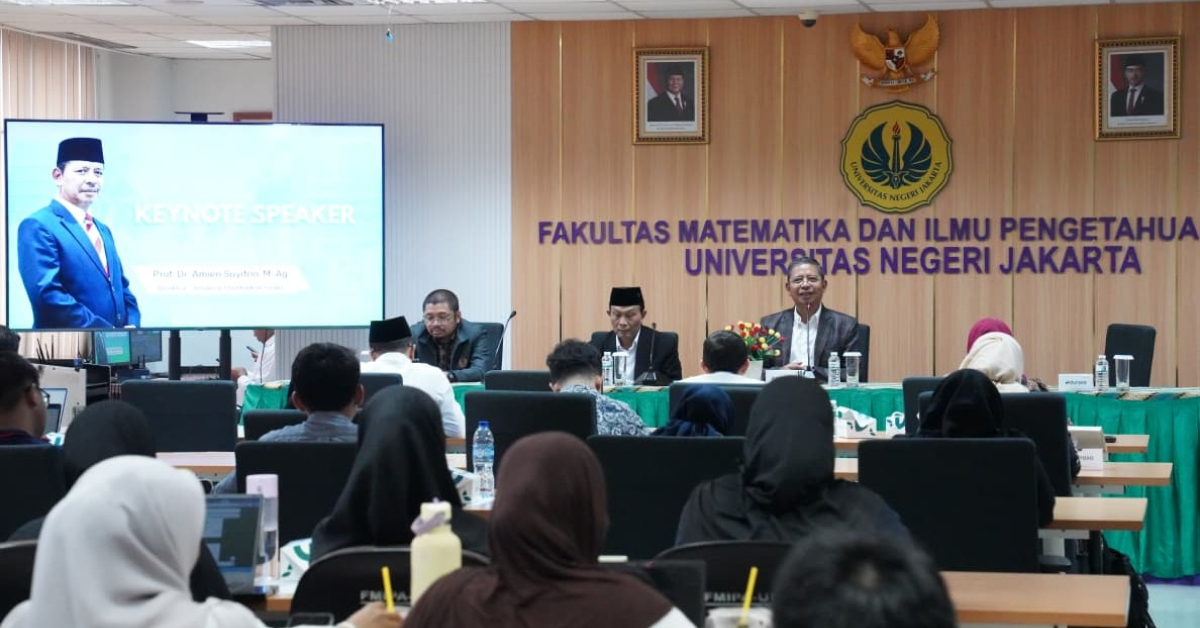
The expansion of AICIS+'s scope was among the key topics discussed at the Road to AICIS+ 2026 event at Jakarta State University (Universitas Negeri Jakarta/UNJ) on Monday (November 9, 2026). Director General of Islamic Education at the Ministry of Religious Affairs, Prof. Dr. Amien Suyitno, said that today's scientific developments require openness and collaboration across disciplines.
He explained that AICIS is no longer limited to Islamic studies but also encompasses science, society, and social studies. This broader scope responds to the increasingly complex challenges of the modern era, which cannot be addressed through a single academic perspective.
"Why should we organize AICIS to cover not only Islamic Studies but also science, society, and social studies? We are living in an era of collaboration. We cannot stand alone," Suyitno said.
The Director General of Islamic Education illustrated his point by referring to the construction of a building, which requires contributions from various fields of expertise, including civil engineering, electrical engineering, chemistry, and other disciplines. This demonstrates that individual fields of knowledge have limitations when developed in isolation.
Therefore, higher education institutions need to move beyond sectoral and disciplinary silos. Interdisciplinary connections are essential to ensuring that the advancement of knowledge produces more comprehensive solutions.
"We can no longer approach academic disciplines independently. Whatever our field of study, we depend heavily on knowledge from other disciplines if we want to grow and develop," he emphasized.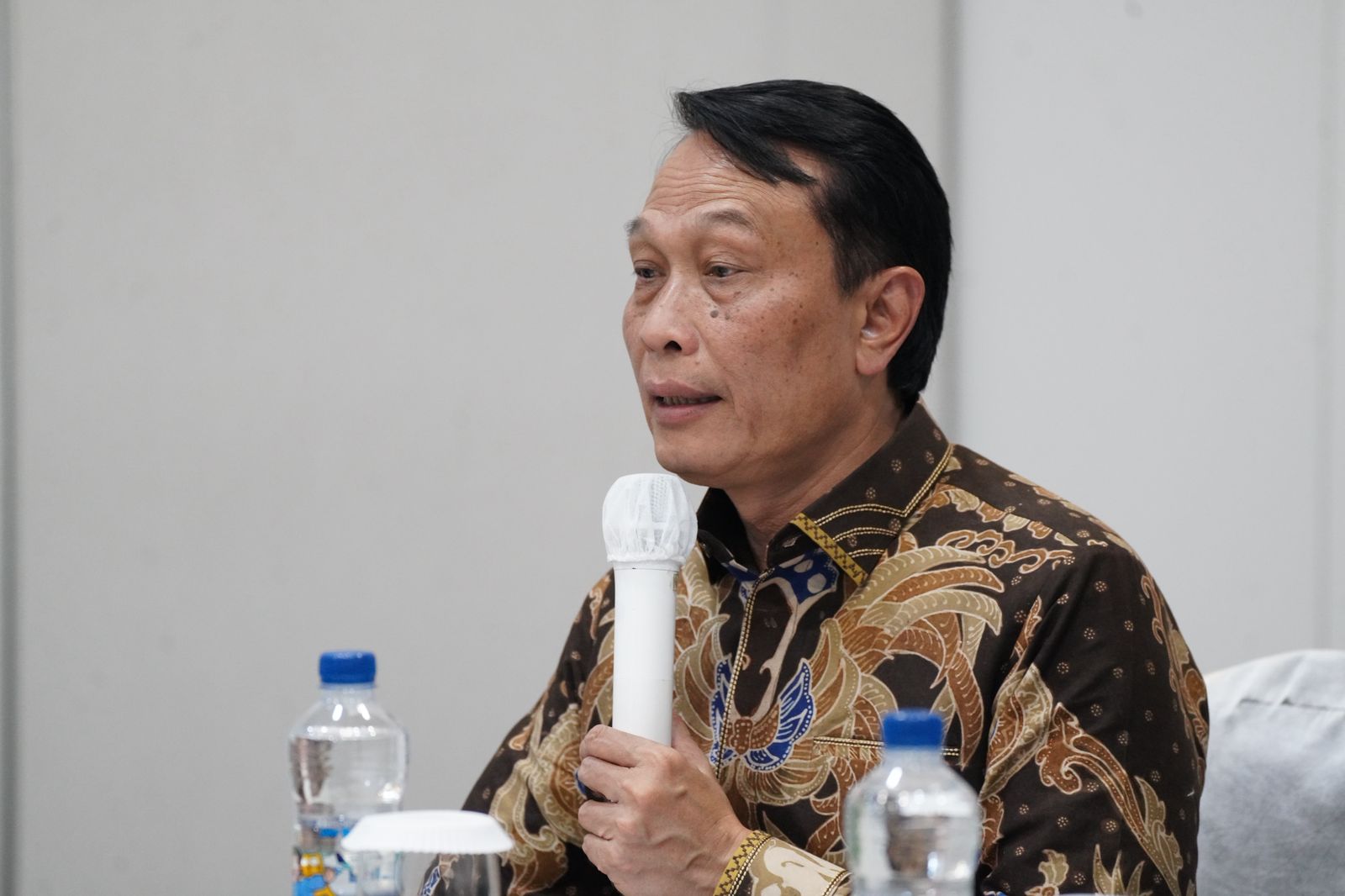
Meanwhile, Director of Islamic Higher Education, Prof. Dr. Phil. Sahiron, explained that AICIS+ 2026 provides an open platform for academics from diverse disciplinary backgrounds to exchange ideas and build collaborations.
He noted that Indonesia's Ministry of Religious Affairs continues to promote the integration of religious knowledge with other academic disciplines, including Science, Technology, Engineering, and Mathematics (STEM), as well as the social sciences.
"At the Ministry of Religious Affairs, we have programs that integrate religious knowledge with other disciplines, such as STEM and the social sciences. Through AICIS+, we want to create broader opportunities for academics from different disciplines to collaborate," Sahiron explained.
Academic interest in AICIS+ 2026 is reflected in the approximately 3,400 abstracts received from 21 countries. Nevertheless, most submissions have come from State Islamic Religious Universities (PTKIN) and Private Islamic Religious Universities (PTKIS).
The Road to AICIS+ event at UNJ is one of the initiatives aimed at expanding participation among academics from general universities. This effort seeks to transform AICIS+ from a platform primarily serving Islamic higher education institutions into a broader space for academic exchange and interdisciplinary collaboration.
UNJ academic Ahmad Hakam, Ph.D., noted that interdisciplinary integration has deep roots in the Islamic intellectual tradition. He cited Ibn Rushd, who was renowned for his expertise in various fields, including medicine, philosophy, and law.
He argued that Islamic studies should continue to evolve by incorporating different academic approaches, including the social sciences, to better understand religious phenomena and contemporary societal challenges.
"Studying Islam should not be limited to theology. There are many other aspects that can be explored, including through social science approaches. As the world evolves, Islamic scholarship must also develop to address emerging issues, such as the ethics of technology use," he said.
A similar perspective was shared by Dr. Hadi Nasbey, S.Pd., M.Si., a lecturer in the Physics Education Study Program and Dean of the Faculty of Mathematics and Natural Sciences (FMIPA) at Jakarta State University. He highlighted the importance of education in building a more equitable and sustainable society. In his view, science education must be accompanied by stronger ethical foundations.
Hadi explained that FMIPA UNJ is currently developing the Dilemma-STEAM program, which integrates ethical values into science education. This approach creates opportunities for religious scholarship to contribute to the development of a more holistic educational paradigm.
"Education is the foundation of a more equitable society. Science education is also fundamental to sustainable living. Through the development of the Dilemma-STEAM program, ethical values can be integrated into learning, creating opportunities for religious studies to contribute," he explained.
He also emphasized that the use of artificial intelligence (AI) in education must take ethical considerations into account. AI can serve as a learning tool, but the information it generates still requires human verification.
AICIS+ 2026 Focuses on Revitalizing Islamic Civilization for Sustainable Living
This broader interdisciplinary perspective provides the foundation for the 25th AICIS+, which will take place November 17–20, 2026, at UIN Siber Syekh Nurjati Cirebon.
Under the theme "Revitalizing Islamic Civilization for Sustainable Life: Local Heritage, Technological Innovation, and Human Flourishing," AICIS+ 2026 highlights the revitalization of Islamic civilization as a contribution to sustainable living, drawing on local heritage, technological innovation, and efforts to improve human well-being.
The theme responds to a range of global challenges, from climate change and rapid technological advancement to social fragmentation. Through this forum, the Islamic intellectual tradition is expected to contribute to developing relevant approaches to humanitarian issues and sustainability.
To broaden the scope of academic discussions, AICIS+ 2026 features ten subthemes covering a range of strategic areas:
- Islamic Thought, Qur'anic Exegesis, and Prophetic Traditions, covering Islamic thought, Qur'anic interpretation, Hadith studies, methodology, and hermeneutics.
- Artificial Intelligence, Digital Ethics, and Techno-Religion, addressing artificial intelligence, digital ethics, Islamic epistemology, and the relationship between religion and technology.
- Ecotheology, Climate Resilience, and Planetary Sustainability, exploring environmental theology, climate resilience, Islamic environmental jurisprudence, and planetary sustainability.
- Inclusive Governance, Peacebuilding, and Global Human Security, covering inclusive governance, peacebuilding, and human security.
- Human Dignity, Gender Equality, and Social Inclusion, addressing human dignity, gender equality, women's leadership, and social inclusion.
- Circularity, Sustainable Economy, Halal Innovation, and Islamic Social Finance, exploring the circular economy, sustainable economic models, halal innovation, and Islamic social finance.
- Public Health, Bioethics, Aging, Disability, and Well-being, covering public health, bioethics, aging populations, disability, and well-being.
- Education, Youth Leadership, and Human Resources, addressing education, youth leadership, and human resource development.
- Science, Innovation, and Technological Transformation, exploring scientific developments, innovation, and technological transformation.
- Nusantara Heritage and Community Initiatives, highlighting the Islamic heritage of the Indonesian archipelago, pesantren traditions, mutual cooperation (gotong royong), arts, mosque architecture, and community initiatives.
AICIS is a longstanding academic tradition of Indonesia's Islamic higher education institutions, organized by the Ministry of Religious Affairs since its inaugural conference in Semarang in 2000. For more than two decades, the conference has served as a platform for research dissemination, intellectual exchange, and the development of national and international academic networks.
The transformation into AICIS+ marks an expansion of the conference's orientation, moving beyond its original focus on Islamic studies toward an interdisciplinary forum connecting Islam, science, and society.
Through AICIS+ 2026, collaboration among State Islamic Religious Universities (PTKIN), general universities, and the international academic community is expected to grow stronger. The conference also provides an important platform for highlighting the contributions of Islamic scholarship in addressing challenges related to technology, the environment, humanity, and the sustainability of civilization.
(Center for Information and Public Relations, Institute for Research and Community Service, UIN Syarif Hidayatullah Jakarta)