Commission VIII DPR RI Visits UIN Jakarta, Highlights Waste Management Innovation and Campus Digitalization
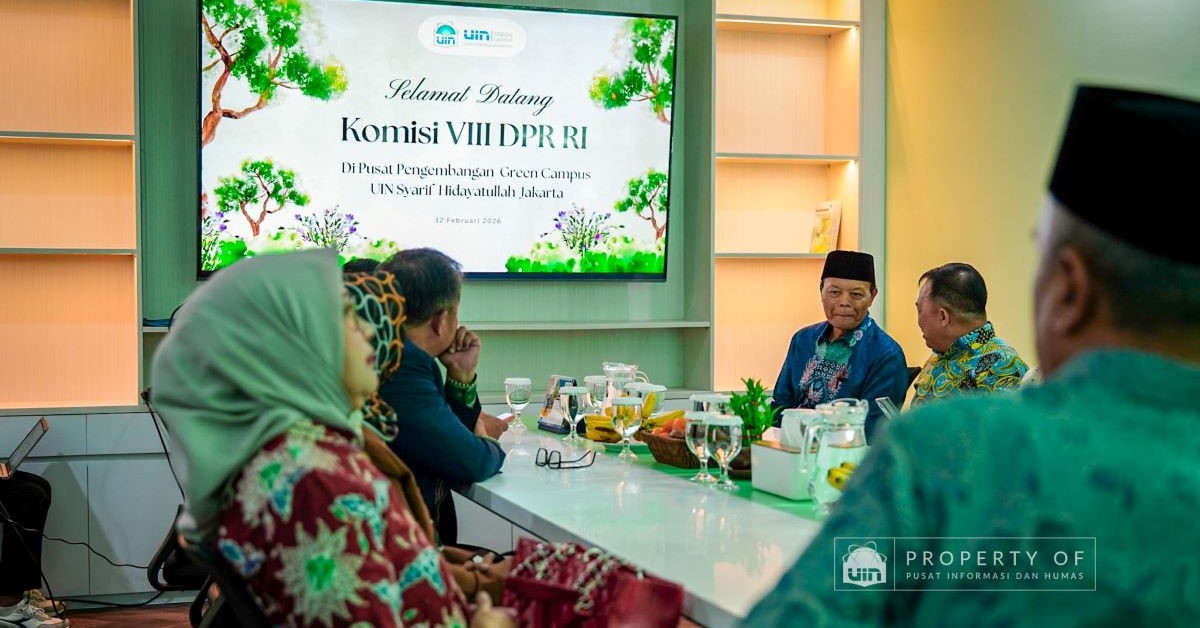
Jakarta, UIN News Online — UIN Syarif Hidayatullah Jakarta received a working visit from Commission VIII of the Indonesian House of Representatives (DPR RI) in a Special Working Meeting held at the Diorama Room, Thursday (12/02/2026). The visit focused on the university’s innovations in environmental management and ongoing campus digital transformation initiatives.
The delegation was welcomed by UIN Jakarta’s Rector, Prof. Asep Saepudin Jahar, M.A., Ph.D., along with vice rectors and faculty leaders. The visit formed part of Commission VIII’s oversight functions, particularly in the areas of religion, social affairs, women’s empowerment, child protection, and disaster management.
During the discussion session, the Rector presented UIN Jakarta’s strategic roadmap for 2025–2029, emphasizing institutional strengthening, digital transformation, and the development of a sustainable green campus model. He highlighted that the university is currently advancing toward a transformation from Public Service Agency (BLU) status to State University with Legal Entity (PTN-BH) status as part of its long-term institutional development agenda.
One of the key highlights presented was the implementation of campus-wide digitalization, including a paperless office system, where administrative processes such as official correspondence and disposition are managed digitally using tablet-based systems.
The Rector also emphasized UIN Jakarta’s commitment to environmental sustainability through its Green Campus program. He explained that the university has developed an integrated waste management system in which campus-generated waste is processed internally through recycling and environmentally friendly treatment systems, reducing external waste disposal.
Commission VIII DPR RI expressed appreciation for these initiatives, particularly the university’s independent waste management system. The delegation noted that UIN Jakarta’s approach demonstrates a practical model of how higher education institutions can contribute to environmental sustainability through technology-based solutions, including the conversion of waste into useful materials such as compost and construction-related products.
In addition to discussions, the delegation was invited to tour the campus using electric buses, showcasing UIN Jakarta’s commitment to low-emission transportation and sustainable mobility. The visit also included symbolic tree planting activities as part of the university’s environmental awareness program.
Through this visit, UIN Syarif Hidayatullah Jakarta reaffirmed its position as a leading Islamic higher education institution that integrates academic excellence, digital innovation, and environmental sustainability in its institutional development strategy.