
Carbon reduction and emission reduction process Have a process for carbon management and reducing carbon dioxide emissions
Syarif Hidayatullah State Islamic University Jakarta has put in place a systematic process to manage its carbon footprint and reduce carbon dioxide (CO₂) emissions. The process covers emissions from electricity consumption and transportation within the campus.
The program is run by the university’s Green Campus Team and follows UI GreenMetric standards. Its main objective is to accurately calculate, monitor, and mitigate CO₂ emissions from key campus operations.
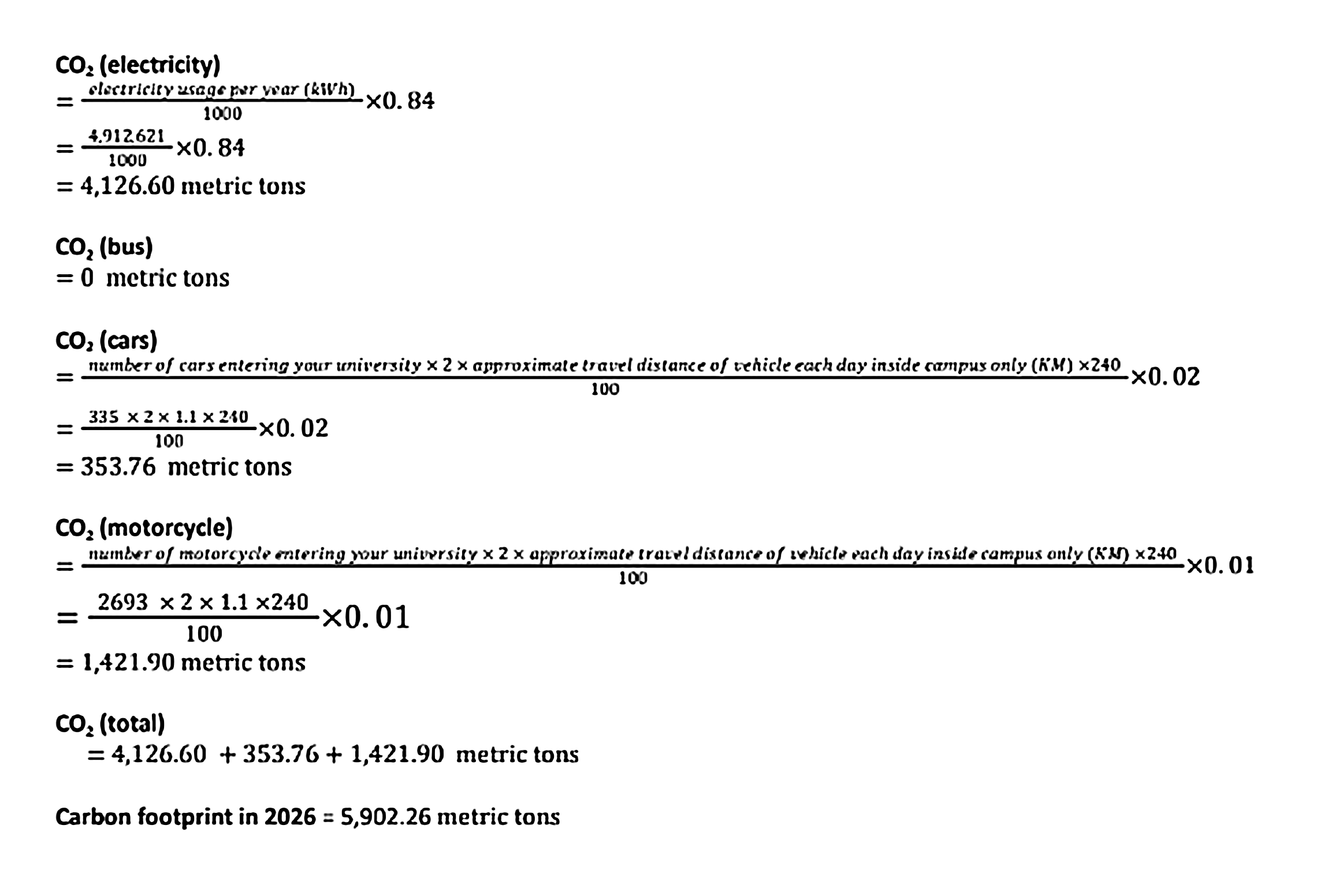
In 2026, the university recorded a total carbon footprint of 5,902.26 metric tons of CO₂. Electricity consumption was the largest source, with 4,912,621 kWh of usage producing 4,126.60 metric tons of CO₂. Transportation accounted for the rest: 353.76 metric tons from cars, based on 335 vehicles entering the campus, and 1,421.90 metric tons from motorcycles, based on 2,693 vehicles. Bus emissions were recorded at zero.
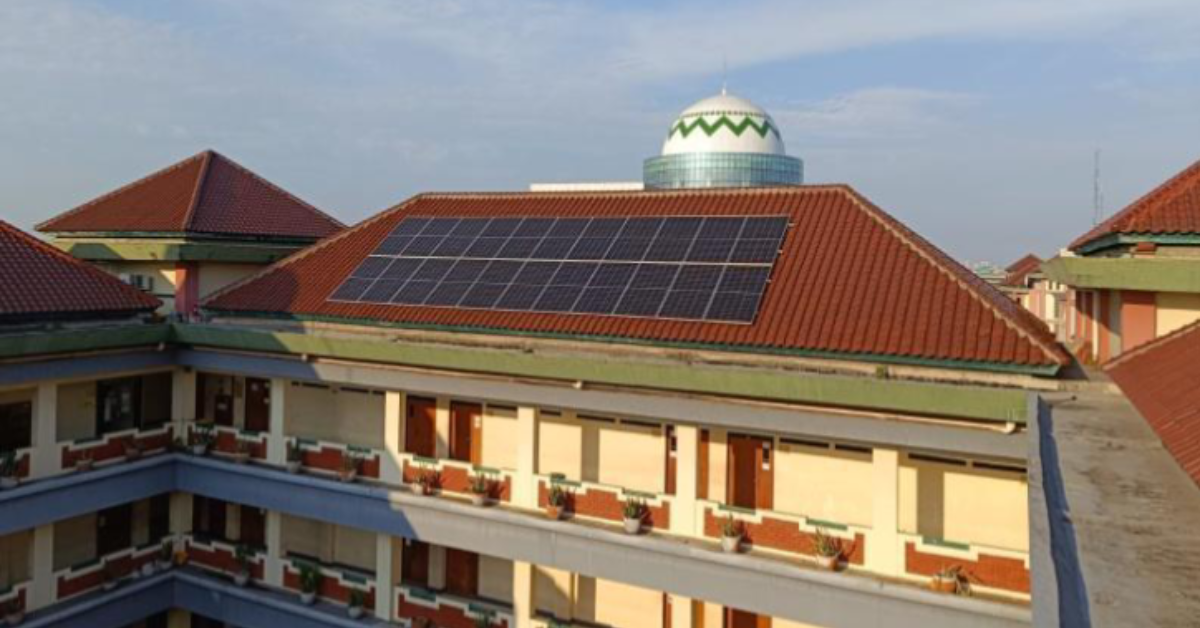
To keep these emissions in check, the university monitors electricity-related emissions, manages vehicle access and parking restrictions, operates zero-emission electric buses, expands rooftop solar photovoltaic installations, and promotes green mobility across the campus.
According to the unit’s report, the transparent calculation lets the university identify its major emission sources, evaluate the effectiveness of its energy efficiency and traffic management policies, and demonstrate measurable accountability in climate action.
Looking ahead, the university plans to expand renewable energy generation to further cut electricity-based emissions, tighten vehicle restriction policies to reduce fossil-fuel transport footprints, and continue optimizing its campus-wide carbon reduction strategies.