Building Cross-Sectoral Dialogue for Sustainable Development and Climate Action
Syarif Hidayatullah State Islamic University Jakarta actively initiates and participates in cross-sectoral dialogue that brings together government institutions, civil-society organisations, environmental NGOs, universities, religious communities, international partners, philanthropic organisations, private-sector actors, and researchers to address challenges related to the Sustainable Development Goals. Through the Center for the Study of Islam and Society (PPIM) and its Religious Environmentalism Actions (REACT) Project, the University created multiple dialogue platforms during 2025 that connected research evidence with policy discussions, environmental action, climate financing, religious leadership, and community participation.
These initiatives demonstrate that Syarif Hidayatullah State Islamic University Jakarta does not approach sustainable development as an issue for academia alone. Instead, the University facilitates collaboration across sectors to exchange knowledge, identify common challenges, develop possible solutions, strengthen networks, and encourage collective action. The activities directly support SDG 17: Partnerships for the Goals while also contributing to SDG 13: Climate Action and other environmental and social dimensions of sustainable development.
1. International Conference on Religious Environmentalism: Connecting Government, Academia, Religious Leaders, and Environmental Actors
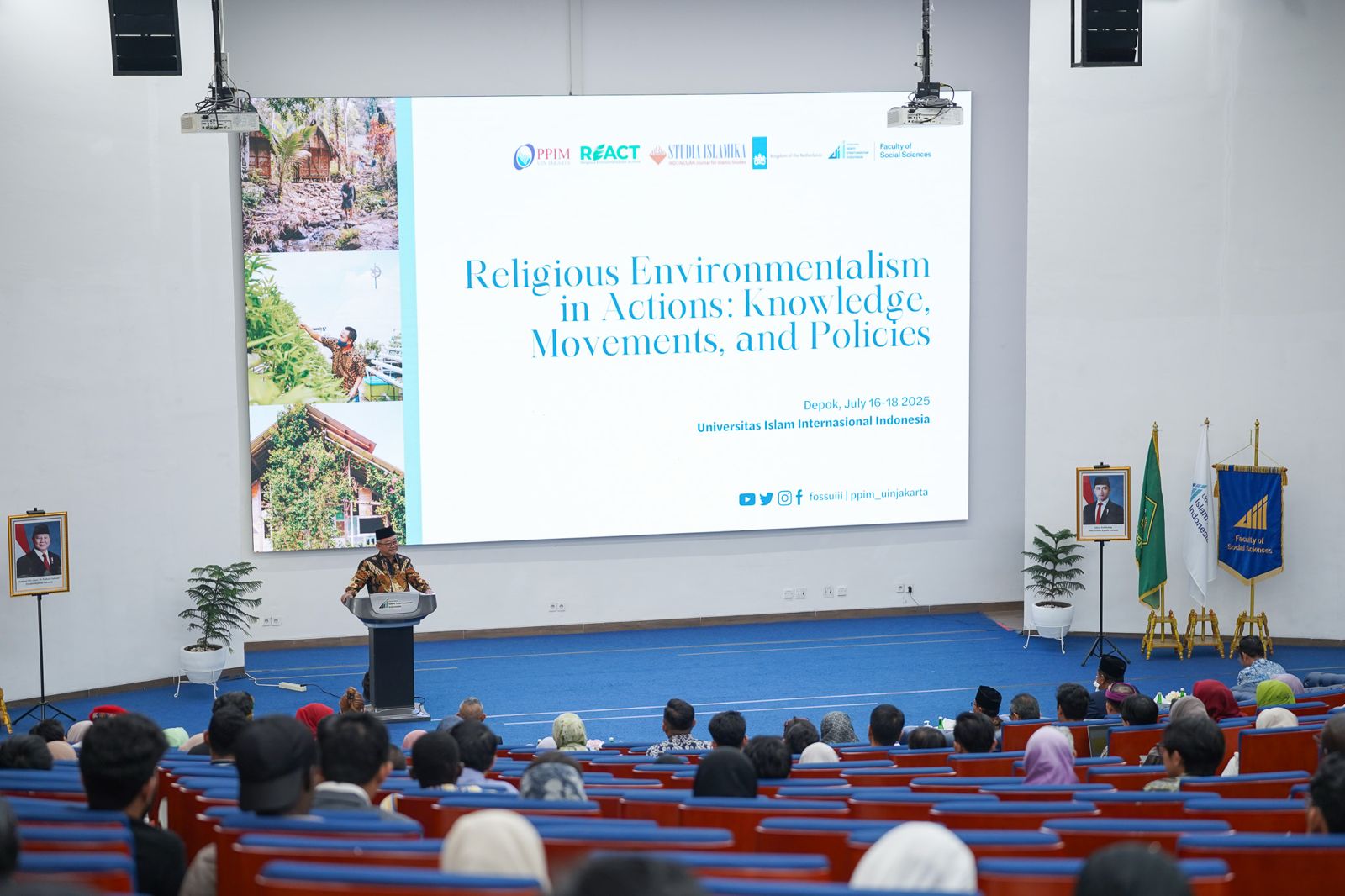
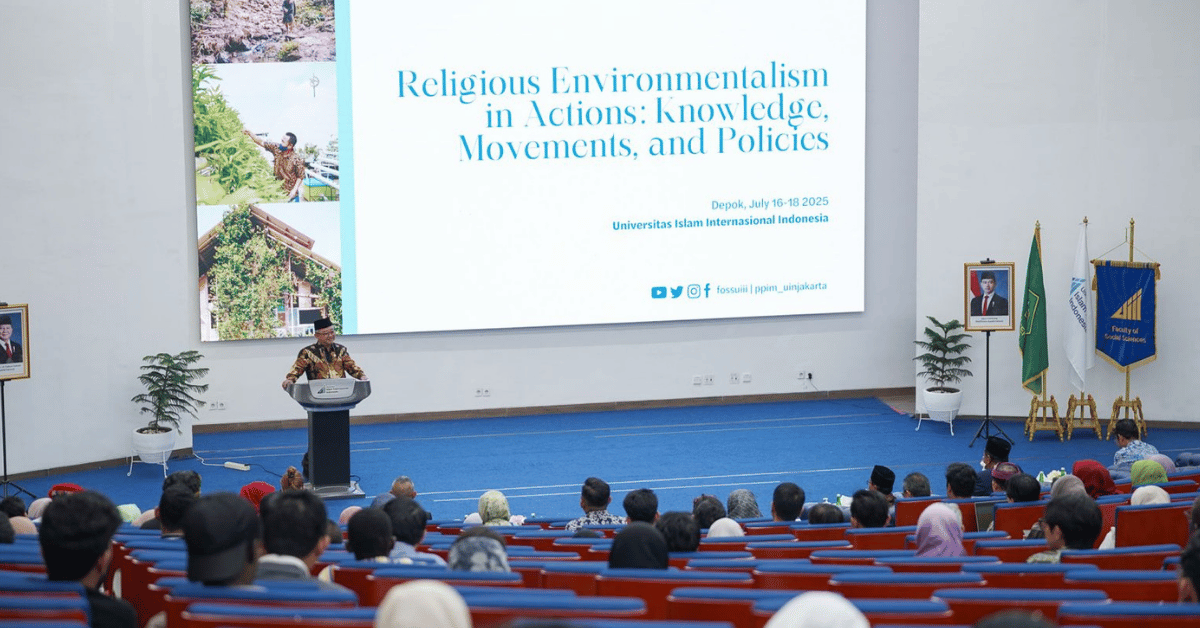
One of the University's most significant cross-sectoral dialogue initiatives in 2025 was the International Conference on Religious Environmentalism in Action: Knowledge, Movements, and Policies, held from 16 to 18 July 2025 at Universitas Islam Internasional Indonesia (UIII) in Depok. The conference was organised by PPIM of Syarif Hidayatullah State Islamic University Jakarta in collaboration with the Faculty of Social Sciences at UIII, Studia Islamika, and with support connected to the Embassy of the Kingdom of the Netherlands. The conference was designed as a forum for discussing how religious communities, academic research, public policy, and environmental movements could contribute collectively to addressing climate change and environmental degradation.
Its participants represented multiple sectors, including:
-
national government;
-
universities and research institutions;
-
international organisations;
-
religious organisations;
-
environmental activists;
-
civil-society organisations;
-
faith leaders; and
-
international researchers.
The conference included prominent government representatives such as Indonesia's Minister of Religious Affairs and Minister of Primary and Secondary Education. International and national speakers also represented academic institutions, religious organisations, environmental initiatives, and international environmental networks.
The presence of these different sectors created a platform where environmental sustainability could be discussed not only as a scientific issue, but also as a matter of public policy, education, religion, culture, and community action. The conference therefore demonstrates the University's direct role in creating cross-sectoral dialogue around sustainable development.
2. Connecting International Knowledge with Indonesian Sustainable Development Challenges
The international conference was designed around the recognition that climate and environmental challenges cannot be solved by one sector alone. It brought together experts whose work connects religion, environmental governance, community action, public policy, and sustainable development. Participants discussed how religious values can strengthen environmental awareness, how policymakers can engage religious communities, and how research can help create more effective and lasting environmental interventions.
The conference also incorporated perspectives from different religious traditions and international academic institutions. This cross-disciplinary and interfaith dimension strengthened opportunities for participants to compare approaches and consider collaborative responses to the climate crisis. The programme included academic presentations, thematic panels, documentary screenings, environmental exhibitions, and discussions concerning policy and community action.
According to the PPIM unit report, the conference involved 110 participants, including 98 presenters distributed across 31 thematic panels. This scale demonstrates that the activity was not an isolated seminar but a substantial dialogue platform involving a wide range of actors concerned with environmental sustainability.
3. REACT Expert Meeting 2025: Dialogue between Environmental and Religious Movements

Cross-sectoral dialogue continued after the international conference. On 6 August 2025, PPIM organised the REACT Expert Meeting 2025: Strengthening the Role of Religion in Indonesia's Environmental Movement at Novotel Cikini, Jakarta. The meeting brought together 38 participants, including environmental experts and activists representing different organisations.
Participants included representatives associated with organisations such as:
-
LPLH SDA MUI;
-
GreenFaith Indonesia;
-
Ummah for Earth / Greenpeace Indonesia;
-
MOSAIC / Purpose;
-
KEHATI;
-
Institute for Essential Services Reform (IESR);
-
Eco Bhinneka Muhammadiyah;
-
environmental research institutions; and
-
faith-based environmental initiatives.
The meeting used research findings from the REACT Project as a starting point for dialogue.
Researchers from PPIM presented empirical findings concerning Indonesian public attitudes toward climate change and environmental action, while environmental and religious actors discussed challenges encountered by grassroots environmental movements. This format enabled academic evidence to be discussed directly with actors responsible for community mobilisation and environmental advocacy. Participants examined barriers to wider public participation, the role of religious institutions in environmental mobilisation, grassroots environmental innovation, and opportunities for cooperation between environmental and religious movements. The forum therefore served both as a knowledge-exchange mechanism and as an opportunity to strengthen networks among organisations working toward sustainable development.
4. Cross-Sectoral Dialogue on Sustainable Climate Financing

Syarif Hidayatullah State Islamic University Jakarta also facilitated cross-sectoral dialogue concerning one of the major practical challenges of climate action: sustainable environmental financing. On 25 September 2025, PPIM organised a Focus Group Discussion entitled “Funding from Philanthropic Institutions, Companies (CSR), and BPDLH related to Climate Action and the Environment.” The meeting examined how different sources of financing could support climate action and environmental conservation. Unlike a conventional academic seminar, this forum intentionally brought together participants from multiple sectors.
These included representatives from:
-
BPDLH under Indonesia's Ministry of Finance;
-
academic institutions;
-
civil-society organisations;
-
zakat institutions;
-
philanthropic organisations;
-
private-sector CSR;
-
environmental NGOs;
-
religious organisations; and
-
community-based environmental movements.
Participating organisations included MUI, Rumah Zakat, Dompet Dhuafa, LazisNU, Eco Bhinneka Muhammadiyah, Caritas Indonesia, GreenFaith, Wahana Visi Indonesia, Greenpeace Indonesia, Kader Hijau Muhammadiyah, and others. The dialogue examined challenges facing environmental financing, including limitations in public budgets, the priorities of philanthropic institutions, accountability requirements, the ability of civil-society organisations to access environmental funds, and the difficulty of measuring environmental programme outcomes. Participants also discussed strategies for connecting community needs with available financing mechanisms.
This forum represents a strong example of the University's role in bringing government, civil society, philanthropy, religious organisations, and other sectors into a common discussion about practical solutions for achieving sustainable-development objectives.
5. Linking Cross-Sectoral Dialogue with National Sustainable Development Priorities
The cross-sectoral dialogue implemented through REACT was not separated from Indonesia's wider sustainable-development agenda. The programme was designed to address environmental sustainability through research, advocacy, capacity building, and public engagement. The climate-financing dialogue, for example, was connected to national priorities under the RPJMN 2024–2029, particularly climate resilience, low-carbon development, and environmental quality.
Meanwhile, the international conference examined relationships between environmental policy, education, religion, community mobilisation, and climate action. The REACT Expert Meeting connected academic findings with organisations that implement environmental initiatives at community and national levels. Taken together, these forums illustrate how the University creates spaces where different sectors can share:
-
research evidence;
-
policy perspectives;
-
practical implementation experiences;
-
community knowledge;
-
funding opportunities;
-
institutional challenges; and
-
potential collaborative strategies.
This process is important for the Sustainable Development Goals because complex development challenges require coordinated responses across institutional boundaries.
6. Maintaining Dialogue between Government and Civil Society
The University's wider REACT activities also demonstrate sustained interaction rather than one-off consultation. The PPIM unit activity report records that REACT's policy engagement involved 30 representatives from key ministries and more than 20 organisations. Participating stakeholders represented religious institutions, environmental NGOs, research institutes, and community-based initiatives.
Ministerial audiences and multistakeholder focus group discussions became mechanisms through which research findings could be discussed with decision-makers and organisations responsible for programme implementation. This sustained cross-sector interaction also created pathways for knowledge generated by the University to contribute to government planning and environmental policy. The involvement of civil-society organisations alongside government institutions is particularly significant because it allows sustainable-development issues to be examined from both policy and implementation perspectives.
7. Knowledge Exchange as a Foundation for Collaborative Action
The dialogue platforms established by Syarif Hidayatullah State Islamic University Jakarta demonstrate an approach in which sustainable-development challenges are addressed through collaboration rather than institutional isolation. Academic researchers contribute empirical evidence. Government representatives contribute regulatory and policy perspectives. Environmental NGOs contribute practical knowledge from advocacy and field implementation. Religious organisations provide access to community networks and values-based environmental mobilisation. Philanthropic institutions and the private sector contribute perspectives on sustainable financing. International organisations and universities provide comparative knowledge and broader environmental perspectives. By bringing these actors together, the University facilitates the exchange of complementary knowledge and helps identify opportunities for collaborative action.
8. Contribution to SDG 17: Partnerships for the Goals
During 2025, Syarif Hidayatullah State Islamic University Jakarta demonstrated active participation in and initiation of cross-sectoral dialogue related to sustainable development. Through the REACT Project, the University organised and supported international conferences, expert meetings, focus group discussions, policy engagement, and multistakeholder forums. These activities brought together government institutions, environmental NGOs, civil-society organisations, religious organisations, researchers, universities, international partners, philanthropic institutions, private-sector actors, and communities.
The International Conference on Religious Environmentalism, REACT Expert Meeting 2025, and the Climate Financing Focus Group Discussion demonstrate that Syarif Hidayatullah State Islamic University Jakarta actively creates spaces where different sectors can exchange evidence, discuss sustainable-development challenges, identify collaborative approaches, and strengthen collective action.
These documented initiatives provide strong evidence for SDG Indicator 17.2.2: Cross-Sectoral Dialogue about the Sustainable Development Goals.
Source :
https://uiii.ac.id/international-conference-on-religious-environmentalism-held-at-uiii-to-address-global-climate-crisis/
https://ppimcensis.or.id/2025/07/15/tiga-pemikir-dunia-hadiri-konferensi-internasional-tentang-gerakan-environmentalisme-berbasis-agama/
https://ppimcensis.or.id/2025/08/06/react-expert-meeting-2025-memperkuat-peran-agama-dalam-gerakan-lingkungan-di-indonesia/
https://ppimcensis.or.id/2025/09/26/ppim-dorong-pemanfaatan-zakat-csr-dan-bpdlh-untuk-aksi-iklim/
https://ppimcensis.or.id/program/religious-environmentalism-actions-react/