
Bridging Islamic Theology and Sustainability: UIN Jakarta Medical Faculty Promotes Green Campus with New Eco-Facilities
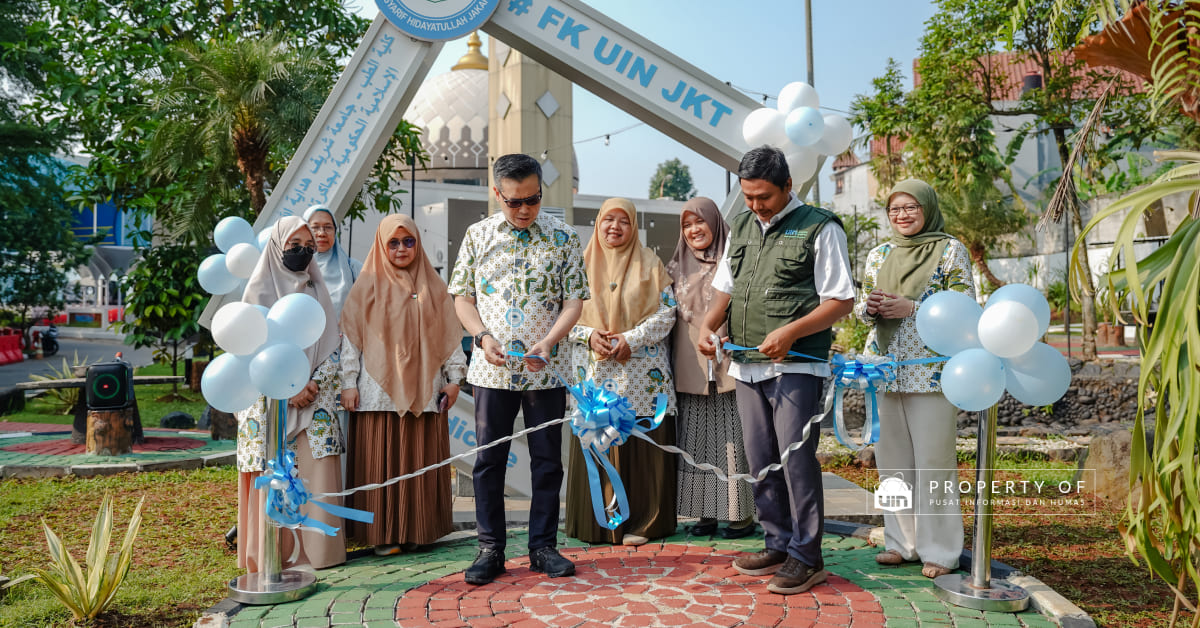
Medicorner Faculty of Medicine, UIN Online News – The Faculty of Medicine (FK) at UIN Syarif Hidayatullah Jakarta officially inaugurated a series of new facilities within its compound. The upgrade aims to establish a more comfortable, healthy, and highly supportive learning ecosystem for the academic community, celebrated at the Medicorner Faculty of Medicine on Tuesday, June 2, 2026.
The inauguration ceremony was attended by the Dean of FK UIN Jakarta, Dr. Achmad Zaki, alongside the executive board of vice deans: Vice Dean for Academic Affairs, Dr. Fika Ekayanti; Vice Dean for General Administration, Planning, and Finance, Dr. Erike Anggraini Suwarsono; and Vice Dean for Student Affairs, Cooperation, and Alumni, Dr. Laifa Annisa Hendarmin. Also in attendance was the Deputy Head of the UIN Jakarta Green Campus Center, Johan Aristya Lesmana, representing the Head of the Green Campus Development Center, Prof. Hendrawati.
This campus infrastructure upgrade is part of FK UIN Jakarta’s institutional commitment to presenting an educational environment that not only delivers academic excellence but also champions the clinical health, comfort, and physical well-being of the academic community.
In his welcoming remarks, the Dean of FK UIN Jakarta, Dr. Achmad Zaki, explained that the facility modernization was designed to inject a fresher, more welcoming atmosphere for students, lecturers, and administrative personnel alike.
"The core objective behind upgrading these facilities is to prevent academic burnout and provide a refreshing atmosphere for everyone executing their daily routines on campus," he stated.
According to him, developing university facilities is a vital, long-term asset investment to support the educational process. A top-tier campus is measured not only by its high test scores and academic publications but also by the availability of a clean, healthy space that stimulates student productivity.
"Our vision is to build a healthy campus. University investment should not only target robust academic curriculums but must also fund facilities that ensure a smooth, comfortable, and anatomically healthy learning process," he added. He also called upon the entire academic community to collectively maintain the new amenities and actively pitch creative ideas for future campus developments.
"We must collectively guard and maintain these existing facilities. Any innovative suggestions or feedback for the next phase of development will serve as highly valuable input for our faculty executive board," he noted.
Representing the central university framework, the Deputy Head of the UIN Jakarta Green Campus Center, Johan Aristya Lesmana, asserted that the expansion of the medical faculty’s facilities directly aligns with UIN Jakarta's broader vision of cultivating an eco-conscious, sustainable university.
He clarified that the Green Campus framework at UIN Jakarta expands far beyond basic landscape greening. Instead, it drives accountable environmental management by operationalizing the theological concept of Khalifa—the spiritual consciousness of humans acting as divine stewards tasked with preserving and protecting global flora and fauna as a sacred, non-negotiable trust.
Furthermore, Johan introduced the concept of Green Hijrah, a behavioral change framework that encourages a collective migration toward eco-friendly lifestyles. This includes cutting out single-use plastics and transitioning toward sustainable, bio-degradable alternative materials.
"The Green Campus initiative urges us to migrate away from plastic dependency toward environmentally conscious alternatives. Tiny behavioral adjustments executed collectively will generate a massive, positive disruption across our campus ecosystem," he explained.
As a prominent healthcare faculty within the UIN Jakarta network, FK continues to pioneer a learning terrain that protects both the physical and mental health of its students. This structural development marks another milestone in UIN Jakarta's ongoing mission to integrate modern public health standards with institutional sustainability goals.